
Georgia and American History
On May 15, 1791, George Washington left Augusta for Savannah.
On May 15, 1800, President John Adams ordered all 125 employees of the federal government to begin packing to move the capital from Philadelphia to Washington, DC.
On May 15, 1864, General William Tecumseh Sherman’s Military Division of the Mississippi remained engaged against Confederate General Joseph E. Johnston’s Army of Tennessee at Resaca, Georgia.
At New Market, Virginia, in the Shenandoah Valley, Major General John C. Breckenridge commanded 4800 Confederate soldiers, including the entire Corps of Cadets from Virginia Military Institute. Breckenridge previously had served as United State Representative and Senator from Kentucky, and as the youngest Vice President of the United States under President James Buchanan. Breckenridge was the Democratic nominee for President in 1860, coming in third in the popular vote and second in the Electoral College to Abraham Lincoln.
Breckenridge attacked forces under Major General Franz Sigel and they skirmished through the morning until Union forces broke through the Confederate lines.
With no other reserves available, Breckinridge reluctantly ordered the VMI cadets into line, saying, “Put the boys in, and may God forgive me for the order.”
The four companies of cadets divided around the Bushong house and regrouped along a fence at the edge of the field some 200 yards from the Union line. When a cavalry assault ordered by Sigel was repulsed, Breckinridge sensed the moment had come for the climactic charge, and ordered his entire line forward. As the cadets moved through the muddy, ruined wheat, many had the shoes sucked from their feet, giving the ground the legendary name the “Field of Lost Shoes.” The Confederate charge drove Sigel’s army back across Smith Creek and captured several cannon that could not be removed in time. One of the guns was taken by the cadets, giving them the ultimate infantryman’s prize in their baptism of fire.
Ten cadets died or suffered mortal wounds that day. This week a dozen cadets left Lexington to retrace the march to New Market. This weekend will see the oldest battle reenactment at New Market.
On the anniversary of the Battle of New Market, the roll of those who died there is called.
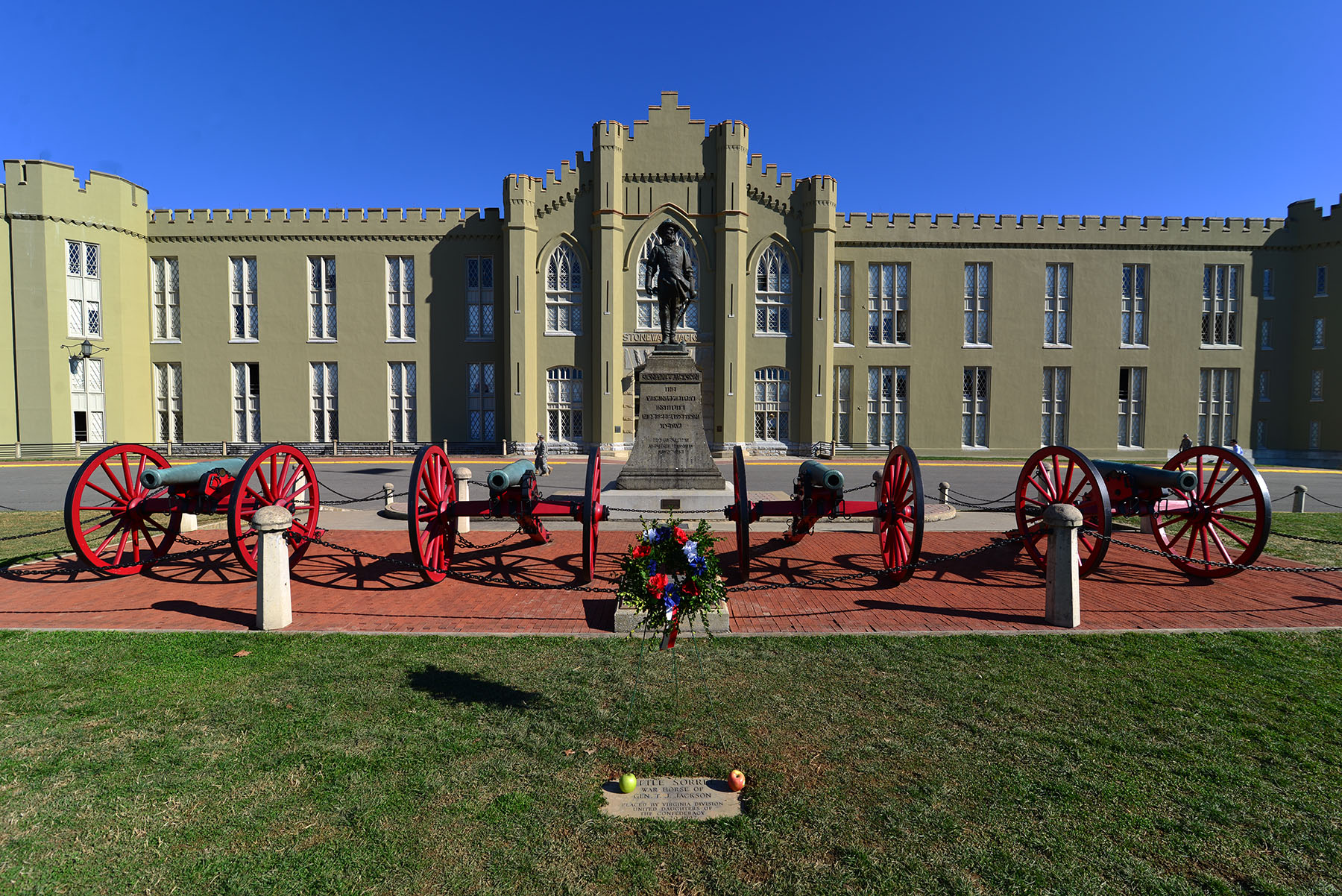
When I was in Lexington we played rugby against VMI frequently, and it’s something else to take the field on their parade ground, where William Pendleton‘s battery of cannon named Matthew, Mark, Luke & John anchored one end of the pitch.
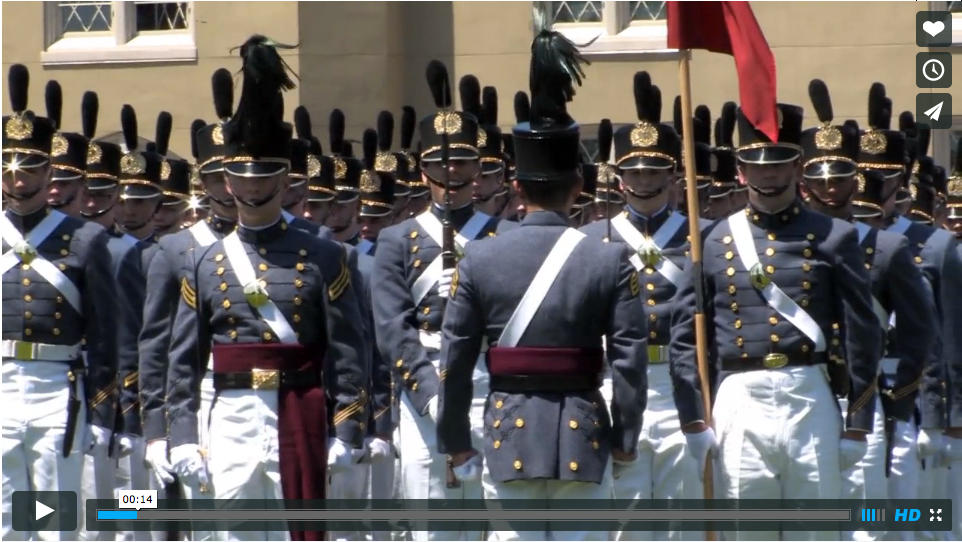
This VMI video, obviously intended for students considering applying, includes some rugby footage.
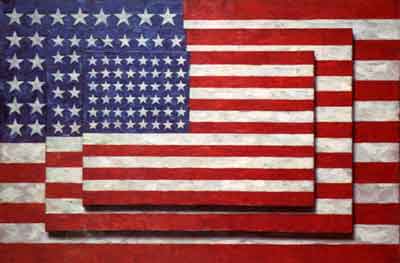
American artist Jasper Johns was born May 15, 1930 in Augusta, Georgia.
Carl Sanders was born on May 15, 1925 in Augusta, Georgia. He served in the United States Air Force, Georgia House of Representatives and State Senate, where he was President Pro Tem. In 1962, Sanders won the Democratic Primary for Governor, defeating former Governor Marvin Griffin, and in November was the first Governor of Georgia elected by popular vote after the County Unit System was abolished.
Former Atlanta Braves pitcher John Smoltz was born on May 15, 1967 in Lansing, Michigan. Smoltz pitched a complete game shutout against the Pittsburgh Pirates in the seventh game of the National League Championship Series in 1991, sending the Braves to their first World Series since moving to Atlanta in 1966. Smoltz was chosen for the All Star team eight times and won the Cy Young award in 1996.
Yet another poll
We surveyed 1006 likely Republican Primary Voters on the evenings of May 12-13, 2014. We weighted the results to approximate the distribution of voters’ age groups in the 2010 General Primary Election.
The question: If the Republican Primary for US Senate were held today and the candidates were Paul Broun, Phil Gingrey, Karen Handel, Jack Kingston, and David Perdue, for whom would you vote?
Paul Broun………….11.0%
Art Gardner………….2.1%
Phil Gingrey………..12.1%
Derrick Grayson…..2.4%
Karen Handel……..20.1%
Jack Kingston……..20.5%
David Perdue………20.1%
Undecided……………11.7%
Data collection was done by IVR phone polling using a series of voice questions and prompts recorded by professional voice talent. Margin of error is +/- 3.1 points at the 95% confidence interval.
My take on the state of the Senate race has been for several days that it’s too close to call among the top three candidates. Voter turnout or the lack of turnout, could be the deciding factor. I think this situation favors Karen Handel and Jack Kingston, in that order. Their field operations appear more robust and their supporters more enthusiastic and engaged.
Jackie Cushman writes in TownHall.com about voter turnout and how it effects polling:
Many of the polls so far have been based on total population or on registered voters, but they may not give an accurate picture of what will happen. That’s because, in off-season elections, the opinion of those who bother to go to the polls may not reflect the opinion of the universe of voters who are eligible to do so.
This is true not only in Georgia but across the country.
President Obama is not up for reelection, but his approval/ disapproval ratings will have an effect on those running on the Democratic ticket. The Republicans in the House are expected to retain the majority and more than likely pick up seats.
This year, the midterm elections will be about turnout. Let’s drive turnout based on voter enthusiasm.
Voter Turnout
Richmond County reports more than 3500 early voters so far this year, leading to high expectations for turnout. Augusta elections include Mayor and 5 Commission Districts and a renewal of the Special Purpose Local Option Sales Tax ,or SPLOST 7. In the heated Mayor’s race, candidate Helen Blocker-Adams is reported to have had more than 40 eviction notices between 2007 and 2013. A poll by InsiderAdvantage for the Augusta Chronicle released May 3d showed State Senator Hardie Davis with a healthy lead in the mayoral race.
This week, a lawsuit challenging the May 20th election date for local Augusta/Richmond County offices was dismissed.
The lawsuit …. contended that the decision to move the local elections from the November general election ballot to the May 20 statewide primary election ballot violates the Voting Rights Act.
The court ruled that the formula used to determine which states had to seek preclearance could no longer be used. Without a formula, no state is currently subjected to the preclearance requirement, Hall wrote.
Although Georgia had submitted its change in election dates to the Justice Department before the Shelby decision was reached, the department’s objection is inescapably unenforceable, Hall wrote.
In December 2012, the Justice Department opposed the election date change, contending it would have the effect of denying or abridging the right to vote.
Augusta is also largely within the Twelfth Congressional District, where Republican candidates are battling for a runoff berth and eventual challenge to Democratic incumbent Congressman John Barrow.
Barrow better be comfortable among GOP faithful, because his district is filled with them. After opting against a Senate bid last year, Barrow, a regular top target of national Republicans, is awaiting the conclusion of a GOP primary filled with candidates sure they should be able to pick off a district that President Barack Obama lost by 12 points in 2012.
And the incumbent is unlikely to find out his Republican opponent on Tuesday — two from the five-candidate primary field are expected to be forced into a July runoff, with no candidate likely to surpass the 50 percent threshold needed to win the nomination outright. This is the only district in the state that has the chance to flip party control.
In my opinion, those local races are driving early and advanced voting more than anything else.
Pierce County reports hopeful numbers:
Advanced voting, long popular with voters, continues to be strong — except for this year’s Saturday voting. The lone Saturday set aside for early voting saw a poor turnout as only 30 residents cast ballots during the seven hours. So far, however, a total of 741 ballots had been cast early in person as of press time– or about nine percent of registered voters so far. A total of 110 absentee ballots have also been cast. Those numbers are on track with 2010, which also featured a chairman’s race and the same commissioner posts up for grabs. However, they are much lower than the almost 2,500 early votes cast during the hotly contested sheriff’s race in 2012.
Floyd County saw a high number of votes cast last Saturday, but still predicts low overall turnout.
A county official is continuing to predict a low voter turnout for next week’s primary election, despite a better-than-usual participation rate during the one weekend date for advanced voting.
Friday is the last day of early voting prior to the May 20 election.
Evon Billups, elections supervisor for Floyd County, is still estimating about a 15-percent turnout of the county’s registered voters based on the numbers so far.
A total of 639 people had cast ballots during early voting in Floyd County through Monday evening.
Billups said that is a low number considering the total number of registered voters in the county, which was 43,224 as of Nov. 26 last year according to the Secretary of State’s election division.
“The primary does not seem to be the flavor for Floyd County,” Billups said, adding that some voters don’t like having to pick either the Republican or Democrat ballot and want to choose candidates from both.
Earlier this week, WABE’s Michelle Wirth spoke to Secretary of State Brian Kemp about early voting and turnout.
Kemp said comparing early voting numbers and turnout in general this year will have a twist, because this is the first time Georgia has held its primary in May rather than July.
“We really don’t know what to expect. We haven’t had a May primary before, so it’s going to be interesting to see you know how that affects turnout, if it does at all. It may being very similar to what we’ve seen in the past. We’ll just have to wait and compare those numbers when we’re finished.”
Statewide 149,446 primary ballots were cast so far this year as of yesterday’s absentee voter report from the Secretary of State. So far this week, the number of ballots cast shows a strong improvement over last week, the first week of in-person advance voting.
Ballots by Party
Republican………90,595……60.5%
Democratic………56,884……38.1%
Nonpartisan………1,967………1.3%
Ballots by Gender
Female………..53.5%
Male………….46.5%
Ballots by Selected County
Fulton………..10,513
DeKalb………..9,142
Cobb………….7,140
Muscogee……5,962
Gwinnett……..4,086
Cherokee…….4,063
Richmond…..3,975
Ballots by Date
May 5…..10,078
May 6…..11,179
May 7…..10,909
May 8…..10,383
May 9…..12,098
May 10…10,258
May 12…17,932
May 13…19,991
Empty Podium wins Gubernatorial debate
Walter Jones of Morris News was a panelist at last night’s debate between State School Superintendent John Barge, former Dalton Mayor David Pennington, and an empty podium representing Governor Nathan Deal. Walter also reported on the debate:
Gubernatorial candidates John Barge of Floyd County and David Pennington of Dalton debated each other about education spending and Republican credentials Wednesday night, but they mostly they took turns attacking the absent incumbent, Nathan Deal.
“Nathan, why, as leader of our state and leader of our party, did you decline or were too scare to come to this debate and defend your record,” Pennington asked the empty lectern reserved to Deal.
Over the next 20 minutes alloted for the debate, the erstwhile candidates did more damage to themselves by revealing that they offer no reason for their election other than that they don’t like Nathan Deal or some of the actions Deal’s administration has taken.
Protest candidates can only get protest votes unless they offer their own vision for the state. Last night, both Barge and Pennington proved their vision is as empty as the podium they asked questions of.





Comments ( 0 )