
On January 22, 1733, James Oglethorpe arrived at Yamacraw Bluff, where the colony of Georgia would be founded.
Following the passage of Georgia’s Secession Resolution, six delegates, including both from Gwinnett County, signed a statement protesting the decision to secede.
On January 22, 1866, Georgia Governor Charles Jenkins signed a resolution by the legislature asking for federal troops to be removed from Georgia.
On January 22, 1959, Atlanta buses were integrated after a federal court decision.
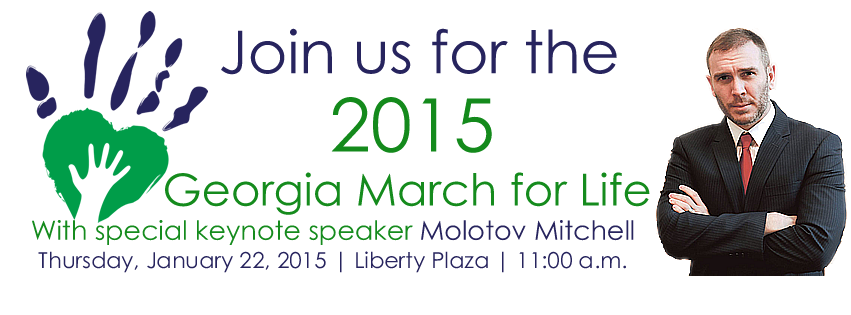
On January 22, 1973, the United States Supreme Court issued its 7-2 decision in the case known as Roe v. Wade.
Gold Dome
| Thu Jan 22 | 8:00am – 9:00am |
Joint AFY15- House Appropriations Health Subcommittee – 341 State Capitol
|
|
|---|---|---|---|
| 8:00am – 9:30am |
Joint AFY15- House Appropriations Public Safety Subcommittee – 606 Coverdell LOB
|
||
| 8:00am – 9:30am |
Joint AFY15- Appropriations General Government Subcommittee – 506 Coverdell LOB
|
||
| 9:00am – 11:00am |
Joint AFY15- House Appropriations Human Resources Subcommittee – 341 Capitol
|
||
| 9:30am – 11:00am |
Joint AFY15- House Appropriations Economic Development Subcommittee – 506 CLOB
|
||
| 12:30pm – 1:00pm |
Governor Deal Addresses Joint Appropriations Committees – 341 Capitol
|
||
| 12:30pm – 2:30pm |
Joint Budget Committee Hearings – Georgia State Capitol Room 341
|
||
| 1:00pm – 3:30pm |
Joint AFY15- House Appropriations Human Resources Subcommittee – 341 Capitol
|
Greg Bluestein of the AJC brings us news that Gov. Deal has returned from England in time for his expected budget address today.
State economic [development] commissioner Chris Carr confirmed the team was, indeed, in the U.K. when he posted on Facebook a few minutes ago: “Back from the UK. Great trip. We’ll go anywhere and everywhere to bring jobs and investment to Georgia!”
Good news for all Georgians – unemployment dropped to 6.9% in December according to figures released by the state Department of Labor.
“We ended the year with our rate dropping below seven percent for the first time since last April,” state Labor Commissioner Mark Butler said in a press release. “And, this was the first time in eight years that we’ve had job growth in December.”
Georgia, overall, has done well in recent years, [Heath] said. Legislators planned financially for a 3.4 percent growth in 2014, but the state grew at 4.8 percent.
He said Gov. Nathan Deal hasn’t released the revenue projections for this year yet, but the $20.8 billion budget for this year is based on 4.3 percent general fund revenue growth.
Heath said growth is a good thing and is helping in Georgia’s economic recovery, but a high level of growth doesn’t equate with leftover money in state coffers.
“The problem is, the challenge is, that population growth and increased demand in existing programs easily gobbles up about five percent of growth,” Heath said.
For instance, growth requires more in education to accommodate more students. Heath said there are a number of similar services that eat up money when more people move to the state.
Tom Crawford gives the context of how the state budget fared during the economic recession.
During the 2008 General Assembly session, lawmakers passed what was then Georgia’s largest budget ever, $21.1 billion in state funds. Later that year, the housing and construction industries collapsed, banks started failing across the country, and a meltdown in the financial markets nearly crashed the economy.
The Great Recession had begun, which blew a gaping hole in tax collections and forced Georgia to start cutting back that $21 billion budget until spending dropped to about $17 billion a year. State revenues eventually recovered as the economy came out of its tailspin, but it was a very slow process.
The budget Deal just released shows expenditures of nearly $21.8 billion for the upcoming fiscal year, which would be the first time the budget total has exceeded what legislators adopted back in the winter of 2008.
The Columbus Ledger-Enquirer notes the top priorities in the budget.
The budget plan Gov. Nathan Deal proposed Friday is predicated on the confidence, and the evidence, that Georgia’s slow recovery from the recession is finally picking up, and that tax revenues are showing and will continue to show that progress.
Be that as it may, the governor’s budget is based on a projected 4 percent tax revenue growth over the fiscal year that begins in July. Consequently, some state functions will get particular attention.
Deal’s budget would fund almost 300 more caseworkers to investigate cases of abuse and neglect.The budget also continues the process of criminal justice reform that has highlighted the past two years, when the focus has been on alternative sentencing, rehabilitation and job placement rather than just warehousing.
Speaking of education, that’s where the biggest infusion of new money in this proposed budget is targeted.
A flashpoint has emerged at the nexus of healthcare and education spending, as the Department of Community Health considers dropping coverage for some education employees.
The Department of Community Health’s $13 billion budget for fiscal year 2016 would eliminate health insurance coverage for 11,500 “non-certificated’’ school personnel, such as bus drivers and cafeteria workers.
DCH Commissioner Clyde Reese, speaking Tuesday to the joint House and Senate Appropriations Committee, cited a “fairly large deficit’’ that the state incurs for covering these school workers. He put the figure at $135 million in fiscal 2014.
“We think a lot of these people will get insurance in other ways,’’ Reese told Democratic Rep. Mary Margaret Oliver (D-Decatur), who questioned the coverage move. He added that some may qualify for subsidies in the health insurance exchange.
Governor Deal has named members to an Education Reform Commission to study the state’s education system, including its funding formula, and provide recommendations intended to improve the system, increase access to early learning programs, recruit and retain high-quality instructors and expand school options for Georgia’s families.
State Senate President Pro Tem David Shafer will serve as a member of the 2015 GOPAC Legislative Leaders Advisory Board. Under the leadership of Congressman, later Speaker, Newt Gingrich, GOPAC played a major role in the development of Republican leaders that led to the 1994 Republican takeover of Congress.
Voting Underway for State House Runoffs
Early voting has started in the State House Runoff elections for the North Fulton seat formerly held by Lynne Riley, and the North Georgia seat formerly held by Mickey Channell.
Transportation Tax Poll
Landmark Communications and WSB-TV released a poll on public support for raising taxes to fund transportation infrastructure needs and the picture is bleak for those looking for more taxpayer dollars.
Of the 800 polled this week, just over 60 percent say they do not support increasing the gas tax to fund maintenance of existing roads and bridges. It showed 23 percent would support it while 16 percent were undecided.
When asked if they would support a one cent statewide sales tax to raise the money, only 32 percent said they would while 52 percent said they would oppose it and 15 percent were undecided.
The numbers get a bit closer when asked if they would support an increase in the gas tax if was offset by a reduction in the income tax rate; 35 percent said they would support while 31 percent would oppose it and nearly 33 percent were undecided.
As for mass transit, the poll shows nearly 41 percent of voters believe some of those funds should be spent on mass transit improvements while 37 percent think they should only be spent on improving roads. The other 22 percent were undecided.
So 32 percent of respondents would support an additional one cent in the statewide sales tax while 52 percent are opposed. How does that compare to 2012 when the statewide T-SPLOST was on the ballot?
That’s not very far off from a June 2012 WSB poll that showed 38 percent of Metro Atlanta voters supporting T-SPLOST and 49 percent opposed. In July 2012, the AJC found 51% against versus 42% for the TSPLOST statewide tax measure.
If past history and current polling are any guide, the going looks rough for increased transportation taxes this year. Here’s the question that was not asked in the Landmark Communications/WSB poll, but is on the mind of every Georgia legislators under the Gold Dome. “Would you be more or less likely to vote to re-elect your state legislator if he/she voted to increase the gas tax.” A better way of doing it would be to include a battery of questions that included different forms the increase might take. Anyone want to commission a poll?
Related Posts
 State Rep. Trey Kelley: EPA rules extend Obama’s overreach
 Before Elections, DeKalb Needs Defined Districts | WABE 90.1 FM
 Metro Atlanta reacts to the Braves move | www.myajc.com
 Georgia Politics, Campaigns, and Elections for October 9, 2024
 Georgia Politics, Campaigns, and Elections for September 9, 2021


Comments ( 0 )