
 Imagine taking a long 14-hour bus trip with 400 family members; that’s what the last day of the Georgia General Assembly is like. Moments of giddy glee as you start the trip alternate with screaming terror as you hurtle toward a cliff with no brakes.
Meanwhile your parents occasionally spar over issues ranging from what’s on the radio to Dad’s inability to ask for directions, to everything that’s wrong with the opposite gender. Your siblings are playing punch buggy trying to raise bruises, and grandpa snores between bouts of “good old days” and “Get off my lawn!”
By the time you reach your destination, nobody is speaking to anyone else, the car is filthy outside, littered with water bottles and greasy burger wrappers inside, and a quart low on oil. Several of the children have been buried in shallow roadside graves.
And despite knowing better, we’ll take the same trip, complete with detours and roadside wonders. Twenty years from now we’ll hug and reminisce as though it weren’t an episode from “Lord of the Flies.” Good times.
Because we’re recovering from a late night last night, we’ll just hit a few high and low points before a comprehensive legislative review next week.

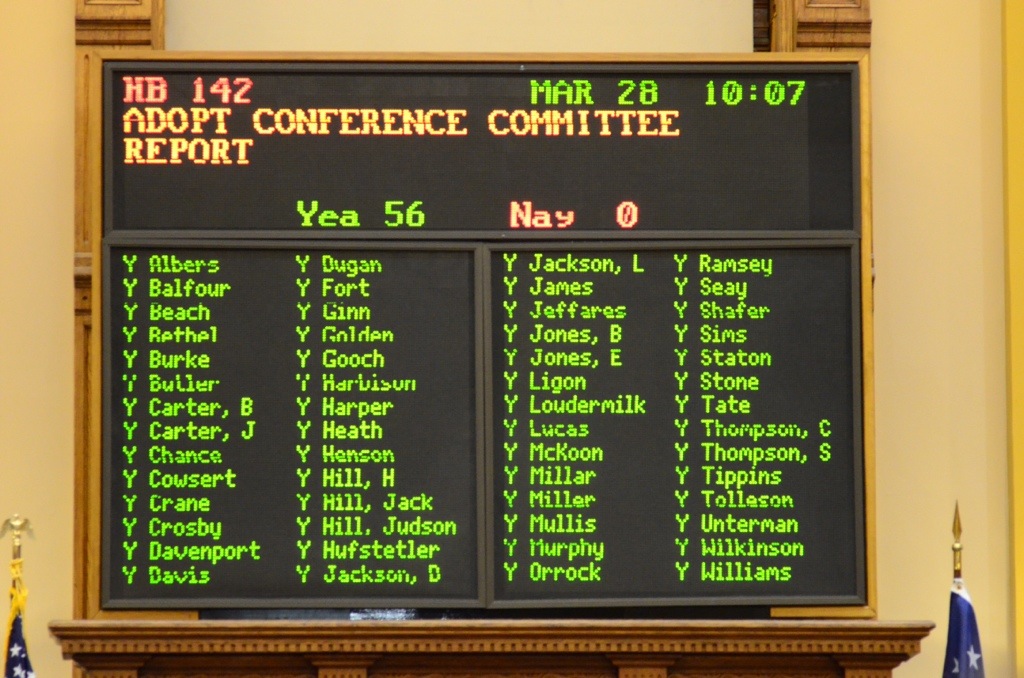
Ethics HB 142 was passed unanimously in both houses with an historic 56-0 vote in the Senate, and 169-0 in the House. Included in the bill:
- $75 cap on gifts by lobbyists to legislators
- Payment for travel by staff and spouse within the US to meetings that directly relate to official duties
- Limited group events such as caucus dinners
The other sticking point was the definition of lobbyists. Some conservative organizations said the House definition was too broad and would discourage citizen participation. The final definition includes anyone who:
- Makes lobbying expenditures of $1000 or more in a calendar year; or
- Is paid more than $250 in a calendar year, whether salary or reimbursements.
A second ethics bill by the speaker, HB 143 passed after surgeons on the Conference Committee excised a Senate addition to prevent legislative challengers from fundraising during the session when incumbent lawmakers are prohibited from accepting checks. The bill as passed primarily exempts some candidates and ballot issue campaigns spending small amounts of money from the electronic filing provision of campaign finance laws, allowing them to file their disclosures with local officials who will transmit the documents to the state.
Guns – The bills to expand concealed carry rights failed because of differences between the chambers on campus carry. Rep. Alan Powell blamed the Board of Regents, saying:
“The Board of Regents has been opposed to this since day one and, yes, they are the fourth branch of government,” he said. “We were fighting an uphill battle.”
Senate Bill 101 would have expanded where guns are allowed in Georgia, including much of college campuses. It passed the House by a vote of 116-55 but stalled in the Senate over the issue of guns on campuses.
Rep. Powell is partly correct when he states that the Board of Regents is the fourth branch — they’re actually number five after the Transportation-Industrial Complex.

Senate Rules Committee Chairman Jeff Mullis (R-Extreme Northwest Georgia and the Occupied Territory claimed by Tennessee) told me,
The House wants something strong; the Senate, some of the members want something strong some of them don’t want anything strong. That’s the place we’re trying to find some medium ground.
Time ran short in negotiations between the chambers before the bill was publicly declared to be dead for the Session. While some advocates for expanded carry will be disappointed, this is the way the legislative process is supposed to work. Structurally, the reason we have two houses in the legislature is to prevent legislation from being passed, not to make it easier. Where, as in this case, there are strong misgivings, or intractable differences, it’s okay to not pass anything.
Look back over the past few years, and you’ll realize that most Sessions it is necessary to “fix” something that was overlooked or mis-written the previous year. This year it was the accidental double-taxation of automotive leases in the car tag tax bill from last year. It is a good thing that there are structural roadblocks to a more “efficient” legislature.
Abortion – Senate amendments to HB 246 that would have prevented the state employees health benefits plan from funding abortions were not voted on by the House, so the measure did not pass. Governor Deal has said that he will explore options within the administration to achieve the same result.
Related Posts
 Legal Scholar: Fulton County May Not Be Able to Beat HB 604 | WABE 90.1 FM
 Georgia Politics, Campaigns, and Elections for April 26, 2019
 Georgia Politics, Campaigns & Elections for Jan. 24, 2013
 Georgia Politics, Campaigns, and Elections for April 19, 2016
 Augusta Commission approves sheriff’s downtown safety plan | The Augusta Chronicle


Comments ( 1 )