
James Oglethorpe was named Commissioner of Indian Affairs and Charles Wesley was named Secretary of Indian Affairs by the Georgia Trustees in London on September 24, 1735.
The Judiciary Act of 1789, which established the first federal judicial system, was adopted on September 24, 1789 with the signature of President George Washington. Under the Act, the original size of the Supreme Court was five Associate Justices and a Chief Justice. Washington nominated John Jay as Chief Justice, and John Rutledge, William Cushing, John Blair, Robert Harrison, and James Wilson as Associates.
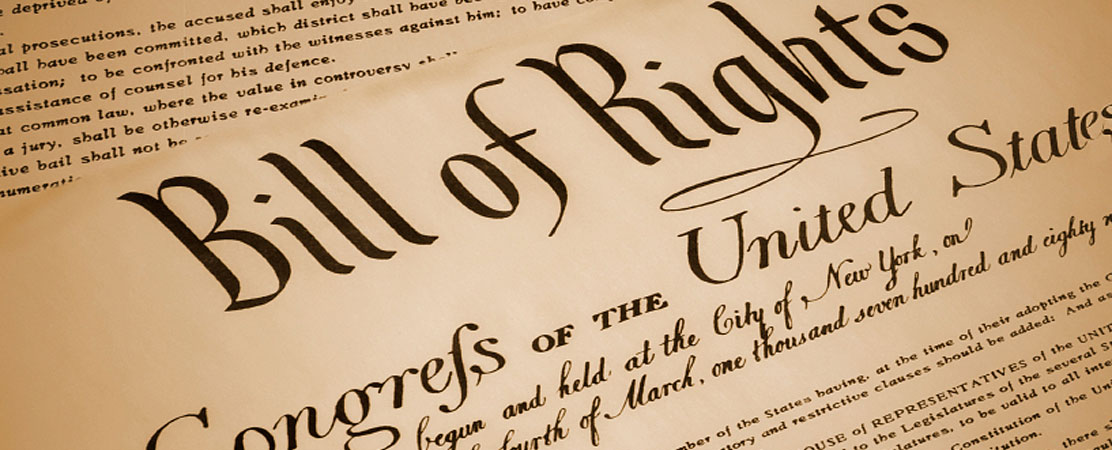
On September 25, 1789, Congress adopted the first twelve amendments, called the Bill of Rights, to the United States Constitution. A little more than two years later, in 1791, enough states had ratified ten of the Amendments, with two not receiving sufficient support.
Also established on September 24, 1789 were the office of Attorney General of the United States and the United States Post Office Department.
On September 24, 1862, the Confederate Congress adopted the Seal of the Confederate States of America.
The Decatur Female Seminary opened with 60 students on September 24, 1889 and would later be chartered as Agnes Scott College.
White vigilantes seeking to assault African-Americans after reports of four white women being assaulted led to the Atlanta Race Riots on September 22-24, 1906, which would claim the lives of at least 25 African-Americans and one white person.
On September 24, 1960, USS Enterprise CVN-65, was launched from Newport News Shipbuilding in Norfolk, Virginia, the first Galaxy-class starship nuclear-powered aircraft carrier. Enterprise was inactivated on December 1, 2012 and decommissioned on February 3, 2017.
On September 24, 1976, former Georgia Governor Jimmy Carter resumed campaigning after the first debate against President Gerald Ford.
On September 24, 1979, CompuServe offered the first dial-up computer information service to consumers.
Launched as MicroNET in 1979 and sold through Radio Shack stores, the service turned out to be surprisingly popular, thanks perhaps to Radio Shack’s Tandy Model 100 computers, which were portable, rugged writing machines that dovetailed very nicely with the fledgling, 300-baud information service.
MicroNET was renamed the CompuServe Information Service in 1980. Around the same time, CompuServe began working with newspapers to offer online versions of their news stories, starting with the Columbus (Ohio) Dispatch in 1980. At least 10 major newspapers were offering online editions through CompuServe by 1982, including The Washington Post, the Los Angeles Times, and the San Francisco Examiner.
Nirvana’s Nevermind was released on September 24, 1991.
Georgia Politics, Campaigns, and Elections
The Democratic National Committee is welcoming trashing former President Donald Trump, who will speak in Savannah today, according to the Savannah Morning News.
The Democratic National Committee launched four new billboards in the Savannah metro Tuesday, attacking former President Donald Trump for the overturn of Roe v. Wade.
According to a DNC press release, the billboard launch comes as Trump is slated for a policy speech in Savannah Tuesday covering the U.S. tax code and manufacturing. The event is at 1 p.m. at the Johnny Mercer Theatre.
The billboards read: “Trump Overturned Roe and now: abortion is banned in GA. Women are suffering. IVF is under threat.”
Trump appointed three of the justices who voted to overturn Roe v. Wade in the Dobbs v. Jackson Women’s Health Organization ruling in 2022. Trump said in a video posted to Truth Social in April he was “proudly” the person responsible for Roe v. Wade’s overturning.
Trump has defended the decision by saying it made abortion a states’ rights issue, according to reporting in the New York Times.
Trump’s visit comes amid new efforts to unify Republicans and energize middle-of-the-road voters behind his bid to recapture Georgia four years after Joe Biden flipped the state by fewer than 12,000 votes.
An Atlanta Journal-Constitution poll released last week shows Trump with overwhelming support among Republican voters but deeper struggles among independents crucial to his campaign. About one-third back his bid, compared with roughly half who support Harris.
The race is increasingly narrowing to Georgia, North Carolina, Pennsylvania and a few other political battlegrounds.
Harris, who delivered an impassioned speech about abortion rights Friday in Cobb County, challenged Trump to return to Atlanta on Oct. 23 for a second showdown following their September debate in Philadelphia. He has so far declined.
Trump’s visit comes amid new efforts to unify Republicans and energize middle-of-the-road voters behind his bid to recapture Georgia four years after Joe Biden flipped the state by fewer than 12,000 votes.
An Atlanta Journal-Constitution poll released last week shows Trump with overwhelming support among Republican voters but deeper struggles among independents crucial to his campaign. About one-third back his bid, compared with roughly half who support Harris.
The race is increasingly narrowing to Georgia, North Carolina, Pennsylvania and a few other political battlegrounds.
Harris, who delivered an impassioned speech about abortion rights Friday in Cobb County, challenged Trump to return to Atlanta on Oct. 23 for a second showdown following their September debate in Philadelphia. He has so far declined.
Governor Brian Kemp is no longer supporting GOP candidate for North Carolina Governor Mark Robinson, currently serving as LG, according to the AJC.
Georgia Gov. Brian Kemp withdrew his support on Monday from beleaguered North Carolina Lt. Gov. Mark Robinson, who was linked in a CNN report to a series of inflammatory comments on a pornographic website.
The Georgia governor’s statement came after The Atlanta Journal-Constitution obtained photographs of Kemp speaking at an August fundraiser in North Carolina for Robinson, the Republican nominee for governor in that state.
“The governor attended the fundraiser as vice chair of the Republican Governors Association and will not be offering further support to the Robinson campaign,” said Cody Hall, a senior Kemp deputy.
Kemp’s statement came on the same day the RGA announced it would no longer fund efforts to elect Robinson in the Tar Heel State. Tennessee Gov. Bill Lee, the chairman of the RGA, also pulled his endorsement from Robinson on Monday.
Democrats are growing more optimistic about their party’s chances in North Carolina beyond the race for governor. Polls show a tight contest between former President Donald Trump and Vice President Kamala Harris in the state’s presidential race.
Houston County Board of Elections Election Assistant Andy Holland discussed new rules by the State Elections Board to require hand-counts of ballots and how it will affect their operations, according to 13WMAZ.
“We’ve already done half of our poll worker training last week, before the rule change on Friday. We’ll have to go back and go over those procedures with the poll workers,” Holland said.
The new rule would require a poll manager and two poll officers to unseal ballot boxes, remove and record the ballots, and have them counted by three people to make sure their ballot totals match the ballot total numbers from the scanner.
According to the Secretary of State’s Office:
“Once all three counts match, they sign a control document. If discrepancies arise between the hand count and recorded totals, the poll manager must resolve and document the inconsistency. The counted ballots are sealed in labeled containers, signed to ensure integrity.”
Holland said it could affect their timeline on election night.
“If anything, it could slow down a little bit getting the results you know, out. But I don’t see it being a huge delay,” Holland said.
He said he thinks it’s an unnecessary step, because they haven’t had problems with the scanners before.
“With it being three people, all coming up with the same total – some concerns being they’ve just worked a 12-plus hour day,” Holland said.
Over at the Macon-Bibb County Board of Elections, Election Supervisor Thomas Gillon said he also thinks the hand-counts are unnecessary.
“We make sure that they’re properly stored and secured once they do come back in. So security and accuracy is how we do things,” Gillon said.
He wants folks to rest assured that poll workers aren’t tallying the votes, but just counting the number of ballots cast.
“There are so many checks and balances to make sure we know who has been sent absentee ballots. And so those are the only people we expect absentee ballots back from,” Gillon said.
Nearly 71,000 people voted in Macon-Bibb in 2020, but Gillon said he couldn’t say how many people voted in person.
Holland said they expect about 30,000 to 35,000 people to vote in person this year.
The last day to register to vote is Oct. 7, early in-person voting begins Oct. 15, and the general election is Nov. 5.
Bulloch county’s elections supervisor tells us if the hand count proposal goes through, it will be a long night for all of her workers.
With the presidential election on the ballot, she’s also expecting a higher volume of turnout, pointing out that delays could happen even before this proposed hand count would begin.
“If poll workers at the end of the night are going to be required to hand count every piece of paper that went into their scanner that’s definitely going to delay voting results and then that’s going to be a county wide thing,” said Bulloch County Elections Supervisor, Shontay Jones.
[Colquitt County] Probate Judge Wes Lewis said, “This is certainly something to digest. Our office will be getting some guidance and direction from the Secretary of State on how to handle this.”
The rule requires the poll manager and two sworn poll officers to unseal ballot boxes, remove and record the ballots and then have three poll officers independently count them. If all three counts match, the poll officers sign a control document.
Friday’s 3-2 vote came against the advice of the state attorney general, the secretary of state’s office and an association of county election officials that’s led by Richmond County Board of Elections Executive Director Travis Doss.
“It was very frustrating because you had election directors there telling the state elections board that this was not a good idea, that there are other ways of doing it. There was the attorney general telling the state elections board that this is borderline illegal, and they still pass the rule anyway,” said Doss.
Doss says this is what the election will look like behind the counter on Nov. 5.
“They’re just sitting there going, 1-2-3-4-5-6–8 ugh. 1-2-3, that’s what we’re concerned about,” said Doss.
Doss had asked the board to delay any new rules until after the November election, saying the group was “gravely concerned that dramatic changes at this stage will disrupt the preparation and training processes already in motion for poll workers, absentee voting, advance voting and Election Day preparation.”
“We are already in the midst of extensive training preparation for our poll workers and preparing for one of the biggest and most scrutinized elections in years,” Doss said in a statement ahead of the vote. “Any last-minute changes to the rules risk undermining the public’s trust in the electoral process and place undue pressure on the individuals responsible for managing the polls and administering the election. This could ultimately lead to errors or delays in voting, which is the last thing anyone wants.”
“When you think about having to count thousands of pieces of paper, how many human error mistakes there can be,” said Doss.
“We tried this back in 2019 when we first started this voting system, and sad to say, but humans can’t count,” he said.
When you’ve been clocked in since 5:30 a.m., this can be even more challenging according to Doss.
“People have difficulty doing a repetitive task over a long period of time, and so you’re talking about poll workers who have been working since 5:30 a.m. The polls close at 7 p.m., they probably won’t even start counting until about 8 p.m. and they’re expecting them to actually get an accurate number after working an entire day of work when there are so many other ways we could do this, more secure ways we could do this,” said Doss.
“We are so under the microscope right now, we are in the spotlight as a battleground state, and the last thing we need is this type of confusion, this type of unrest, where people are, you know, would call into question the election results,” he said.
“I call it the ‘poll workers cruelty rule.’ It’s just going to make a bunch of longer nights for our poll officials to have to stay there,” said Zack Manifold, Gwinnett County’s elections director.
“They’re not counting the actual races. They’re just hand counting sheets of paper and I just don’t see a lot of value there,” Manifold said.
Unless a court intervenes, Gwinnett County poll manager Francine Gadson said she’ll make the new rule work.
“I think the numbers will match. I think the issue will be the length of time it takes to actually count those ballots,” she said.
And that, she said, will add at least a couple of hours to election night for her poll workers.
The Athens-Clarke County Board of Elections began mandatory testing of voting equipment ahead of the November 5, 2024 General Election, according to the Athens Banner Herald.
“Every single piece of equipment that is going out will be tested,” said elections assistant Lisa McGlaum of the Athens-Clarke County Elections Office.
She said the testing could take anywhere from two to five days.
The state requires each county to conduct what it terms the “Logic and Accuracy Testing” of the voting equipment and ballots before an election.
The testing in Athens takes place at the election office warehouse, where the equipment is stored.
The Georgia State Elections Board ordered investigations into how eight elections boards handled voter eligibility challenges, according to the Georgia Recorder.
Three State Election Board members loyal to former President Donald Trump agreed to request that the board’s executive director look into whether eight election boards in counties led by Democrats are improperly dismissing complaints questioning if tens of thousands of voters are eligible to vote.
The Georgia board requested Executive Director Mike Coan report findings by the time the election board plans to hold its next meeting Oct. 8.
DeKalb County Republican Party Chairwoman Marci McCarthy requested that the board carefully examine how several counties handle voter eligibility cases. A lawsuit filed by the DeKalb County Republican Party and a DeKalb resident argues that the county election board has failed to address complaints challenging the status of over several thousand registered voters regarding issues such as whether residential addresses are correct and potential double registrations.
McCarthy said the DeKalb board did not follow its duties to investigate challenges of voters registered at non-residential addresses, voters who may have moved out of the county and others who have not been in touch with election officials for over a decade.
“There’s a 90-day period before an election that certain voters should not be removed from the voter list,” McCarthy said. “In particular are voters that just haven’t recently voted. However, as you might guess, voters who have died, been convicted of a felony or moved away more than 30 days ago to another county or state, do not belong in the voter rolls for that county, they are ineligible to vote.”
Federal law mandates a 90-day hiatus prior to an election that prevents certain voter list purges. However, Georgia law prohibits voter removal within 45 days of the upcoming election. Georgia’s Election Day is Nov. 5.
Earlier this month, DeKalb election officials passed a measure declaring it would follow the 90-day moratorium on voter list maintenance as prescribed under federal law.
In a 3-0 vote, the State Election Board approved an investigation by Executive Director Mike Coan into Athens-Clarke, Bibb, Cobb, DeKalb, Forsyth, Fulton, Gwinnett and Jackson counties’ elections management of voter challenges.
Marci McCarthy, chair of the DeKalb County Republican Party, said a lawsuit that conservative activist William Henderson and the DeKalb County Republican Party filed last week seeks to force the county election board to consider three batches of challenges submitted by Henderson.
The lawsuit, filed in the DeKalb County Superior Court, says the election board is legally obligated to consider the challenges Henderson submitted last month.
“We cannot have voters disenfranchised due to this negligence and the unlawful actions of DeKalb County,” McCarthy told the State Election Board. “Election laws are in place for a reason, and they must be enforced consistently to maintain our public confidence in our elections.”
State laws passed in the wake of the 2020 presidential election allow any registered voter to challenge an unlimited number of voters in the same county. Conservative activists have used these laws to lodge over 350,000 voter challenges since 2020 and an additional 45,000 across four metro Atlanta counties since July. County election boards dismiss a majority of challenges.
Two Tift County students were taken into custody for alleged threats against schools, according to the Tifton Gazette.
The threats were made against Eighth Street Middle School, located at 700 W. 8th Street, a statement from Tift County Schools said.
The FBI had monitored a threat against the school via Snapchat, the Tifton Police Department said in a statement.
The threat stated, “Im shooting up 8th St middle school,” the FBI said.
Dana Spurlin, chief of communications for the school system, said law came out to the school to deal with it.
“There was no lockdown, no evacuation,” she said. “(Law enforcement) took two students into custody.”
A 14-year-old student and a 15-year-old student were arrested and charged with disrupting a public school and terroristic acts and threats; the pair were taken to a youth detention center, police said.
“As is the case for systems across the state and country, Tift County Schools continues to receive an increase in social media driven threats of violence,” the statement said.
A threat against a Towns County school resulted in a minor being arrested for allegations of the threat as well as statutory rape and child molestation, according to AccessWDUN.
The Towns County Sheriff’s Office began an investigation into a rumor of a threat against their school system.
Officials suspected 17-year-old Jeremiah Andrew Franklin Lloyd of Murphy, North Carolina and began monitoring his social media accounts.
On Friday, a threat against Towns County Schools was detected and arrests and search warrants were executed.
The investigation led to multiple other alleged crimes involving a 14-year-old teenage girl.
Lloyd was arrested at a residence on Konahetah Road and charged with:
• Felony Terroristic Threats
• Disrupting Public School
• Felony Sexual Exploitation of Children
• Felony Enticing a Child for Indecent Purposes
• Child Molestation
• Statutory RapeAccording to officials, Lloyd reportedly confessed to all charges during an interview and is being held without bond at the Towns County Detention Center.
The State House Study Committee on Navigable Streams and Other Matters heard public comments on proposals to change the laws on public river access, according to the Capitol Beat News Service.
Allowing canoes and kayaks only on Georgia rivers and streams deemed navigable would ruin an outdoor recreation industry that brings in billions of dollars, outfitters and paddling enthusiasts told a legislative study committee Friday.
“Tourism is a significant economic driver in Georgia,” Amanda Dyson-Thornton, executive director of the Georgia Association of Convention and Visitors Bureaus, told members of the House Study Committee on Navigable Streams and Related Matters during a hearing at the Unicoi State Park & Lodge near Helen. “Public access to Georgia’s rivers and streams is crucial to sustaining Georgia’s outdoor recreation economy.”
The study committee was formed this year as the next step in a process aimed at guaranteeing Georgians the right to hunt and fish in the state’s navigable rivers and streams without violating private property rights.
Fishing rights Georgians have enjoyed for generations came into question last year when a property owner on the Yellow Jacket Shoals portion of the Flint River banned fishing there and sued the state to enforce it. When the Georgia Department of Natural Resources entered into a consent decree promising to enforce the ban, Gov. Brian Kemp and lawmakers moved quickly to pass a bill codifying public fishing rights into state law.
After some waterfront property owners complained that a provision in the 2023 bill containing a legal concept known as the “public trust doctrine” could take away their private property rights, the General Assembly revisited the issue this year by passing a second bill removing the public trust doctrine from the law.
The study committee’s task is defining which rivers and streams in Georgia are navigable and, thus, open to fishing and paddling, and which are off limits.
Several North Georgia outfitters who testified Friday said they operate their businesses on streams with far less flow than the 400-cubic-feet-per-second standard the state Department of Natural Resources has suggested to define a stream as navigable.
“A kayak can float in two to three inches of water,” said Andrew Bruce, owner of Toccoa River Outfitters. “If we start restricting what we’ve had before, we’re doing an injustice.”
Both outfitters and riverfront property owners urged the committee to maintain the current status quo rather than impose new restrictions that could put outfitting companies out of business.
“We’re just asking to float through,” said Tim Brenner, owner of Wildwood Outfitters in Cleveland. “We don’t want to trash anyone’s property.”
“Ninety percent of the paddlers we have no issue with,” added Joe Rose, who owns property along the Toccoa River in Fannin County.
But Brad Coppedge, board president of the Soque River Watershed Association, warned that any rush to reclassify non-navigable streams as navigable would damage efforts to protect and restore the Soque, a tributary of the Chattahoochee River.
“If it is reclassified as a navigable waterway … overnight, the Soque becomes the Chattahoochee River running through Helen, Georgia … a recreational playground of tubing, boating, and open fishing, a new deposit area for trash and debris,” Coppedge said.
The resolution that created the study committee set a Dec. 1 deadline to complete its work.
State Senate Majority Leader Steve Gooch (R-Dahlonega) sat for an interview with 11Alive.
Influential Georgia Republican Senator Steve Gooch joined 11Alive’s Sunday politics show, The Georgia Vote, for a wide-ranging interview.
The conversation comes roughly six weeks before the presidential election and three months before the start of the next state legislative session.
The Senate Majority Leader discussed his priorities for the upcoming legislative session, his views on calls for gun control bills following the Apalachee High School shooting, and a host of other issues.
Republican Georgia House Speaker Jon Burns recently released a raft of legislative proposalsin the wake of the Apalachee High School shooting. Many focused on increasing physical security on campuses and boosting mental health resources. But he also signaled support for limited gun safety legislation.
“We will reintroduce legislation that incentivizes safe storage and encourages law-abiding citizens to properly secure their firearms and obtain gun safety training,” Burns wrote.
“Simple measures such as storing guns in lockboxes or equipping firearms with trigger locks has the ability to save lives,” he continued.
We asked Senator Gooch if he supported Burns’ proposal:
Senator Gooch: “We had a bill last year that allowed for a tax credit for people who bought the safe storage boxes and even gun safes themselves. And so I think that’s a start; it’s a good discussion to have. I don’t know if that bill will get out of the House and the Senate this year, but I think it’s worthy of discussion, but it’s really the responsibility again of the citizen, the gun owner, to make sure that their gun is put in a safe location.”
“So I think that’s a good discussion that Speaker Burns has taken on. And I think he put that letter out publicly last week. And so we will work with the House and the leadership in the Senate and the governor’s office to see where that goes.”
11Alive’s Zach Merchant: “You talk about discussion. Just to be clear, so I don’t misquote you, and we represent your views accurately, do you support that legislation?”
Senator Steve Gooch: “I think the legislation to offer an incentive can be a useful tool. I don’t support a mandate that people buy gun safes. I think that’s a decision that each citizen must make on their own.”
The State House Study Committee on Private Water Systems heard complaints from Lake Oconee homeowners about rates charged by private water systems, according to the Capitol Beat News Service via the Gwinnett Daily Post.
Lake Oconee-area property owners complaining of exorbitant water rates urged Georgia lawmakers Wednesday to bring private water systems in Georgia under the same regulations that apply to municipal systems.
Piedmont Water Co., the state’s second-largest private water system, is charging the second-highest water rates in Georgia, lower only than the private system serving the community of Big Canoe, property owner Mike Hartman told a Georgia House study committee at a hearing in Greensboro. Hartman said he was charged $19,250 to connect his new home to the Piedmont system in 2022.
“Private water systems must be regulated,” he said. “That’s the only way to fix this problem.”
State Rep. Trey Rhodes, R-Greensboro, chairman of the House Study Committee on Private Water Systems, introduced legislation this year requiring the Georgia Public Service Commission (PSC) to regulate private water systems. The bill made it through the House Energy, Utilities, and Telecommunications Committee but failed to reach the floor for a vote.
“City and county water systems have public oversight. Private water systems do not,” Rhodes said Wednesday. “We need them, but we need to see if there needs to be oversight.”
Brent Hurst, Piedmont Water’s chief operating officer, said the company has spent almost $40 million on capital projects to keep up with growing demand for water in its fast-growing service area covering Greene and Putnam counties, including $15 million for a new water treatment plant.
Hurst said much of that new investment has been driven by a huge spike in demand every summer for irrigation needs.
“You have to have the production capability to meet it,” he said. “It requires a lot of investment.”
Hurst said most of the complaints about Piedmont’s water rates have come from irrigation customers who use a disproportionately large amount of water, a remark that drew laughter from the large crowd on hand for the hearing.
“This is not about just a few people,” said Rhodes, pointing to the crowd. “All I want for my people is a fair price.”
Hurst said giving the PSC jurisdiction over private water systems would force Piedmont to spend $500,000 to $750,000 to prepare a rate case study, driving up the company’s operating costs.
Rep. Debbie Buckner, D-Junction City, a member of the study committee, said Piedmont could recover those costs from customers, just as electric and gas utilities regulated by the PSC recoup such costs from ratepayers.
Commission Chairman Jason Shaw, also a member of the committee, said adding private water systems to the PSC’s responsibilities would require increasing the agency’s budget to hire more staff. With the commission legally bound to set rates that provide regulated utilities a fair return on their investment, there would be no guarantee water rates would go down, he said.
“The regulated model is not always the cheapest solution,” Shaw said.
But Jacob Fried, who owns a car wash in Eatonton, said there are real-life consequences to allowing private water systems to set rates with no oversight. He said he was forced into bankruptcy during a legal dispute with Piedmont and had to sell his house.
Fried urged the study committee to push for legislation that would provide that oversight.
“They have no rulebook to play by,” he said. “Give them a rulebook and some guidelines.”
State Rep. Gerald Greene (R-Cuthbert) and State Rep. Mack Jackson, (D-Sandersville) chaired the second meeting of the State House Rural Development Council, according to the Albany Herald.
Both Reps. Greene and Jackson were appointed as co-chairs by House Speaker Jon Burns, R-Newington, in 2023.
The meeting’s agenda concentrated on addressing rural health care needs, including maternal and infant health, shortages of physicians and improving access to care in underserved regions.
“I want to extend my thanks to my co-chair, Rep. Mack Jackson, for graciously hosting us in his district,” Greene said. “The discussions we had on rural health care, particularly maternal and infant health, physician shortages and access to care in underserved areas, are essential for the future of Georgia’s rural communities. The council is fully committed to addressing these unique challenges, and I’m eager to keep these important conversations going as we work toward meaningful change for rural Georgia.”
The meeting gathered stakeholders from across the state to address challenges and explore potential solutions for improving health care access in rural areas. The council heard testimony that underscored the need for more health care providers and facilities in rural portions of the state, especially in maternity services and specialties like OB/GYN and family medicine. The Georgia Board of Healthcare Workforce outlined strategies for attracting and retaining physicians in rural areas, stressing the importance of long-term funding for Graduate Medical Education programs and enhancements to the state’s credentialing and liability processes.
The council also received presentations on school-based health centers and the increasing demand for behavioral and mental health services in schools. The need for mental health support was highlighted as a growing concern, particularly following the passage of the Mental Health Parity Act, championed by the late House Speaker David Ralston. Georgia Department of Behavioral Health & Developmental Disabilities Commissioner Kevin Tanner provided updates on initiatives to address mental health crises, homelessness and developmental disabilities in rural areas. DBHDD also reported on the success of the 988 suicide and crisis lifeline, noting that rural Georgians are utilizing this service at higher rates than their urban counterparts.
The House Rural Development Council was established in 2017 to collaborate with rural communities on strategies for promoting economic growth and job creation. During the 2023 legislative session, the council was renewed for the current term through the unanimous adoption of House Resolution 488.
State legislation passed earlier this year will affect sellers of hemp-related products, according to the Capitol Beat News Service via the Albany Herald.
A Georgia hemp industry that has been manufacturing and selling hemp products virtually unfettered since Congress legalized it six years ago is about to get some significant regulation.
Legislation the General Assembly passed this year that takes effect Oct. 1 will prohibit retailers from selling hemp products to anyone under the age of 21 and impose labeling, packaging, and testing requirements on manufacturers.
“[Congress] left it pretty open-ended,” state Sen. Sam Watson, R-Moultrie, who introduced Senate Bill 494, said. “There’s no regulatory environment around it. … It’s a consumer-protection bill.”
The bill, which the legislature passed overwhelmingly in March, requires hemp growers, manufacturers, and retailers to obtain licenses and pay a licensing fee. Violators will be subject to criminal misdemeanor charges and civil penalties.
The new law prohibits the sale of any hemp products containing more than the legal limit of 0.3% of THC, the psychoactive drug that gets users high.
That means retail stores may continue to sell gummies, tinctures — generally cannabis-infused alcohol or oils administered orally — and non-alcoholic CBD beverages. But anything smokable and food products will no longer be permitted.
“A lot of these facilities are scrambling to get rid of inventory and replace it with compliant products,” said Gary Long, CEO of ONE59, which sells a line of hemp-derived, over-the-counter products from Botanical Sciences LLC, one of two companies awarded a Class One license to grow, manufacture, and sell low-THC cannabis oil to eligible patients under Georgia’s medical cannabis program. “We saw this as an opportunity, with our expertise, and know-how, to create a separate line of products that could be sold over the counter.”
Tom Church, an Atlanta lawyer who represents hemp retailers, said having to get rid of smokable hemp and food products poses a serious threat to some of the businesses.
“Legislators were uncomfortable legalizing something that looks like cannabis and smells like cannabis,” he said. “[But] for some stores, that’s their bread and butter. It’s not infeasible that some businesses may have to shut down because of this bill.”
But Watson said hemp products like peanut butter cups that are attractive to children shouldn’t be legal.
“It scares me as a parent,” he said. “If you’re using this stuff for medical purposes or a sleep issue, why do you need a candy bar for that?”
Church said some parties may file lawsuits challenging the restrictions on which hemp products can be sold, but he hasn’t heard of any as yet.
Glynn County will host two public meetings to discus the Special Purpose Local Option Sales Tax (SPLOST), according to The Brunswick News.
People with general or specific questions about the status of planned or ongoing Special Purpose Local Option Sales Tax projects in the Golden Isles will have two opportunities to meet with county officials this week.
“Hosting a SPLOST open house keeps the community engaged and provides an opportunity for one-on-one interactions with commissioners, department heads, staff members and SPLOST project managers to address any questions or concerns about ongoing projects,” said Katie Baasen, the county’s communications director.
The meetings are in addition to the quarterly review meetings held every three months, alternating between comprehensive plan and SPLOST project updates.
“We want to ensure that SPLOST remains a key part of the conversation,” Baasen said. “We are committed to maintaining transparency and keeping our reporting up-to-date for the public, as this was a concern raised by many, particularly in past SPLOST referendums.”
Newton County Commissioners voted to increase impact fees, according to The Covington News.
The Newton County Board of Commissioners (BOC) voted 4-1 to increase impact fees to 40 percent of the maximum allowed by the state of Georgia. This marks the first time that the impact fee schedule has been changed in Newton County since 2018.
Three figures were mainly under consideration for the board to adopt. The board saw figures at 51.07 percent – which represents 1 percent of the average cost of new single-family homes in the county – 40 percent and 20 percent.
Comparatively speaking, the city of Covington’s impact fees currently sit at 50 percent of the state’s maximum, though this impact fee update will only affect developments in the county and not those in the city limits.
Rincon City Council voted to hire Robert Byrd as their new City Manager, according to WTOC.
“He has seen the annexation and growth that the city of Pooler had, from 6,500 residents to current size, so we feel like the city of Rincon is heading in that direction and it would be nice to have someone lead us into the future that has that knowledge,” said Kevin Exley, Mayor of Rincon.





Comments ( 0 )