

President Abraham Lincoln delivered an 87-word speech at the dedication of the Soldiers’ National Cemetery at Gettysburg, Pennsylvania on November 19, 1863.
Four score and seven years ago our fathers brought forth on this continent a new nation, conceived in liberty, and dedicated to the proposition that all men are created equal.
Now we are engaged in a great civil war, testing whether that nation, or any nation so conceived and so dedicated, can long endure. We are met on a great battlefield of that war. We have come to dedicate a portion of that field, as a final resting place for those who here gave their lives that that nation might live. It is altogether fitting and proper that we should do this.
But, in a larger sense, we can not dedicate, we can not consecrate, we can not hallow this ground. The brave men, living and dead, who struggled here, have consecrated it, far above our poor power to add or detract. The world will little note, nor long remember what we say here, but it can never forget what they did here. It is for us the living, rather, to be dedicated here to the unfinished work which they who fought here have thus far so nobly advanced. It is rather for us to be here dedicated to the great task remaining before us—that from these honored dead we take increased devotion to that cause for which they gave the last full measure of devotion—that we here highly resolve that these dead shall not have died in vain—that this nation, under God, shall have a new birth of freedom—and that government of the people, by the people, for the people, shall not perish from the earth.
On November 19, 1864, as Sherman marched toward Savannah, the Georgia delegation to the Confederate Congress in Richmond, Virginia, sent a message to the state,
“Let every man fly to arms! Remove your negroes, horses, cattle, and provisions from Sherman’s army, and burn what you cannot carry. Burn all bridges and block up the roads in his route. Assail the invader in front, flank, and rear, by night and by day. Let him have no rest.”
The first issue of National Review magazine was published on November 19, 1955.
Apollo 12 landed on the moon on November 19, 1969.
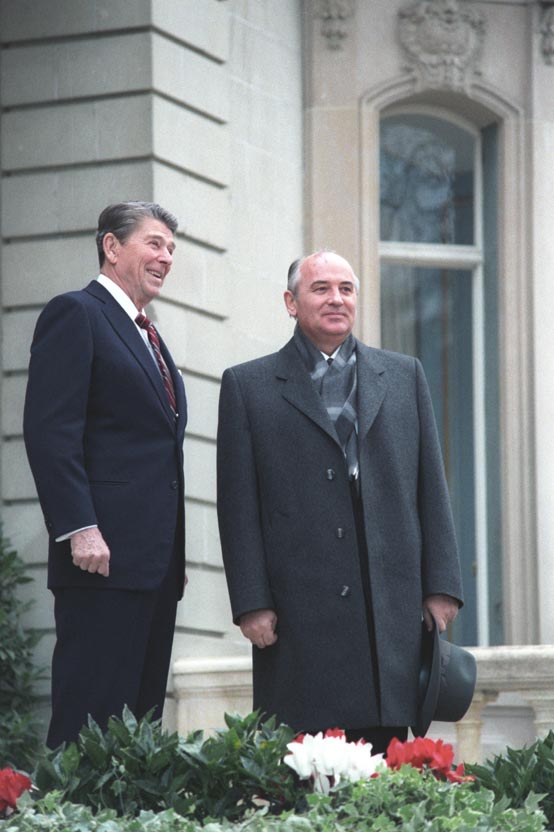
President Ronald Reagan met for the first time with Soviet General Secretary Mikhail Gorbachev on November 19, 1985.
Georgia Politics, Campaigns, and Elections
Georgia State Election Board member Janelle King proposed giving a private company the driver’s license numbers and social security numbers of all Georgia registered voters, according to the Savannah Morning News.
At a Georgia State Election Board meeting Monday, Board Member Janelle King floated the idea of divulging voters’ private information to the founder of software program EagleAI as a way of boosting voter confidence in the state’s election integrity. The third-party program was presented to the board as an alternative to Georgia’s current program for maintaining its voter rolls, a multi-state partnership known as the Electronic Registration Information Center (ERIC).
EagleAI (pronounced Eagle Eye by its founder, Georgia resident Dr. John W. “Rick” Richards), was founded in the wake of the 2020 election in response to what election integrity activists saw as rampant voter fraud in key swing states like Georgia, despite the fact that officials found no evidence of systemic errors or mass voter fraud. The software allows activists to comb through massive datasets like the National Change of Address Database, identifying people whose registration may contain errors and submitting those discrepancies to local election officials as evidence of malfeasance.
EagleAI has been used to file hundreds of thousands of voter challenges in Georgia over the past four years in counties like Fulton, Gwinnett, Chatham and Forsyth, but the majority have been thrown out by local election officials who say the challenges lack sufficient evidence.
During his Monday presentation to the board, Richards promoted EagleAI as a way for individuals to identify those who may be improperly registered to vote and report them to county officials, explaining that his software scrapes and compares data from a variety of public sources, including the Secretary of State’s voter rolls, records from the Department of Corrections, county zoning codes and Google Maps. Throughout the presentation, he spoke of how his software allowed him to examine voter registration records without allowing bias or partisanship to cloud his judgement.
“I have no secrets, it’s just data,” he told the board during his presentation. “It’s publicly available data.”
Yet, at the same time he endorsed harsh interpretations of the state’s election statutes that attorneys who were present said did not correctly align with Georgia law, claiming it is illegal for students to register to vote at their college dorms and suggesting that Georgia residents with errors in their voter registrations had committed felonies.
Richards also pushed back against voter rights organizations, including the ACLU of Georgia, Campaign Legal Center, All Voting is Local and the Brennan Center of Justice, who have questioned EagleAI’s accuracy in flagging voter registrations for challenge.
However, critics of the software say that EagleAI often turns up false positives, as it lacks sensitive personal information like driver’s license numbers and Social Security numbers that members of ERIC use to compare voter registrations across states. Board Member Sara Tindall Ghazal also argued that canceling voter registrations for those suspected of moving out of state could violate the National Voter Registration Act of 1993, a federal law that among other things, limits how quickly states can remove registered voters from their rolls.
“I am not making a policy view on this, I am telling you what the law says,” Ghazal told Richards during his presentation.
“I would disagree,” Richards replied.
She also proposed divulging Georgia residents’ driver’s license and social security numbers — the confidential information that state governments use to verify voter roll accuracy — to EagleAI to test its effectiveness compared to ERIC.
“If the only argument is that [Richards] doesn’t have all the information, then let’s give him the information so that we can see if there is a real issue with ERIC, let’s at least find out,” King said during the meeting Monday.
Ghazal pushed back on King’s suggestion, arguing that as an unelected body, the state election board does not have the authority to implement those changes without the state legislature changing the laws around who is allowed to access sensitive personal information.
“As a board, you’re right, we cannot tell the state to utilize [EagleAI] over ERIC,” King replied. “That’s not what I’m saying by any means. What I’m saying is I need all of us to put our thinking caps on and to really look at this with common sense.”
Court orders prevented several rules from being enforced in this year’s election, a victory for critics who argued changes to certifying results and hand counting ballots could disrupt elections administration.
The Georgia Supreme Court has agreed to review the legality of the contested rules, including whether the State Election Board exceeded its authority by passing election law that should instead be passed by the state Legislature.
On Monday, Georgia election board members Janelle King, Janice Johnston and Rick Jeffares, who were praised at an Atlanta rally by Trump as “pit bulls” for victory, asked state lawmakers to pass legislation which would require each county to make publicly available a list of all eligible voters during and after every election.
The Georgia Court of Appeals canceled a hearing on whether Fulton County District Attorney Fani Willis must be removed from the Trump prosecution, according to Atlanta News First via WTOC.
The hearing, which was to be an oral argument, was set for Dec. 5. The Georgia Court of Appeals was set to hear arguments on whether Willis should be dismissed from the case.
On the heels of her own reelection, Willis told Atlanta News First she planned to push ahead on the charges against Trump and his co-defendants.
The Georgia Constitution requires the appeals court to render a decision by the end of the following term that a case is docketed.
The election interference case is docketed for the August term, which would require the court to make a decision on removing Willis by March 31, 2025.
The Georgia Court of Appeals put a stay on all proceedings in the election interference case in June — meaning all matters in the case were put on hold until the court ruled on matters it was currently hearing, which is Willis’ potential removal.
“They could reschedule it,” [moving attorney Ashleigh Merchant] said. “It could mean they don’t need to hear oral arguments and can decide it on the merits.”
The court also could have made its decision because Trump was recently elected to be the 47th president of the U.S. and is to take the oath of office on Jan. 20. It was recently disclosed that Trump’s lead Atlanta attorney, Steve Sadow, was preparing to ask the appeals court to dismiss the case outright because Trump is about to return to the White House.
The appeal is being overseen by a three-judge panel consisting of Trent Brown, Benjamin Land and Todd Markle. As recently as Oct. 23, the panel agreed to requests to extend the length of oral arguments to one hour a side. But whether they occur now remains to be seen.
Merchant, who represents former Trump campaign aide Michael Roman, said the appeals court scheduled oral arguments in the contempt of court case involving lawyer Brian Steel, who represented Young Thug, whose real name is Jeffery Williams, but then abruptly canceled the arguments. The court then issued a ruling finding that the judge who had been overseeing the Young Slime Life trial had erred in holding Steel in contempt.
“This sure is similar,” said Merchant, who represented Steel. “Maybe they will decide the case without arguments, but I don’t know.”
Former Georgia Court of Appeals Judge (and State House member) Christian Coomer will lose his license to practice law for two years, according to the Capitol Beat News Service via the Macon Telegraph.
The Georgia Supreme Court Tuesday suspended former state Court of Appeals Judge Christian Coomer’s law license for two years.
The suspension will expire in August of next year, two years after the state Supreme Court removed Coomer from the Court of Appeals based on the recommendation of the state Judicial Qualifications Commission (JQC). A commission hearing panel had found Coomer’s misuse of campaign funds and dealings with a client before he became a judge undermined public confidence.
Coomer, a Republican and former state legislator, was appointed to the Court of Appeals in 2018 and elected to a full six-year term in 2020. Later that year, the JQC charged him with violating the Georgia Code of Judicial Conduct, and he was suspended from the bench with pay in January 2021 pending the outcome of the case.
The JQC recommended removing Coomer from the bench following a three-month hearing.
The charges against Coomer stemmed from his relationship with James Filhart, an elderly client he began representing in 2015. Filhart hired Coomer to pursue an action for guardianship of Filhart’s girlfriend, according to the court ruling.
After the matter was resolved successfully, Coomer continued to represent Filhart in other legal matters, including drafting a will that named Coomer and his heirs among the beneficiaries and Coomer as executor and trustee.
Coomer also accepted several loans from Filhart, including a loan of $130,000 in 2018 to a business Coomer controlled that lacked assets, the ruling stated. The loan was not secured, and Coomer provided no personal guarantee.
By 2019, the relationship between the two men had soured, and Filhart e-mailed Coomer demanding that the judge return the money he had borrowed. Coomer repaid the loan in 2020 after Filhart filed a lawsuit against him.
Coomer also was accused of transferring campaign funds to his law firm’s operating account and, in two instances, failing to report the transfers on his campaign contributions disclosure report. A third instance involved a trip to Hawaii before Coomer left the General Assembly that he said was for legislative business but ultimately was found to have been for leisure, according to the ruling.
Coomer reimbursed his campaign account for expenses from the trip after the state Government Transparency and Campaign Finance Commission began investigating him.
The State Bar of Georgia agreed that the two-year suspension of Coomer’s law license was “appropriate and sufficient,” according to the 24-page ruling the state Supreme Court handed down Tuesday. Coomer had agreed to the suspension by entering a petition for voluntary discipline.
The Macon District Attorney’s Office produced “not guilty” verdicts in more than 60% of murder prosecutions that went to trial this year, according to 13WMAZ.
In the 13 murder cases that went to trial in Bibb County this year, more than 60% ended in “not guilty” verdicts with eight suspects acquitted on murder charges.
Legal observers and families say that rate raises questions about District Attorney Anita Howard’s office, its staffing and practices and how well it’s working with other agencies.
According to Department of Justice data from 2009, in the nation’s 75 largest counties, the conviction rate in murder trials was 60%.
But in Macon, in the past year, that rate is 38.5%.“It’s about as normal as a 95-degree day in the middle of January in Atlanta,” former Fulton County Assistant District Attorney Darryl Cohen said. “No, normally the District Attorney’s Office will have a much higher rate of conviction.”
In 2019, the last year Howard’s predecessor David Cooke was in office, his office won 75% of their murder trials over four trials, court records show.
Howard and her assistants in the Macon District Attorney’s Office declined to be interviewed for this story.
But they released a statement saying, in part, that their job goes beyond securing convictions. When they believe they have the evidence, they say, it’s their job to present it to jurors who decide.
“Many violent crime cases present significant prosecutorial challenges due to witness and victim credibility issues,” Howard’s office said in a statement. “While these obstacles do not prevent us from seeking accountability and justice for victims’ families, they can sometimes prove insurmountable for our required standard of proof with a jury.”
In Bibb County, the Macon DA’s Office has taken 13 murder cases to trial in 2024, but only five people have been convicted on murder charges. Eight people were found not guilty.
However, identifying the core root of the conviction rate is tough because every case is different, former Fulton County prosecutor Cohen said. He served for years as a prosecutor in Fulton County and in Miami-Dade County and says he had a roughly 90% conviction rate.
Because prosecutors have a few options in their toolbelt, they can decide which cases go to trial — the most expensive option — and which cases do not.
If the evidence is not there, most prosecutors typically choose to either drop the charges or bargain for convictions on lesser charges through plea deals.
While over 60% of Bibb County murder cases have ended in acquittals, the Macon District Attorney’s Office points to convictions on other charges as evidence of their success.
While eight defendants were found not guilty on murder charges, nearly 70% of people tried for murder were convicted on some charges, even if many were acquitted on the murder charges against them.
“Despite these challenges, our skilled prosecutors consistently secure convictions at trial, even in the most complex cases,” the Macon DA’s Office said.
The low conviction rate in Bibb County could also impact the other mechanisms within the justice system.
Jury trials are a rarity with nearly 95% of all cases in state courts being settled by plea deals, the American Bar Association says.
But with the conviction rate being so low, former Fulton County prosecutor Cohen says it likely impacts the DA Office’s ability to secure plea agreements. He explained the thought process.
“‘Are you kidding me? I’m not gonna plead guilty to this because they couldn’t get a conviction even of a ham sandwich,’” Cohen said. “No, it’s not gonna happen. So that does have an impact.”
[W]within the DA’s Office, turnover has also proved to be a problem.
Back in 2021, we reported at least 18 prosecutors left the DA’s office after Howard took office. That number has only increased in the years since.
Cobb County Sheriff Craig Owens allegedly curbed free speech by shutting down public comments on his department’s Facebook page, according to the AJC.
A new lawsuit filed against Cobb County Sheriff Craig Owens claims he silenced his critics on social media in the weeks before his reelection, when it was revealed he had called deputies to a Burger King restaurant because staff botched his order of a Whopper with no mayonnaise.
David Cavender, the Republican who unsuccessfully challenged Owens in the Nov. 5 election, lodged a civil complaint Wednesday in the U.S. District Court for the Northern District of Georgia, together with Cobb residents Michele Beagle and Michael Dondelinger.
The trio alleges their constitutional free speech rights were violated by Owens when he blocked their comments on his office’s public Facebook page. They said he limited comments on 11 Facebook posts and deleted or hid five comments.
A representative of Owens’ office referred questions about the case to the county’s attorneys, who did not immediately respond to an inquiry. A spokesperson for the county said Owens’ social media accounts are not subject to any policy set by the county as he is a constitutional officer who is not directed by, and does not report to, the county’s commissioners.
Owens’ office addressed the comment limitations in a Nov. 1 post on its Facebook account. The post states the office is “committed to providing a safe and respectful space on our social media channels.”
“To keep our posts focused on community safety updates and educational info, we’ve turned off the comments feature,” Owens’ office stated. “Although Facebook may show comments as ‘limited,’ no comments will be allowed.”
“No plaintiff, and on information and belief, no person, has ever made a comment that is pornographic, obscene, threatening, inciting violence, or otherwise not protected by the First Amendment on the Official Account,” the lawsuit states.
Cavender, Beagle and Dondelinger asked the court to order that Owens lift the comment limitations on the Facebook page and restore all hidden or deleted comments. They also want Owens to establish standards limiting his ability to curb free speech on the Facebook page.
United States Representative David Scott (D-Metro Atlanta) is missing two weeks of nothing Congress recovering from back surgery, according to the AJC.
U.S. Rep. David Scott has not yet returned to Washington after the election season recess and will miss votes this week as he receives treatment for his ailing back in an Atlanta-area rehabilitation facility.
“I had to go ahead and take care of myself so I can be very strong, and I am,” he told The Atlanta Journal-Constitution on Monday.
Scott, 79, said he is receiving treatment for back problems that have hindered him in recent years, even after surgery. The issues have affected his mobility, and he uses a wheelchair to get around.
The Atlanta Democrat said he plans to return to his congressional duties “in full strength” after the Thanksgiving break when votes on the U.S. House floor resume Dec. 3.
Scott told the AJC that he continues to work on behalf of his constituents in Georgia, pointing to a bill he introduced in 2023 that would make permanent a scholarship for certain historically Black colleges and universities and provide $100 million in new funding.
Towaliga Judicial Circuit District Attorney Jonathan Adams will take over the investigation into the Columbus Consolidated Government’s finance department, according to WTVM.
Columbus District Attorney Don Kelly, who recused his office from the case in July, has confirmed to News Leader 9 that Middle Georgia District Attorney Jonathan Adams from the Towaliga Circuit will serve as the prosecutor. This district is located approximately 75 miles west of Columbus, near Macon.
The Muscogee County Sheriff’s Office is currently overseeing the investigation, which has escalated into a criminal probe. This follows last year’s revelation that millions of dollars were unaccounted for concerning the city’s business licenses and application fees, with conflicting reports about the missing funds.
The investigation centers on three city employees: the human resources director, a deputy city manager and the finance director.
The Towaliga Judicial Circuit serves Butts, Lamar, and Monroe Counties.
Houston County Superior Court judge-appointee Amy Smith may alleviate the circuits case backlog, according to 13WMAZ.
Houston County’s overburdened court system is about to receive significant relief with the appointment of a new Superior Court judge, marking the first addition to the bench since 2007.
Governor Brian Kemp appointed Amy Smith to serve as the fourth Superior Court judge in the Houston Judicial Circuit, a move expected to add between 8 to 12 weeks of jury trial time annually to a system currently wrestling with thousands of pending cases.
The appointment comes as the District Attorney’s office manages 2,219 active cases – all formally charged and awaiting their turn before a judge. Each month, the judicial calendar schedules between 100 to 150 criminal trials, far exceeding the system’s current capacity.
“It gets whittled down a little bit, but obviously we can’t try 150 cases every month. We just don’t have the time or the amount of people in the county to answer juror summons,” said District Attorney-elect Eric Edwards.
Superior Court Judge Katherine Lumsden said the impact of adding another judge would bring much-needed closure to many Houston County families.
“Adding another judge really gives us the opportunity to move things more quickly,” she said. “For families that are waiting. For crimes that are waiting to be decided or heard.”
Smith brings extensive experience to the bench, having served as Houston County’s Solicitor General since 2011. Before that, she worked as Chief Assistant District Attorney at the Houston County District Attorney’s Office, handling felonies, appeals, and child support enforcement cases during her 14-year tenure.
The impact of this appointment on the judicial backlog remains to be seen, but officials are optimistic about the additional capacity it brings to the Houston County court system. Smith is set to assume her position on January 1st.
Effingham County Schools Superintendent Yancy Ford discussed a recent case of a student bringing a gun to school, according to the Savannah Morning News.
“The firearm was not on the student in the sense that it was in his book bag between a Chromebook and a notebook,” said Ford. “That child was reported to the front office because he asked the teacher for a Chromebook charger and the teacher felt like he was under the influence of some substance. That’s how it got initiated and even through the search process, nobody knew about the weapon until the weapon was found in the book bag.”
This is the third incident in two years where a students’ actions have raised this level of concern.
Ford said his staff is doing all they can to ensure students are safe. The district has invested $5 million in safety measures, including cameras inside the classrooms. That amount does not include the salaries for school resource officers in which the district pays 75% of those salaries.
“It’s quite a bit of money but you can’t put a price tag on safety,” said Ford.
In addition, students are also required to use a clear book bag. Metal detectors are used at various events, such as sporting events. The district is considering adding Evolv, a high-tech detection system that can screen numerous people at a time and identify weapons, such as a firearm in a bookbag.
“It is my understanding that it can get about 1,000 kids through this advanced technology within an hour whereas currently, we’re running about 80 kids at our alternative school through regular metal detectors now and it takes quite some time just to get those 80 students through,” said Ford. “We want to be on the forefront of trying to make our schools safe with the technology that’s available out there, but we also have to make sure that we do our due diligence and make sure we can still have school.”
“We can’t be fully operational and fully safe without the support of those families – having those open conversations with their child, supervising social media and continuing to build relationships with the schools and being an advocate for school safety,” said Ford. “We always tell kids if you see something, say something.”
The Georgia Education Savings Authority voted to move forward with the creation of the Georgia Promise Scholarship school voucher program, according to the Associated Press via WTVM.
The education savings account program will begin for the 2025-2026 school year. After a long struggle, Republicans pushed the law through earlier this year, part of a nationwide GOP wave favoring education savings accounts. Supporters say parents should take the lead in deciding how children learn. Opponents argue the voucher program will subtract resources from public schools, even as other students remain behind.
The law provides $6,500 education savings accounts to students zoned for any public school in Georgia’s bottom 25% for academic achievement. That money could be spent on private school tuition, textbooks, transportation, home-schooling supplies, therapy, tutoring or even early college courses for high school students.
Students who qualify must either have attended a public school for two consecutive semesters or must be a kindergartner about to enroll. Parents must have been Georgia residents for at least a year, unless they are on active military duty.
Lawmakers must decide next year how much to appropriate, but the law creating the program limits spending to 1% of the $14.1 billion that Georgia spends on its K-12 school funding formula, or $141 million. That could provide more than 21,000 scholarships.
The authority announced the launch of the mygeorgiapromise.org website and the hiring of a company to run that site. Parents will be able to use the website to pay tuition or buy goods and services.
The state will begin accepting applications from private schools that want to take the vouchers beginning Wednesday. The Governor’s Office of Student Achievement is supposed to announce the list of the bottom 25% of schools on Dec. 1. The authority says it will accept applications from parents in early 2025.
Georgia State Sen. Chuck Payne, (R–Dalton) will chair the final meeting of the Senate Study Committee on Veterans’ Mental Health and Housing, according to the Dalton Daily Citizen News.
The location is room 307 of the Paul D. Coverdell Legislative Office Building at 18 Capitol Square S.W. in Atlanta. This hearing is open to the public and will be livestreamed on the Senate website at https://vimeo.com/showcase/9027934?autoplay=1.
The study committee was created to evaluate the adequacy of Georgia’s public and private programs and services when providing resources to veterans. The committee will recommend additional measures to ensure that Georgia veterans and their families have the support they need to thrive after their military service ends.
The Georgia Forestry Commission announced a relief program for Hurricane Helene victims, according to WRDW.
Aid includes $25 million for debris cleanup and firebreak installation in areas where the storm decimated millions of acres of forestland.
This includes aid to the following CSRA counties: Burke, Columbia, Emanuel, Glascock, Hancock, Jefferson, Jenkins, Lincoln, McDuffie, Richmond, Screven, Taliaferro, Warren, Washington and Wilkes.
Two programs recently approved by the Georgia State Financing and Investment Commission (GSIC) are available to help landowners with specific needs: the Fuels Mitigation Program and the Forest Access Road & Firebreak Restoration Project. Separate application procedures are required for each program.
“We’re grateful to Governor Kemp and the GSIC for making these funds available to impacted Georgia landowners,” said Georgia Forestry Commission Director Johnny Sabo. “Applications are being taken now, and we are optimistic about the effects this program will have on reducing catastrophic wildfires as well as forest pest infestations.”
Landowners who have 10 or more acres of forestland of any size with trees damaged by Hurricane Helene, are eligible for the “Fuels Mitigation Program” (FMit). The sign-up period runs from November 18 through December 6, and landowners can apply here: Hurricane Helene Fuel Mitigation (FMit) Program | Georgia Forestry Commission.
The Forest Access Road and Firebreak Restoration Project provides for the clearing of forest debris from existing firebreaks and roads at no cost to the landowner. The project is designed to create a more manageable situation should wildfires become prevalent in the region. Eligible tracts must have had existing tree cover containing forest roads and established firebreaks immediately prior to the storm’s arrival. Online applications will be accepted from November 18 to December 6, 2024 and landowners may apply here: Hurricane Helene Firebreaks Cleanout.
“The intent of these programs is to protect communities and reduce their wildfire risk.” said Sabo. “The GFC stands ready with the tools and the expertise to help landowners get through this important phase of recovery.”
Related Posts
 Georgia Politics, Campaigns, and Elections for May 14, 2015
 Projection favors Allen over Barrow, but some insiders not swayed | The Augusta Chronicle
 Adoptable (Official) Georgia Dogs for June 24, 2021
 Grady will not accept BCBS after months of negotiations | www.wsbtv.com
 Adoptable (Official) Georgia Dogs for August 4, 2025


Comments ( 0 )