
Georgia’s trustees asked Britain to repeal the law against importing slaves to the colonies on May 17, 1749.
On May 17, 1769, George Washington introduced resolutions in the Virginia House of Burgesses, drafted by George Mason, criticizing Britain’s “taxation without representation” policies toward the colonies.

Button Gwinnett and Lachlan McIntosh met outside Savannah on May 16, 1777 and fought a duel; Gwinnett was mortally wounded.
Gwinnett returned to Georgia immediately after signing the [Declaration of Independence] to find city Whig Lachlan McIntosh commanding Georgia’s nascent military efforts. Determined to take control of Georgia politics, Gwinnett became speaker of the legislature, guided the Georgia Constitution of 1777 into existence and took over as governor when Archibald Bulloch died suddenly in office.
Gwinnett then wanted to lead an expedition to secure Georgia’s border with Florida. A dispute between McIntosh and Gwinnett over who would command the effort ultimately led to their duel and Gwinnett’s death.
On May 15, 1791, George Washington left Augusta for Savannah. George Washington continued his tour of Georgia on May 17, 1791, staying overnight in Waynesboro; on May 18 he arrived in Augusta.
A Constitutional Convention met on May 16, 1795 in the capital of Louisville to amend the Georgia Constitution of 1789.
On May 15, 1800, President John Adams ordered all 125 employees of the federal government to begin packing to move the capital from Philadelphia to Washington, DC.
General Winfield Scott issued an order on the removal of Cherokee people from Georgia on May 17, 1838.
On May 15, 1864, General William Tecumseh Sherman’s Military Division of the Mississippi remained engaged against Confederate General Joseph E. Johnston’s Army of Tennessee at Resaca, Georgia.
On May 15, 1864, at New Market, Virginia, in the Shenandoah Valley, Major General John C. Breckenridge commanded 4800 Confederate soldiers, including the entire Corps of Cadets from Virginia Military Institute. Breckenridge previously had served as United State Representative and Senator from Kentucky, and as the youngest Vice President of the United States under President James Buchanan. Breckenridge was the Democratic nominee for President in 1860, coming in third in the popular vote and second in the Electoral College to Abraham Lincoln.
Breckenridge attacked forces under Major General Franz Sigel and they skirmished through the morning until Union forces broke through the Confederate lines.
When a gap opened in the Confederate lines, Breckenridge realized that the only force available was the VMI cadets.
He turned toward an aide and issued the following command;
“Put the boys in, and may God forgive me for the order.”
The charge of the VMI cadets remains the most noticeable feature of the Battle of New Market. With rain pouring the cadets broke the charge of the 34th Massachusetts Regiment and then advanced themselves in attack.
When the day ended, 10 cadets had been killed and/or mortally wounded. Another 48 suffered wounds.
Ten cadets died or suffered mortal wounds that day. New Market hosts the oldest continuous historical battle reenactment in the United States that is still held on the original terrain, but this year’s is canceled because of COVID-19, as was last year’s.
On the anniversary of the Battle of New Market, the roll of those who died there is called.
On the same day, the Battle of Resaca was fully engaged in Northwest Georgia.
On Saturday, May 14, the fighting at Resaca escalated into a full-scale battle. Beginning at dawn, Union forces engaged the Confederates along the entire four-mile front. In the early afternoon Schofield’s Army of the Ohio attacked the sharply angled center of the Confederate line. The assault was badly managed and disorganized, in part because one of Schofield’s division commanders was drunk. As the Union attack unraveled and became a fiasco, Johnston launched a counterattack on Sherman’s left flank. The counterattack collapsed, however, in the face of a determined stand by a Union artillery battery. In the evening Union forces pushed forward and seized the high ground west of Resaca, which placed the bridges leading south from the town within artillery range and threatened Johnston’s line of retreat.The following day Sherman renewed his assault on the Confederate center.
On May 17, 1864, Sherman and Johnston engaged in the Battle of Adairsville, Georgia.
The United States Senate voted to acquit President Andrew Johnson of 11 Articles of Impeachment passed by the House of Representatives on May 16, 1868.
The North Georgia Electric Company was incorporated on May 16, 1901 to build a hydroelectric dam on the Chattahoochee River near Gainesville; in 1916, it would be bought by the company that today is known as Georgia Power.
Carl Sanders was born on May 15, 1925 in Augusta, Georgia. He served in the United States Air Force, Georgia House of Representatives and State Senate, where he was President Pro Tem. In 1962, Sanders won the Democratic Primary for Governor, defeating former Governor Marvin Griffin, and in November was the first Governor of Georgia elected by popular vote after the County Unit System was abolished.
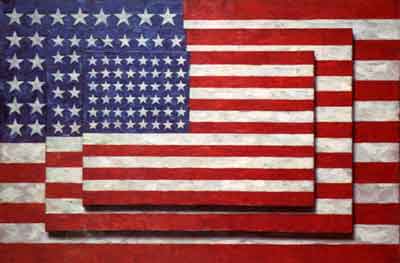
American artist Jasper Johns was born May 15, 1930 in Augusta, Georgia.
The United States Supreme Court released its unanimous decision in Brown v. Board of Education on May 17, 1954, overturning Plessy v. Ferguson.
The historic decision, which brought an end to federal tolerance of racial segregation, specifically dealt with Linda Brown, a young African American girl who had been denied admission to her local elementary school in Topeka, Kansas, because of the color of her skin.
Former Atlanta Braves pitcher John Smoltz was born on May 15, 1967 in Lansing, Michigan. Smoltz pitched a complete game shutout against the Pittsburgh Pirates in the seventh game of the National League Championship Series in 1991, sending the Braves to their first World Series since moving to Atlanta in 1966. Smoltz was chosen for the All Star team eight times and won the Cy Young award in 1996.
Georgia Politics, Campaigns, and Elections
So far, 816,227 early ballots have been cast for the May 19, 2026 Primary Election, according to the Secretary of State’s website.
Democratic – 451,901 (55.36%)
Republican – 352,098 (43.14%)
Nonpartisan – 12,228 (1.50%)
From the Statesboro Herald, dated Wednesday, May 13, 2026:
With just over two days left for in-person early voting, Bulloch County’s turnout toward next Tuesday’s, May 19, partisan general primary and nonpartisan general election had surpassed the 3,000-voter mark and 6.2% turnout of the county’s 50,681 “active” registered voters.
As of 3:33 p.m. Wednesday, a total of 3,156 Bulloch County residents had participated either by voting early in-person or by absentee ballot, according to the Election Data Hub maintained online by the Elections Division of the Georgia Secretary of State’s Office.
Of the 3,156 Bulloch County ballots cast by 3:33 p.m. Wednesday, 1,901 were Republican primary ballots, 1,200 were Democratic primary ballots, and 55 were nonpartisan-only ballots. Although a voter cannot vote both party ballots, the nonpartisan ballot, featuring choices for judgeships and school board members, is included with both party ballots.
Statewide, the combined early in-person and absentee turnout rate had reached 9.1% of active, registered voters by midafternoon Wednesday, with 671,798 of the state’s 7,357,126 active voters participating, according to the Georgia Secretary of State’s Office election data hub.
House District 177 voters will return to the polls on June 9, 2026 for a Special Runoff Election, according to WALB.
Two candidates for the Georgia House of Representatives’ 177th seat are headed to a runoff election following the May 12 primary vote in Lowndes County. Six candidates were in the running for the seat.
Because none of the six candidates achieved 50% of the vote plus one vote, the race remains undecided. The two candidates with the most votes will be voted on again in a runoff.
The Lowndes County Board of Elections Supervisor confirmed that candidates Alvin Payton, Jr. and Eric Howard will go on to a runoff election. Election Day for the runoff will be June 9, officials said.
According to unofficial election results from the Georgia Secretary of State’s office, Payton got 35.75% of the vote (586 votes), and Howard got 19% (325 votes).
The GA-177 seat was vacated for the first time in 13 years when former Representative Dexter Sharper resigned in March 2026.
This comes after former Representative Dexter Sharper resigned in March 2026, after he and two other state representatives were accused of lying on pandemic unemployment forms and taking nearly $14,000 in benefits.
Attorney General Chris Carr campaigned for Governor in Albany, according to WALB.
Attorney General Chris Carr met with voters Wednesday, May 13, at Modern Gas in Leesburg.
Carr’s gubernatorial campaign is centered around jobs, safety and affordability. Carr was given a tour of the modern gas facility and spoke to voters on his plans if elected.
“Jobs and safety are my two big issues. So everything has to do with jobs, whether it’s workforce, education, literacy, making sure we have the lowest tax environment of any statement nation, investing in infrastructure, talking about the affordability issues of housing and healthcare and education, but also keeping folks safe. That is the thing government is supposed to do.” [said Carr.]
Carr visited various parts of South Georgia Wednesday, including Moultrie and Worth County. Early voting ends this Friday.
AG Carr also campaigned in Columbus, according to the Ledger-Enquirer.
Georgia Attorney General and Republican gubernatorial candidate Chris Carr presented his plans to reduce crime and improve education and committed to supporting redistricting during a visit to Columbus, hours before Gov. Brian Kemp called for a special session to create new maps for the 2028 election. Less than a week ahead of the May 19 election, Carr made a campaign stop Wednesday at The Office Sports Bar & Grill, where he met with local residents and answered questions about his platform for governor, telling supporters he aims to advance to a runoff in the Republican primary.
“There is going to be a runoff on June 16th,” Carr said. “And we intend to be one of the two that’s in it. So my pitch to you is very simple: If you are tired of the negativity and you are tired of the volume of advertising, there is a better choice. And if you are tired and angry that a rich guy and a guy’s rich dad are trying to buy your vote and buy the governor’s mansion, there is a better choice.”
While in Columbus on Wednesday, before Kemp signed a proclamation convening the Georgia General Assembly for a special session, Carr told the Ledger-Enquirer he was in favor of redistricting. “I am not in favor of using race for government reasons,” he said. “It’s just not right. I am for treating everybody with dignity, value and worth.”
Carr said he is concerned the partisan gerrymandering could mean every time a political party takes over a state legislature or becomes governor, they will be more focused on redrawing the map than on other issues.
One of his top priorities if elected governor would be jobs, Carr said. “And jobs are based on the workforce,” he said. “Workforce is based on education. Education is based on literacy.” It’s a “travesty” that only one in three children is reading at grade level in Georgia, he said. He would focus on phonics and literacy, utilizing literacy coaches and accountability, Carr said.
On Wednesday, May 15, 2016, Governor Brian Kemp issued a Proclamation calling the Georgia General Assembly into Special Session to convene Wednesday, June 17, 2026 to (1) redistrict Congressional and state legislative districts; and (2) address the question of how November ballots will be counted. From the Savannah Morning News:
It’s not uncommon in Georgia to call a special session, and Kemp has already done so twice before, once in 2021 and again in 2023.
“We have a relatively short legislative session,” Andra Gillespie, an associate professor in political science at Emory University, told USA TODAY in an interview. “The governor has the right to recall the state legislature to deal with any important unfinished business.”
Lawmakers were already expecting to be called back this summer after the General Assembly passed a law requiring the state to change its voting machines, remove QR codes, and complete other voting reforms. The deadline to allocate money for the change is July 1.
Now, Kemp has added redistricting talks to the table.
According to Kemp’s proclamation, the legislature will come together to “consider enacting, revising, repealing, or amending general law for the division of the State into appropriate districts” as well as “address issues created by .. S.B. 189,” or the voting reforms.
The legislatures will have to find an alternative to the current ballot-scanning machines that use QR codes, likely opting for something like hand-marked paper ballots instead, in the fallout of the 2020 election in Georgia, where a significant portion of the MAGA base alleges votes were stolen in Fulton County.
Any redistricting changes would go into effect for the 2028 election cycle and would not impact the midterm races currently running in Georgia.
“Governor Kemp could have said, ‘I’m not going to raise redistricting as an issue. I will leave it for the next legislative session,’” Gillespie said, given that the changes won’t go into effect until 2028. “But the risk is that you can have a Democratic governor who wouldn’t sign such a change into law this time next year. While I would expect that Republicans will still control both the state House and state Senate, you never know. … So from a Republican standpoint, it certainly makes sense to kind of strike while the iron is hot, if you will.”
“It also just makes perfect sense that the districts that are most vulnerable are the ones — and I’m thinking about this from the congressional level and also from the state legislative standpoint — are Democratic districts that are geographically isolated and those are going to be more susceptible to cracking, if you will,” Gillespie said.
Gillespie explained that by splitting up some Democratic voting blocks, it may be dividing a Democratic majority, but it is also adding Democratic voters to districts that have been more easily won by Republicans in the past, thereby making them slightly more competitive. In theory, a district today that was easily won by a Republican could become up for grabs if redistricting adds blue voters for the 2028 election cycle.
“The Callais decision coupled with the partisan gerrymandering war that we’re in right now that started when President Trump asked Texas to redistrict, and we see Democratic states respond in kind, and then you see other Republican states kind of respond in kind, I think this is going to be the new normal until the people make it stop,” Gillespie said.
From the Capitol Beat News Service:
Kemp’s proclamation calls lawmakers to the Gold Dome at 2 p.m. on June 17, the day after any necessary runoff elections to decide the outcome of the May 19 primary elections.
By then, some lawmakers who return to the Capitol will know that they lost and will be out of office next year.
They will be redrawing election maps without the same limitations previously imposed by the Voting Rights Act of 1965, which strengthened protections for Black and other minority voters by barring practices that diluted their votes.
In April, the U.S. Supreme Court ruled in Louisiana v. Callais that a new majority-Black legislative district was unconstitutional, raising questions about future legal interpretations of the Voting Rights Act. Lawmakers in several Southern states moved to redraw district lines after the ruling.
From the Savannah Morning News:
Georgia Democratic Senator Raphael Warnock has been vocal about the Louisiana decision in the weeks since, and has long made voting rights and protections a key part of his platform.
“Georgians are angry about the broken promises of this President. Everything is more expensive because of an endless war and reckless tariffs. On top of that, 1.2 million Georgians saw their health care premiums double, all to fund tax cuts for billionaires. Now, the same people who robbed Georgians of their doctors are robbing Georgians of their voice by redrawing the lines,” Warnock said in a statement Wednesday. “Republicans under the Gold Dome are using their powers, not to make life more affordable, but to escape accountability from the people.”
State Rep. Eric Gisler, who represents parts of Athens-Clarke and Oconee counties, said the Louisiana decision “did not invalidate Georgia’s maps or require the legislature to redraw them,” but instead made fighting “racial gerrymandering” more difficult.
“Georgia can continue the cycle of endless partisan redistricting, or we can choose to draw districts that respect communities, county lines, and voters,” Gisler said in a statement. “Regardless of what maps are ultimately passed, voters should remember this: no district line can overcome an engaged electorate. High turnout, civic engagement, and community organizing still matter. If citizens stay involved and hold leaders accountable, even the more carefully engineered political maps will fail.”
Keisha Lance Bottoms, the former mayor of Atlanta and a leading Democratic candidate for the governor’s race in Georgia, said the Republicans were “taking orders from Trump” and that the redistricting choice was a “blatant attempt to dilute Black voting power.” She said she would veto any map to cross her desk, if elected, that was “designed to suppress fair representation.”
Jasmine Clark is running in Georgia’s 13th congressional district, the seat previously held by the late David Scott, in the predominantly Black neighborhoods of Atlanta. She currently serves as a state representative and was a vocal advocate for the recent release of double amputee Rodney Taylor from an ICE detention center in Georgia.
“When Republicans can’t win, they change the rules of the game. Gov. Kemp is calling us in for a special session so Republicans can redraw the lines and eliminate Black representatives and all of the gains we’ve made since the Civil Rights Movement,” Clark said in a post on X.
From the Capitol Beat News Service via the Savannah Morning News:
Democrats reacted angrily to Gov. Brian Kemp’s call Wednesday to rewrite electoral district lines after a U.S. Supreme Court ruling in April.
Kemp, a Republican, ordered a special legislative session for June 17 to redraw election maps after the high court ruled last month in Louisiana v. Callais that a new majority-Black legislative district in Louisiana was unconstitutional.
That raised questions about future legal interpretations of the landmark Voting Rights Act of 1965, which strengthened protections for Black and other minority voters by barring practices that diluted their votes.
Alabama, Louisiana, Tennessee and other Southern states moved to redraw district lines after the ruling.
Democrats in Georgia said Kemp’s decision to join the rush is further evidence that Republicans fear they can no longer win elections.
“When Republicans can’t win elections, they first lie about fraud,” Sen. Harold Jones II, D-Augusta, the Georgia Senate minority leader, said in a statement. “Then they beg Republican judges to save them from democracy’s verdict. Finally, they make new rules to help them win next time.”
He called Republicans “drunk-on-power bullies” who “don’t give a damn what voters want.”
Earlier this week, Kemp also signed House Bill 369, which will require five metro Atlanta counties — Clayton, Cobb, DeKalb, Fulton and Gwinnett — to hold nonpartisan elections for county commissioners, district attorney, and other county offices.
Democrats saw that as a move to undercut the increasing Democratic vote in those counties.
On April 1, Fulton County Commissioner Dana Barrett wrote Kemp asking him to veto the bill. Fulton commissioners hold undeniably partisan offices, she reasoned, since they both fund the county elections board and appoint members to it.
“Because our work absolutely has political implications, it is critical that voters understand the party affiliations of the county commissioners on their ballot,” she wrote.
Barrett noted that Kemp had rejected President Donald Trump’s call in 2020 to help overturn the election results in Georgia that had Trump narrowly losing to Joe Biden: “Governor, you stood up for the will of the people in 2020, I’m asking you to stand up for the will of the people again.”
The Georgia General Assembly’s failure to address a deadline of its own making played into Kemp’s decision. The special session he called is also supposed to address a July 1 deadline to stop using Quick Response (QR) barcodes when tallying votes in Georgia elections.
State Republicans created the deadline when they passed a 2024 law banning the QR codes. In the subsequent two legislative sessions, they did not adopt an alternative.
The death last month of U.S. Rep. David Scott, a metro Atlanta Democrat, triggered a special election in July, leaving little time to address the issue.
The Georgia House Democrats’ caucus issued a press release that accused Lt. Gov. Burt Jones, a GOP candidate for governor, of ensuring a special legislative session by failing to allow a vote on legislation that would have addressed the July 1 deadline.
The House passed a bill that would have moved that deadline back two years. The Senate did not vote on it as the legislative session came to an end in the early morning hours of April 3.
Now, the GOP is using the issue to justify a special legislative session, House Democrats said, adding that the rush before the upcoming elections illustrates why the Voting Rights Act was passed by Congress six decades ago.
“The speed and urgency that Republicans have moved to redraw maps to lock-in single-party rule, indefinitely, shows why the Voting Rights Act was needed in the first place,” the House Democrats wrote.
The QR code issue will not be an easy one to fix. Groups such as the Coalition for Good Governance have sued Georgia in the past over the way the state conducts elections. They contend that the voting machines violate federal and state laws that predate the 2024 law banning QR codes.
The Coalition recently petitioned the State Election Board to mandate the use of hand-marked paper ballots for the November general election. The board rejected the petition.
Local election officials have said that they do not have enough time to switch from the current digital system.
The Legislature will have even less time to address the issue when they meet in July.
“These things should have changed long ago,” said Marilyn Marks, executive director of the Coalition.
More from the Capitol Beat News Service:
Alleging racism, Black Georgia lawmakers assailed Gov. Brian Kemp’s call for a special session to redraw election maps, saying Republicans want to drag the state back to the era before the civil rights movement.
“It’s despicable that Georgia is following this racist playbook and taking us back to Jim Crow,” said Sen. Nikki Merritt, D-Grayson, chair of the Georgia Legislative Black Caucus.
The Democratic lawmakers who met outside the Capitol Thursday were reacting to the Republican governor’s signing of a proclamation Wednesday that calls lawmakers back to the Capitol on June 17.
They will contend with two election-related issues.
Kemp asked them to address the July 1 deadline they set two years ago to cease using QR codes for tallying votes. Despite meeting for two regular legislative sessions since passing that law, the Legislature has neither authorized nor funded an alternative process.
Kemp also is convening them to redraw voting districts after the U.S. Supreme Court invalidated a new majority-Black district in Louisiana. The April ruling in Louisiana v. Callais raised questions about future legal interpretations of the 1965 Voting Rights Act, a legacy of civil rights protests.
The Black leaders gathered at Liberty Plaza, next to the Gold Dome and Martin Luther King Jr. Drive. Christopher Bruce, with the ACLU of Georgia, referenced the road’s namesake along with others who had marched with him and had beaten and bloodied for it.
“Our ancestors did not die for us not to fight now,” he said.
Merritt and the others called for protesters to fill the streets and to turn out for upcoming elections. The primary is May 19 and the general election is Nov. 3.
She also called on leading businesses and the chambers of commerce to rally against the redistricting, recalling the historic alliance between white and Black leaders and business interests in Atlanta.
Atlanta was known as “the city too busy to hate,” she noted, setting it apart from the rest of the South and putting it on a prosperous path that she said was now in jeopardy. The state’s image and its ability to attract international investors are at risk, she said.
Sen. Harold Jones II, D-Augusta, the state Senate minority leader, said Republicans see the electoral tide turning against them, have run out of ideas, and are “dusting off the same playbook of racial hate, fear, and racial divisiveness.”
He observed that lawmakers will be returning to the Capitol amid the throngs of soccer fans who will come to Atlanta for the World Cup.
The Republican-led General Assembly will be on a world stage, he said. Viewers “will see that the Republicans have opted to continue racial oppression,” he said. “And they will see protests and they will see stories about the old South and racial divisions.”
[U.S.] Senator Jon Ossoff, [D-Atlanta] who is seeking re-election in 2026 for his seat, issued a statement calling the session a “blatant scheme to undermine Black representation.”
“(Republicans’) disgraceful campaign against the Voting Rights Act will mobilize unprecedented voter turnout, heightening the wave already building against the Trump Administration’s disastrous economic failures,” Ossoff said.
AccessWDUN spoke to House Majority Leader Chuck Efstration (R-Mulberry) regarding the proclamation.
“There’s been no substantive discussions that I’ve had about specifics,” Efstration said. “I think that the discussion around what that proposal may look like is going to be debated in this special session.”
State Representative for District 97 and Senate District 7 Candidate Ruwa Romman (D-Duluth) issued a statement on Facebook, calling the session “cowardly bulls—.”
When talking to AccessWDUN, Romman said the fight is no longer left versus right, but top versus bottom.
“In Georgia, every branch of government is controlled by Republicans,” Romman said. “Why is it that they’re able to call for a special session to redraw maps … but they can’t, for example, call a special session to address the health care crisis, to address the rising cost of everything because of this war in Iran … my challenge to voters is this, it is time for us to move past partisanship. The fight is no longer left versus right, the fight is now top versus bottom.”
She added that there has been a consistent effort by Republicans to “surgically suppress the vote.” Romman and other Gwinnett legislators will convene for an emergency town hall on Saturday at 3:30 p.m. at the Duluth library branch to discuss their path forward.
State Senator for District 49 Drew Echols (R-Gainesville) issued a statement to AccessWDUN, saying he’s ready to roll up his sleeves.
“I applaud the Governor’s decision to call a special session to redraw legislative maps and resolve the QR code problem affecting our ballots,” Echols said. “I’m ready to roll up my sleeves and get to Atlanta, fix this mess, and get back home to work because election integrity is just common sense.”
Efstration also noted the logistical issues around getting 236 state legislators back to Atlanta.
“The scheduling is the biggest issue right now. Just the thought of getting 180 house members and 56 state senators back to the state capitol is always an undertaking,” Efstration said. “The governor’s call cites a recent Supreme Court opinion … we as legislators … have to come and show up and consider the issues that he’s put before us for the special session.”
On the vote counting issue, from Atlanta News First via WALB:
The call came just in the nick of time.
With the November midterm elections fast approaching, Georgia, by then, would have been out of compliance with the law after passing a 2024 measure banning the QR codes that counties currently use to tabulate ballots.
The legislature adjourned the regular legislative session in April without passing a replacement and wasn’t on track to meet again between Sine Die and the midterms.
Then, on Wednesday, Gov. Brian Kemp broke the tension over what was going to happen when he called a special session. Now lawmakers will return to the Capitol on June 17 with a clear mandate: pick a new method for tabulating votes before people go to the polls in November.
“This is a great opportunity,” said state Sen. Steve Gooch, a Republican from Dahlonega. “We have a special session on June 17 to go in and get the House and the Senate working together with the governor’s office and really make some decisive decisions on how to process that.”
The law passed by legislators in 2024 came amid deep skepticism of Georgia’s Dominion voting machines. In order to move toward from what lawmakers set as the benchmark for compliance, the state would have to purchase new equipment. But no one has yet determined if that cost would fall on the state, or to the counties, which run elections.
“I think the state should step up and help fund that,” said Gooch. “Election integrity is important. We need to make sure that every vote counts, and that comes at a cost.”
At a campaign event Thursday, Republican Lt. Gov. Burt Jones placed the blame squarely on Georgia Secretary of State Brad Raffensperger for failing to help the state get up to compliance by the deadline.
“We have a secretary of state who will not comply with legislation we passed two years ago to get rid of the QR codes,” said Jones. “We’re going to have to go fix what Brad Raffensperger has refused to fix and actually refused to comply with.”
In response, Raffensperger’s team said there has been ongoing communication between the legislature during the past three sessions, saying it “appears” Jones “wasn’t adequately informed about the ongoing communications.”
“Lt. Governor Burt Jones championed an overhaul to our elections system and then refused to fund it. He created this, and it’s his responsibility to fix it,” Raffensperger said in a statement.
“Make no mistake about it, this is not the legislature’s fault,” Jones said Thursday. “The legislature has done its job and we just have a secretary of state that just won’t comply.”
There are a few options on the table. Lawmakers could – perhaps most simplistically – kick back the self-imposed July 1 deadline and take up the issue when they return to session later this year.
They could also eliminate the QR codes and use the state’s existing Dominion tabulation machines without purchasing new ones.
Or, as many Republican lawmakers have expressed support for, the state could move to a fully hand-marked paper ballot system, where voters bubble in their choices in pen.
But election clerks have expressed consistently to Atlanta News First that a change in process that rapid could create room for error.
“That’s chaotic for voting,” said Milton Kidd, the elections supervisor in Douglas County. “That introduces a level of uncertainty, a level of voter irregularities that are unheard of at this scale.”
“We can’t prepare for elections overnight,” said Deidre Holden, the elections supervisor in Paulding County. “It takes time. It takes at least nine months to plan for one election. So we just want guidance. We want to know what’s going to happen, what we need to do, and the sooner, the better.”
Governor Brian Kemp signed Senate Bill 220, the “Putting Georgia’s Patients First Act” by State Sen. Matt Brass (R-Newnan), which revises the state’s medical cannabis law, according to WRDW via WALB:
Some Georgians with chronic pain and illness are rejoicing following Gov. Brian Kemp’s official signature on Senate Bill 220, which expands the state’s medical cannabis program.
The bill adds new qualifying conditions, like Lupus, and allows those with a medical cannabis card to begin legally inhaling the drug via a vape.
Gary Long is the CEO of Botanical Sciences, Georgia’s largest medical marijuana dispensary, with five locations across the state.
He said the vaping provision will make a massive difference to his customers.
“They’re looking for instant relief. This particular form of the product, inhaled, goes straight into the bloodstream and allows for quicker relief for patients,” Long said. “Whether it’s cancer, PTSD, multiple sclerosis, or chronic pain.”
Long’s dispensary serves customers, like 29-year army veteran Doug Maddi, who suffers from both physical and mental pain after a lifetime of combat.
“It (the vape) gets me the relief the fastest, I think,” Maddi. “Being able to get pain relief within a relatively short amount of time is, it’s really helpful for me in my day-in and day-out life.”
The new law also replaces the current 5% THC potency cap with 12,000 milligrams of THC that a patient can possess at any one time.
Michael Mumper, executive director of Georgians for Responsible Marijuana Policy, says he’s concerned with how much product patients will now have access to.
“I mean, 10 milligrams will get someone very high. Forty milligrams is a lot for someone to take every single day. So, 12,000 divided by 40 milligrams is 300 days,” Mumper said.
Mumper notes that vaping is also not FDA-approved.
“Just walk into this knowing I’m about to take a serious medicine, and I better get a lot of information about how much I should take on a daily basis,” Mumper said.
Kemp said that while he supports this bill and recognizes the symptoms that can be quelled by medical marijuana, he does not support legalizing recreational marijuana in Georgia.
The law goes into effect July 1.
Governor Kemp also signed Senate Bill 433, by State Sen. Brian Strickland (R-McDonough), called “Rio’s Law,” to help drivers with autism when they are pulled over, according to WSAV.
A new law passed by Gov. Brian Kemp this month aims at helping drivers with autism during traffic stops.
Rio’s Law, also known as Senate Bill 433, will require Georgia police officers to get extra training on assisting people with autism during a traffic stop.
It also gives drivers a chance to get a special license plate, making it clear that either the driver or a passenger has autism or a developmental disability.
Shenequa Gresham, the president and CEO of the Matthew Reardon Center for Autism, said traffic stops can be very stressful for those with autism.
“Being around different surroundings, the sirens can be loud, they can be overstimulating as well,” she said.
She said a person with autism could have reactions that aren’t understood by some people.
“That reaction looks as though it’s a behavior reaction, but it could truly be just them trying to understand the space that they’re in,” said Gresham.
The Savannah Police Assistant Chief Robert Gavin said they partner with local agencies to help train their officers on this.
“We’ve had parents come in and present to our officers and say, you know, my child has autism and here are some of the things they want us to know,” said Gavin.
He feels the training and the license plates will help prepare officers for the interaction before it starts.
“Having that prior knowledge gives the officer the ability to adjust how they approach,” he said.
Gresham told WSAV the bill is a powerful and necessary next step in the right direction.
“Having this law being passed, I definitely think it’s a way for us to start bridging the gap and have open communication about what this community looks like and how we build an inclusive community,” she said.
The required training for officers will begin on Jan. 1, 2027.
It will include teaching officers the best techniques for conducting traffic stops and investigations with people who have autism.
Six candidates qualified for the July 28, 2026 Special Election to fill the remainder of the term of the late U.S. Rep. David Scott, according to WRDW.
The following individuals qualified:
• Caesar Gonzalez
• Carlos Moore
• Everton “EJ” Blair II
• Fayth Park
• Marcye Scott
• Tony BrownThe actual special election itself is set for Tuesday, July 28. A runoff, if needed, has been set for August 25.
Monday, June 29, is the last day to register to vote in the July special election. Early voting in the special election begins Monday, July 6.
Scott’s 13th congressional district includes portions of Rockdale, Clayton, DeKalb, Gwinnett, Henry and Newton counties.
Scott died at age 80 after almost five decades of public service at the state and national levels.
Marcye Scott, David’s daughter, said she originally intended to run for her father’s seat before he decided to enter the race for reelection.
Marcye can still make it onto the ballot for November’s general election, but she would have to do so by July 1 and register as an independent. When asked Monday, Marcye said she hadn’t made that call yet.
Other candidates who had already qualified for the regular election to replace Scott for a full two-year term had to make some much quicker decisions. Some, like State Rep. Jasmine Clark, a Democrat from Lilburn, decided not to enter the special election.
Others, like former Gwinnett County Board of Education Chair Everton Blair, decided to run in both.
“This is my home district, and I’m committed to the district,” said Blair. “So when there’s another election that’s been put on the ballot, I’m gonna run for that too. I’m gonna run for every election.”
Blair said even if it’s just short-term, whoever fills out the rest of Scott’s seat will need to work hard for the people of the 13th district.
“I think that’s the big difference in this moment is we deserve leadership that’s accessible and present, leadership that we know, leadership that’s honest and tells the truth,” he said.
Macon-Bibb County voters will elect members of the Macon Water Authority, according to the Macon Telegraph.
The District 2, District 4 and at-large seats are all contested. Elaine Lucas, who currently holds the District 1 post, is running unopposed.
Augusta voters will decide a Floating Local Option Sales Tax (FLOST) referendum, according to WJBF.
For voters, it’s down at the bottom of the ballot – a half penny sales tax called FLOST.
Unlike the SPLOST, which has been around since the 80’s, FLOST is new sales tax, but if approve the funds generated by it are designed be used by the city at budget time to offset the property tax rate.
“It will offer some relief to our homeowners. It will reduce the M and O [county government Maintenance and Operations portion] of your tax bill,” said Tameka Allen, Augusta City Administrator.
So for many, the selling point for FLOST is a reduction in city property taxes. But how about renters? For them, it means a half a percent more in sales taxes at the checkout line.
The Metro Augusta Chamber of Commerce is taking a stance on one sales tax this time, the SPLOST, by endorsing it. But the group is staying neutral on the FLOST.
“I think there are some unknowns in regard to FLOST particularly with some of the legislation at the state level that was still in talks and still be discussed,” said Angie Cox.
“It would benefit them because it does lower the taxes they could be charged because it offsets that amount,” said Allen.
SPLOST and FLOST has some voters finding this ballot too taxing.
Lee County voters will decide a Special Purpose Local Option Sales Tax for Education (E-SPLOST), according to WALB.
Lee County voters will decide whether to renew the one-percent education sales tax known as ESPLOST when they head to the polls May 19.
Lee County School System Superintendent Dr. Kathleen Truitt said this is not a new tax or a tax increase, but a continuation of the current penny sales tax already in place. She says the measure would fund school renovations and maintenance repairs, including major needs like a new HVAC unit for the high school and a new roof for the middle school.
“It’s really hard to learn when it’s 103 degrees outside and you don’t have air conditioning that’s keeping up with that heat,” Truitt said. “There is almost nothing that we do… well, there is nothing that we do that does not tie directly to instruction, classrooms, co-curricular, which are those things that, you know, fine arts, some of the clubs that we do, and then extracurricular. And I think those are the core things that, with high academic performance, are the core things that make Lee County Schools so good. And that’s why families move here, is for those things.”
However, not everyone agrees. Posts circulating on social media accuse the district of spending millions on what some call “non-educational projects.” Others have raised concerns about transparency and trust following criticism tied to recent questions about calculations of the rollback rate for property taxes discussed publicly at school board meetings.
One person commented on WALB’s Facebook page, “They are going to raise taxes anyway they’ve been getting ESPLOST for over a decade and it has not affected whether they raise or lower property taxes.” Another said, “Vote no. They can use the 35% increase in property taxes they gave themselves this year.”
Truitt said the district has safeguards in place to make sure taxpayer dollars are spent responsibly.
“We have really thoughtful decisions around how do we spend money, where do we spend money, and then we have processes and procedures that make sure that if we’re spending taxpayer dollars, we’re getting the best bang that we can for our taxpayers’ money,” Truitt said. “And so, we have things like we require three bids or three quotes for any expenditure over $500. We make sure that we are renegotiating contracts so that we’re getting what we need, but we’re getting that at the best price point that we possibly can.”
Republican Terence L. Fowler Sr. was found ineligible for election to State Senate District 12 by a state judge, according to WALB.
A state judge has ruled Republican candidate Terence L. Fowler Sr. is not qualified to run for Georgia State Senate District 12, following a residency challenge filed by Will Davis, chairman of the 2nd Congressional District of Georgia for the Democratic Party of Georgia.
The race, which will now be final in May barring any possible additional review, will be between three Democratic candidates.
Davis said he filed the challenge contesting Fowler’s eligibility to seek the District 12 seat. A hearing was held April 2, 2026, with both parties representing themselves. Davis said the court’s ruling was issued Friday.
According to Davis, the challenge argued Fowler’s listed address on his voter registration did not meet residency requirements under Georgia law and that Fowler cast a ballot in the November 2025 general election in Fulton County.
Georgia’s constitution and state election law require state senators to have been a citizen of Georgia for at least two years, and a legal resident of the district for at least one year prior to the election. Davis also cited state law that allows an eligible voter to challenge a candidate’s qualifications by filing a written complaint with the Secretary of State within a set timeframe after the qualifying deadline.
In a campaign statement dated April 24, 2026, Fowler announced he was suspending his campaign following what he described as a residential challenge to his candidacy. Fowler said he respected the court’s decision and “accept[s] this outcome with dignity.”
Fowler also offered endorsements in multiple local races and urged voters—particularly Republicans—to unite behind Corey Morgan for the Senate District 12 race.
Davis said Fowler has the right to seek additional review, including filing a motion for agency review. Davis added that the Board of Registrations and Elections will be guided by the Georgia Secretary of State on procedures affecting the primary and general election.
Senate District 12 includes South Georgia counties. The election is to replace long-time senator Freddie Powell Sims.
Some Glennville residents are calling on the Mayor and Council members to resign, according to WTOC.
The Glennville mayor and several city council members are facing backlash after a video surfaced showing them making derogatory statements about community members.
After a special called meeting April 28, the Glennville mayor along with city council members Marcus Noble, Tammy Waters and Greg Janeczek stayed after the meeting and began discussing city matters.
“When you have three or more council members present and they’re altogether in the room, that could be a violation of the sunshine law, so basically they’re breaking the law, violating Georgia code and also doing something illegal and unethical at the same time,” Micah King said.
The group also began speaking negatively about community members and other council members.
Some members from the group can be heard calling Zuber Malek a terrorist and negatively speaking about doing business with him because of his religion.
Malek owns several businesses in the Glennville community, employing hundreds. He has also helped the community rank top five in Georgia for most amount of money raised for Children’s Miracle Network.
Malek is calling for the leaders in the video to resign.
“They shall resign right away, resign right away,” Malek said. “This is just 20 minutes, so we don’t know what is going on for last six years.”
Members of the Glennville community said they are outraged and upset that the leaders they elected could say such things about someone who has done so much for the community.
“See that happened and I was very like heartbroken,” Glennville resident Tavontae King said. “Like things like Christian, you can’t like pick and cheese buffet style, which you kind of want to use it when you want to use it in the time you want to use it, and so just seeing that was very heartbreaking to me.”
Glennville resident Glenda Thompson said she has always been proud of her hometown.
“Shameful. I mean, cause first of all, no matter what your race, religion, we’re human,” Thompson said.
The Glennville Ethics Committee is holding a meeting tonight with the city’s attorney at 5:30 p.m. The meeting will be open to the public.
City officials are also under scrutiny for an altercation that broke out after another council meeting May 5 where an officer can be seen shoving a community member.
The issue spilled over into a meeting of the city ethics committee, according to WTOC.
Dozens of Glennville residents packed City Hall Thursday after two videos involving city officials circulated online, but many left the meeting frustrated after learning how the city’s ethics complaint process works.
The crowd turned out for an ethics committee meeting after one video from April 28th showed city leaders making derogatory comments and another video from a May 5 city council meeting showed a law enforcement officer pushing a resident inside City Hall.
During the meeting, an ethics committee member told the crowd the committee’s role is limited.
“Our job is not to provide a decision for what happened,” the member said.
According to Glennville’s code of ethics, complaints are submitted to the city clerk and then forwarded to the mayor and city council. The ethics committee can review complaints and gather information, but findings are submitted to the city council, which can issue a public reprimand or censure, or request a resignation.
That means the same leaders in the video are the ones who will decide the action.
“It sounds like those who commit the crimes get to decide their own punishment,” Glennville resident Joanne Anderson said.
Also in the crowd was Justin Enfinger, the resident seen being pushed in the May 5 video. Enfinger told WTOC he went to the meeting to ask questions about police training and says he previously had words with the same officer.
Enfinger said the situation escalated after the mayor and the officer spoke to him about that exchange. Enfinger says the mayor requested officers to take his son’s video while his son was recording. Enfinger said he exchanged some words with the officer and what happened next is clear on camera.
“And that’s when he lost his cool. And he said he tried to escort me to the door, but in the video, that’s not the way to the door,” Enfinger said. “That’s the way into a chair, a table, and a pillar.”
Enfinger said he believes change will come through community involvement.
“We can do better. We can get better representation,” Enfinger said. “And we can get rid of them now if we want to, we just have to get together as a community and do it.”
The Glennville city clerk said the officer involved has been placed on administrative leave.
City officials said another public meeting is expected Friday and WTOC will continue following the story.







Comments ( 0 )