
On March 18, 1766, the British Parliament repealed the Stamp Act, which required American colonists to purchase a stamp for every legal or printed document they obtained. Revenue would be used to support the British army in America.
The Stamp Act led Patrick Henry to denounce King George III, the British Monarch at the time of the passage of the Stamp Act and the ensuing Revolutionary War; Henry’s later “Give Me Liberty or Give Me Death” speech to the Virginia Assembly at St. John’s Church in Richmond, Virginia, listed by Time magazine as one of the top ten speeches of all time. Henry later opposed adoption of the Constitution, arguing it was incomplete without a Bill of Rights; after the Bill of Rights was adopted, Henry was satisfied.
On March 18, 1939, the State of Georgia ratified the Bill of Rights, which were proposed 150 years earlier in 1789. Georgia initially declined to ratify the Bill of Rights arguing that the first ten amendments to the United States Constitution were unnecessary. Governor E.D. Rivers signed the joint resolution six days later, but under federal court decisions the ratification is marked as of the date the second house of the state legislature adopts the legislation (assuming a bi-cameral state legislature).
On March 18, 1942, the United States government, under President Franklin D. Roosevelt, created the War Relocation Authority to “Take all people of Japanese descent into custody, surround them with troops, prevent them from buying land, and return them to their former homes at the close of the war.” More than 120,000 Japanese Americans, many of them citizens of the United States were moved from the west coast into concentration camps in the western United States.
The 442nd Regimental Combat Team, composed entirely of Japanese Americans, many of whose families were interned at the camps, became the most-decorated unit of World War II, with members being awarded 4,667 medals, awards, and citations, including 1 Medal of Honor, 52 Distinguished Service Crosses, and 560 Silver Stars; eventually 21 members of the 442nd would be awarded the Medal of Honor. The late United States Senator Daniel Inouye, a member of the 442nd from 1941 to 1947, was awarded the Medal of Honor by President Bill Clinton for actions during WWII. First elected to the United States Senate in 1962, Inouye became President Pro Tem in 2010.
On March 18, 1947, Herman Talmadge surrendered the Governor’s office, ending the “Three Governors Affair.” Earlier this year, the General Assembly honored the late Governor Melvin Thompson, who was elected the first Lieutenant Governor of Georgia and became Governor at the conclusion of the Three Governors Affair.
Over the weekend, I found two old certificates that are often given to political supporters of Georgia’s Governor. Between the, they bear the signatures of all three men who claimed to be Governor during the “Three Governors Affair,” and a total of four Georgia Governors. The one signed by Governor Ellis Arnall (69th Governor of Georgia) also bears the signature of M.E. Thompson, who would later become the first Lieutenant Governor of Georgia and then elected as the 70th Governor. The one signed by Governor Herman Talmadge (71) was also signed by Ernest Vandiver, Jr., who would later serve as Lt. Governor and then as the 73d Governor of Georgia.

On March 18, 1955, the Georgia Educators Association endorsed “equal but separate” schools for the races.
On March 18, 1961, the United States Supreme Court decided the case of Gray v. Sanders, which arose from Georgia. Three politically-important results come from the case.
First, the Court held that state regulation of the Democratic Primary made the primary election a state action, not merely that of a private organization; thus, the Equal Protection Clause of the Fourteenth Amendment applies.
Second, the Equal Protection Clause requires that every vote be given equal weight in electing officials, often stated as the “one person, one vote” rule. In Georgia at that time, each County had between two and six “county unit votes”. As a result,
“One unit vote in Echols County represented 938 residents, whereas one unit vote in Fulton County represented 92,721 residents. Thus, one resident in Echols County had an influence in the nomination of candidates equivalent to 99 residents of Fulton County.”
Third, because the County Unit System gave the votes of some Georgians greater weight than that of others, it violated the Equal Protection Clause. The “one person, one vote” rule is one benchmark of redistricting.
On March 18, 1976, Governor George Busbee signed legislation recognizing the following official state symbols:
Staurolite – Official Mineral of Georgia
Shark’s Tooth – Official Fossil of Georgia
Clear Quartz – Official Gem of Georgia
Purple Quartz (Amethyst) – Official Gem of Georgia
Georgia Politics, Campaigns, and Elections
Democrat Stacey Abrams says she won the 2018 election for Governor of Georgia, according to the Washington Free Beacon.
At an event Thursday, Abrams was asked by a tracker if she would ever concede to Kemp. She appeared to remain silent, but she said inside that she’d told the tracker “no.”
“I did win my election,” she said, according to ABC News reporter Adam Kelsey. “I just didn’t get to have the job.”
Other prominent Democrats have also claimed the race was stolen from Abrams, although she lost by nearly 55,000 votes and couldn’t get the race to a runoff. Sen. Elizabeth Warren (D., Mass.) said the evidence suggested the race was stolen by Kemp, and Hillary Clinton and Sen. Sherrod Brown (D., Ohio) made similar claims.
However, it was Clinton who claimed during her 2016 campaign against Donald Trump that he would potentially not accept defeat.
“One of our hallmarks has always been that we accept the outcomes of our elections,” she said.
Abrams claimed Kemp’s office put 53,000 votes “on hold,” but the allegation was deceptive, the Washington Free Beacon reported. They were not purged from voter rolls but rather placed in “pending” status because of violations of state “exact match” laws. Some of those violations appeared to be by a voter-registration group started by Abrams[.]
She also talked about irregularities that occurred during the election. “The vote differential was 54,000 votes,” she said. “I cannot prove empirically that I would have gotten every vote that could have been counted, but I do know that the absence of an effective system robbed me and Georgians of having a fair election where we could say with certainty that what happened was right.”
Asked whether she could make a bigger statement on the issue about which she is passionate by running and winning an election in Georgia or going national, she said, “I think that is a legitimate frame, but it’s not the one I can use. These are jobs. I’m applying for a job, and I should run for office because I want to do that job at that moment. The issue of voter suppression is an existential issue, and no matter what job I have, I’m going to talk about that issue.”
Abrams said she already believes she could do a better job than Trump in the highest office in the land. She could not cite anything the president has done on his own initiative that has been good for the country, and she offered a blistering description of him.
“He is a racist, xenophobic, misogynistic, homophobe who has diminished our sense of cohesion as a nation. Regardless of where a president stood on issues, there has always been at least a veiled attempt at some sense of national unity. His intentionality to speak only to a narrow group that he calls his base, his willingness to only administer his office for that population, has diminished the credibility of his time in office.”
Abrams said she does not believe Democrats lost in 2016 because Trump was a superior candidate with superior ideas. “We lost because our organizing method in 2016 did not engage voters who had long been out of the body politic,” she said. “I do not believe in turnout targets. And one thing we demonstrated in our campaign, much to the suspicion and chagrin early on, is that you cannot run a campaign in the 21st century that believes in a base. Every voter is a persuasion target.”
Under the Gold Dome Today
8:00 AM SENATE SCIENCE AND TECHNOLOGY 450 CAP
8:00 AM HOUSE INSURANCE 606 CLOB
9:00 AM HOUSE RULES 341 CAP
TBD SENATE RULES UPON ADJOURNMENT 450 CAP
1:00 PM SENATE INSURANCE & LABOR 310 CLOB
1:00 PM SENATE FINANCE MEZZ 1
1:00 PM HOUSE PUBLIC SAFETY 606 CLOB
1:00 PM HOUSE Academic Achievement Subcommittee of Education 406 CLOB
1:30 PM HOUSE JUVENILE JUSTICE 515 CLOB
2:00 PM SENATE EDUCATION & YOUTH 307 CLOB
2:00 PM SENATE PUBLIC SAFETY MEZZ 1
2:00 PM HOUSE BANKS AND BANKING 341 CAP
3:00 PM SENATE HEALTH & HUMAN SERVICES 450 CAP
4:00 PM SENATE JUDICIARY 307 CLOB
SENATE RULES CALENDAR
HB 35 – Sales and use tax; certain poultry diagnostic and disease monitoring services; create exemption (FIN-50th) Watson-172nd
HB 168 – Sales and use tax; tangible personal property to certain non-profit health centers; extend exemption for five additional years (FIN-8th) Taylor-173rd
HB 185 – Financial institutions; change certain definitions (B&FI-18th) Williamson-115th
HB 192 – Professions and businesses; real estate management companies; change certain provisions (RI&U-51st) Powell-32nd
HB 212 – Banking and finance; retail brokers of manufactured homes or mobile homes and residential contractors from the requirement to obtain a license as a mortgage loan originator, broker, or lender under certain circumstances; exempt (B&FI-18th) Pirkle-155th
HB 223 – Conservation and natural resources; provide for an exception to notification of spills or releases; provide for definitions (NR&E-7th) Dickey-140th
HB 368 – Insurance; division of a domestic insurer into two or more resulting domestic insurers; provide (Substitute)(I&L-9th) Taylor-173rd
HB 374 – Health; administer medications to residents under hospice care pursuant to a physician’s written orders; authorize certified medication aides (H&HS-11th) LaHood-175th
HB 419 – Revenue and taxation; Internal Revenue Code and Internal Revenue Code of 1986; define terms and incorporate certain provisions of federal law into Georgia law (FIN-52nd) Knight-130th
HB 501 – Game and fish; provide for mariculture development (NR&E-3rd) Petrea-166th
Thomasville, Georgia native William Crozer serves in the Trump Administration as a special assistant to the president and deputy director in the White House Office of Intergovernmental Affairs, according to the Times-Enterprise.
Crozer served former Georgia Gov. Nathan Deal and worked on 2012 GOP presidential nominee Mitt Romney’s campaign as Georgia political coordinator. He also worked in the Republican National Committee’s finance department during the 2008 election cycle.
Crozer said he had “a lot of good experiences” working with the late Arizona U.S. Sen. John McCain’s presidential campaign in 2008, while employed by the GOP national committee.
“Our office is the primary liaison between the White House and state and local elected officials,” Crozer said. “In that capacity, we are proactive in terms of building support among state and local elected officials around shared priorities, like combatting the opioid epidemic, and reactive where state and local officials reach out to us with various issues with a federal nexus, such as federal permitting and other matters pertinent to their community.”
Crozer said his position is a political, commissioned appointment. He is the primary liaison between the White House and state and local elected officials.
“We manage those relationships for the White House,” Crozer explained. “We’re that clearinghouse for state and local.
When Hurricane Michael ravaged the southwest Georgia in October 2018, Crozer traveled with the president on Air Force One to tour damaged areas in Georgia and Florida. Crozer reached out to county commission chairmen ito help direct communities to the proper source for help.
District 11 State Sen. Dean Burke (R-Bainbridge) said Crozer contacted him the day of the hurricane and many times in the following weeks to be sure this area had needed resources and to ask how the White House and federal agencies could help in response efforts.
State Rep. Wes Cantrell (R-Woodstock) has introduced two bills to keep Georgia from flip-flopping the time, according to WSB-TV.
Channel 2’s Dave Huddleston talked to Cantrell about why he thinks the time change is antiquated and why he’s submitted the bill to keep us on one time.
“Why do we keep doing this? Somebody needs to stand up and say, ‘Hey, this is ridiculous, and let’s do something about it,’” Cantrell told Huddleston. “I think it’s just one of those things we’ve just become accustomed to. It’s a hassle, but that’s they way it is, you know? We just live with it.”
Daylight saving time first started during World War II when President Roosevelt made it official.The goal was to save energy for the troops. Most states never made the switch back to year-round standard time, except Arizona and Hawaii.
“Let’s be a trailblazer,” Cantrell said. “Our state needs to lead, so let’s lead on this.”
Cantrell said his proposal won’t see any action this year, but he is working to get a proposed amendment with three different options on the ballot in 2020. If the majority of voters want to stay on daylight saving time, the state would have to get federal approval. If the public votes to stay on standard time, the change could be made with just voter approval, Cantrell said.
House Bill 628 would keep Georgia state government on Standard Time and does not require federal approval. House Bill 630 would keep Georgia on Daylight Savings Time permanently.
This morning at 8 AM, the Senate Science & Technology Committee will hear House Bill 481, the fetal heartbeat bill. From WSB radio:
Georgia lawmakers are considering a bill that would ban most abortions as soon as a doctor can detect a heartbeat in the womb, which is usually about six weeks into a pregnancy. The measure, House Bill 481, has sparked a fierce and emotional debate over the point life begins and the role of government in health care.
The legislation comes at a time when several states are tackling the issue of abortion, from similar measures that would limit access in states such as Kentucky and Tennessee to bills guaranteeing access in Illinois and New York.
Many of the bills that have sought to limit access have run into legal trouble. Every “heartbeat bill” that has passed across the country so far has been overturned in a state or federal court, while in other states the bills were never signed into law.
Hearings on HB 481 have attracted overflow crowds of passionate advocates from both sides. Some told deeply personal stories about their own decisions. Others debated the science.
So fraught has been the debate, that lawmakers had the committee room checked for bombs before Thursday’s Senate committee hearing.
The bill’s sponsor, state Rep. Ed Setzler, said he has wanted to push legislation that puts additional limits on access to abortion since he was elected 14 years ago. If a heartbeat is what determines the end of life, he said it should also be considered when life begins.
“It’s so important we act on this,” the Acworth Republican said. “We have to protect children that have heartbeats. We know they’re part of the human community.”
The Georgia Senate is scheduled to debate House Bill 501 by State Rep. Jesse Petrea (R-Savannah), which regulates oyster farming and is opposed by the industry, according to the Savannah Morning News.
“It’s just overly restrictive and there’s no guarantee they’re going to do any of it,” [Oysterman Charlie] Phillips said. “Were afraid it’s going to be so restrictive it is going to be a token oyster industry and not nearly as vibrant as what it could be.”
It’s a bill that’s flipped the script for garnering support. Its sponsor in the house, Savannah Republican state Rep. Jesse Petrea, finds himself in the unusual position of supporting more regulation from the Department of Natural Resources, which wrote the bill. And environmental groups like One Hundred Miles, which typically support regulation, are in the novel position of urging less of it.
There’s also political intrigue in the story. Brunswick state Rep. Jeff Jones, a Republican, has worked on an oyster industry bill since June.
“Prior to my involvement our regulatory agencies have been dinking around with this issue for 15 years and had not moved the ball forward,” Jones told the Senate Natural Resources Committee on Tuesday.
Petrea holds that this bill is better than no bill and that any problems with it can be fixed through DNR’s regulatory process or through the legislative process in the future. He said Jones was “making the perfect the enemy of the good.”
“This is creating an industry in Georgia that does not exist today,” he told the committee Tuesday.
The Rome News Tribune looks at local legislation affecting Floyd County.
House Bill 602 will create the Rome Building Authority. HB 603 will boost the pay of Floyd County Board of Education members to $600 a month from $400 a month.
Legislation that affects only local entities does not have to meet the Crossover Day deadline. Rep. Katie Dempsey, R-Rome, said bills requested unanimously by the entities involved typically sail through both chambers.
The Rome Building Authority will be able to issue bonds for school construction projects backed by the education local option sales tax.
It was requested by the City Commission and city school board. Members of the authority will be the mayor, city manager and school superintendent.
HB 603 was requested by the county school board. It also includes a provision for reimbursement of their travel expenses outside the county and will be effective the month after it’s signed by the governor.
Lula City Council will consider asking the General Assembly for local legislation creating a development authority, according to the Gainesville Times.
The Lula City Council will vote Monday on whether to move forward in establishing the authority. If the Council agrees to the idea, it will be introduced in the Georgia General Assembly, which will need to approve the proposal before the authority can get to work.
The development authority would cover Lula’s water and sewer service area, reaching outside city limits. Because the authority’s coverage area would go into unincorporated Hall County, the county will appoint two of the authority’s seven members. Lula’s mayor would be an automatic member.
The city already has the Lula Downtown Development Authority, which Mayor Jim Grier chaired for seven years before getting elected.
Gwinnett County‘s decision on the transit referendum tomorrow could have ramifications for the rest of Metro Atlanta, according to CityLab.
If MARTA wins, the vote would build on growing support behind a more expansive transit future for the Atlanta area. That momentum started in 2014, when Clayton County voters approved a penny sales tax to build out bus and rail service and continued when Atlanta area voters agreed to pay the same to improve core MARTA service in 2016. The stakes are high: Success in Gwinnett could trigger Cobb County and other parts of metro Atlanta to get behind MARTA, too.
But if it fails, transit supporters may face a steeper climb in rallying future support in new areas. “Cobb’s leadership would balk at pushing for it,” said Brionte McCorkle, the executive director of Georgia Conservation Voters. “Gwinnett is the domino.”
The vote is likely be close, according to polls; it will all come down to turnout, McCorkle said. The nonprofit she leads is one of many organizations rallying voter support ahead of next week’s special election, which is being pitched as a referendum on the state’s future. The New Georgia Project—the grassroots campaign formed by Stacey Abrams, the Democrat who nearly unseated Republican Brian Kemp in last November’s gubernatorial race—has been pulling out the stops, knocking on 75,000 doors and texting 100,000 voters so far. The “Yes to MARTA” committee, spearheaded by the Georgia Sierra Club, has been doing outreach for 60,000 voters identified as environmentally conscious, the Atlanta Journal-Constitution reported. The Georgia Association of Latino Elected Officials are sending out mailers to tens of thousands of Latino households in the county.
Unsurprisingly, polling indicates that race and age play a big role in predicting support for the MARTA expansion, said Stacey Mink, a communications director for the Working Families Party. Polls show that people of color under 40 are more likely to support the referendum (they’re also more likely to ride transit), while older white voters are more inclined to less so. “We have to turn out young, diverse voters if we’re going to win on March 19,” she said in an email to CityLab.
But young people of color are statistically less likely to vote than older whites, and they’re even less likely to cast ballots in special elections. “We knew that this would pass during a general election. It was a heartbreaker,” McCorkle said, when [Gwinnett County Republicans] scheduled it for this month, instead.
“I don’t think anybody is expecting a blow out on either side,” Brian Robinson, a spokesman for the pro-MARTA group Go Gwinnett, said. “It’s going to be close.”
Voters will go to their regular voting precincts between 7 a.m. and 7 p.m. Tuesday to decide what to do about the MARTA question. The ballot question does not specifically state the contract is with MARTA or reference how the county’s participation in the transit system would be paid for.
“The vote is for a contract that is as favorable of a deal as Gwinnett County or any other county will ever get,” [Robinson] said. “It maintains local control while also giving Gwinnett three seats on the MARTA board.”
But United Tea Party of Georgia President David Hancock disagrees with the argument that there are benefits to joining MARTA. He said there are a few issues that have to be taken into consideration, including advancing autonomous vehicle technology and data which he said shows transit ridership is declining.
Hancock also said data contradicts the argument that transit would relieve congestion.
“There’s no evidence that increasing money for public transportation reduces congestion,” he said. “Before I did the research, I sort of figured that out on my own because I realized if you’re driving to work and it takes you 30 minutes to get to work and you’re OK with that and then it goes up to 45 minutes, you may say, ‘You know what I’m tired of this. I don’t want to do this anymore.’
The AJC looks at other Metro Atlanta elections taking place tomorrow.
Voters across metro Atlanta will go to the polls Tuesday to decide on an array of ballot questions, from electing a new commissioner for the Cherokee County Commission to extending a SPLOST another five years for Clayton County Schools to a choosing an Atlanta City Council member to serve out of the term of longtime member Ivory Lee Young Jr., who died in November.
Clayton County Schools is hoping voters approve the extension of its newest SPLOST. Continuation of the penny sales tax for the district would raise $280 million over the next five years.
Incumbent city of Hapeville Alderman at Large Michael Rast will square off against candidate Rod Mack in Tuesday’s special election for the seat Rast has held since 2017.
Antonio Molina and Tod Warner are competing for a seat on the Snellville City Council.
In addition, Snellville residents will decide whether to support the Sunday Brunch bill to allow Sunday alcohol sales to begin at 11 a.m.
Whitfield County early voting for the Special Purpose Local Option Sales Tax (SPLOST) referendum is up compared to four years ago, according to the Dalton Daily Citizen.
As of 3 p.m. Friday, the last day of early voting, 1,422 people had cast their ballots, according to the Whitfield County elections office. Early voting began Feb. 25 and continued weekdays from 8 a.m. to 5 p.m. at the Whitfield County Courthouse.
By comparison, 650 people voted during the 2015 SPLOST early voting period. All together, 3,915 people voted in that election, or 10.26 percent of registered voters. By comparison, 8,781 people voted during early voting in November 2018, and 24,937 people voted overall, or 59.57 percent of registered voters. Whitfield County has about 40,000 registered voters.
Whitfield County residents go to the polls on Tuesday to vote on the proposed six-year, 1 percent SPLOST that expects to bring in $100 million. If approved, the SPLOST would begin on July 1 of this year. The current four-year SPLOST expires on June 30 and is on pace to collect $64 million. A SPLOST is a 1 percent sales tax on most goods and services bought in the county.
The Glynn County Commission will likely continue discussing restrictions on short-term rentals, according to The Brunswick News.
“We’re going to have a meeting with Host Compliance, and we may be finalizing a contract with them, but we’ll have to see how that works out,” said Commissioner Peter Murphy. “They have experience in probably 100 municipalities and counties, and they’ve established a best-practices program where they can monitor activity and ensure compliance with local laws.”
Host Compliance held a teleconference with the commission in July 2018, during which representatives of the company explained their methods for tracking rentals and making sure they adhere to local ordinances.
“We want to level the playing field for all rental properties, we want to ensure safety and occupancy issues are addressed and we want to make sure all rental properties are complying with the (bed) tax as it is written,” Murphy said.
While it would ultimately be up to the rest of the commissioners, Murphy said he hopes to take a vote on whether to enter into a contract with Host Compliance at the Tuesday meeting.
Macon-Bibb County is preparing to close a landfill, according to the Macon Telegraph.
The landfill closure is the second most expensive special purpose local option sales tax project. It falls behind the $40 million budgeted for a major Bibb County courthouse addition.
Even after the landfill shuts down, there will be on-going costs including those associated with 30 years of maintaining and environmental monitoring before it can be re-purposed into something like a park, [interim solid waste department director Pat] Raines said.
Former Bibb County Manager Dale Walker agreed to pay $10,000 fine to the SEC after being charged with fraud involving the county pension plan, according to the Macon Telegraph.
Related Posts
 Fox News Poll: 67 percent say delay Obamacare, 53 percent would vote to repeal it | Fox News
 Adoptable (Official) Georgia Dogs for December 4, 2019
 Adoptable (Official) Georgia Dogs for June 12, 2023
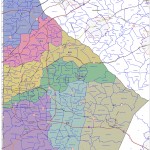 Will this be the new DeKalb Commission Map?
 Ex-Richmond County Commissioner sentenced for shoplifting from pharmacy | The Augusta Chronicle


Comments ( 0 )