
On June 23, 903 AD, the Icelandic Parliament, the Althing or Althingi, was established and is the world’s oldest.
In honor of the Icelandic Parliament, here’s the greatest Icelandic band ever, the Sugarcubes, playing at Auburn in 1988.
Off the coast of Charleston, South Carolina, British Commodore Sir Peter Parker spent June 23, 1776 preparing to land the next day, charged with supporting loyalists to the British crown.
On June 23, 1819, Texas declared its independence from Spain.
On June 23, 1862, General Robert E. Lee met with his commanders in preparation for what would be known as the Seven Days’ Battles.
On June 23, 1865, Georgia-born Cherokee Stand Watie became the last Confederate general to surrender.
On June 23, 1888, Frederick Douglass became the first African-American nominated for President, receiving one vote from Kentucky at the Republican National Convention in Chicago, Illinois.
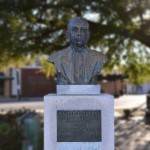
Former Atlanta mayor Maynard H. Jackson, Jr. died on June 23, 2003.
Happy birthday to Supreme Court Associate Justice Clarence Thomas (1948) and the late Mrs. GaPundit.
Georgia Politics, Campaigns, and Elections
Police Blotter: Nicholls Police Department Chief Ashley Wilson was arrested on allegations of inappropriate communications with a minor, according to WJBF.
On the evening of Wednesday, June 18th, just prior to midnight, the Sheriff’s Office received a report concerning an officer from the Nicholls Police Department allegedly involved in an inappropriate relationship with a minor.
The investigation revealed that Wilson had exchanged inappropriate text messages with a 15-year-old girl from Nicholls. The girl’s mother discovered the messages and reported the incident to an officer with the Nicholls Police Department, who then relayed the information to the Coffee County Sheriff’s Office.
Further investigation uncovered that Wilson had sent numerous texts to the minor, discussing a desire to engage in a sexual relationship. Many of these messages were sent while Wilson was on duty, raising serious concerns about misconduct and abuse of authority.
As a result of the investigation, Wilson was arrested and is currently being held at the Coffee County Pre-Trial Detention Center. He has been charged with the following offenses:
• Three counts of enticing a child for indecent purposes
• One count of criminal attempt to commit child molestation
• Violation of oath of office
• Conspiracy to commit child molestation
Georgia Democratic primary voters return to the polls on July 15, 2025 for a Special Primary Runoff Election in Public Service Commission District 3. From Georgia Recorder via the Dalton Daily Citizen:
Two Democratic candidates for the Georgia Public Service Commission are headed to a runoff while Republican Commissioner Tim Echols handily beat his GOP challenger Tuesday night, according to unofficial results from the Secretary of State’s Office.
Keisha Sean Waites, a former Atlanta City Councilwoman and ex-state representative, was the top vote-getter in the District 3 Democratic primary but came just shy of the 50% threshold needed to avoid a runoff with Peter Hubbard. She ended the night with about 46% of the vote.
“The voters have spoken and they want a fighter on the PSC,” she said late Tuesday night. “I look forward to continuing to work for all of the people of Georgia making the case that I am the best choice to serve them on the PSC.
“We will continue to watch the race tonight to make sure all votes are counted and continue with the campaign tomorrow,” she said.
Hubbard, who is the founder of the nonprofit Georgia Center for Energy Solutions, was the second place finisher with about 33% of the vote.
“I am grateful to be in the runoff election for the Public Service Commission to fight for a Georgia powered by clean, low-cost renewable energy. I have a detailed plan to create that future and to lower power bills,” Hubbard said.
Robert Jones, a former utility executive in California, came in third place.
The District 3 race was upended when a leading candidate in the race, Daniel Blackman, had his eligibility challenged. Blackman, who came close to winning a seat on the commission in 2020, spent most of the early voting period trying to stay in the race. He was officially disqualified last week after he was unable to prove he met the 12-month residency requirement.
Commissioners must live within a given district but all Georgians can vote for every seat, meaning someone in south Georgia has a say in who represents Atlanta.
The winner next month will go on to face Republican Commissioner Fitz Johnson, who was appointed by Gov. Brian Kemp in 2021. Johnson ran unopposed in the GOP primary.
“Georgia families know the difference between reliable leadership and rolling blackouts,” Johnson said in a statement. “As I travel the state, I hear two consistent points – we need to see rate relief and thank goodness we can count on the reliability of our service.”
Over in the contested District 2 Republican primary, Echols was leading Lee Muns with nearly three-fourths of the vote late Tuesday.
“I am grateful to Republicans who value our low rates and grid reliability—allowing us to stay the #1 state to do business,” Echols said in a statement Tuesday night. “Our Public Service Commission is laser focused on protecting Georgia families.”
Echols will face Democrat Alicia M. Johnson in November as he seeks a third term on the commission. Alicia Johnson ran unopposed in Tuesday’s Democratic primary. District 2 spans a wide swath of east Georgia.
The Georgia Public Service Commission is a little-known regulatory panel that has significant influence over what consumers pay for their utilities and what resources utilities use to provide those services.
Going into this election, commissioners are facing criticism for approving a series of Georgia Power rate increases that have cost the average household about $43 more per month since 2023. The utility recently agreed to a three-year rate freeze, though customers’ bills are still expected to rise during that time as the utility seeks to recoup its Hurricane Helene recovery and fuel costs.
This year also marks the first time since 2020 that voters will have a chance to change the makeup of the panel. The 2022 elections were delayed because of a lawsuit challenging the statewide method for electing commissioners, arguing it diluted the power of Black voters.
But the election so far have been a sleepy affair. About 200,000 voters participated in Tuesday’s election, representing about 3% of active voters. Some of those who showed up Tuesday hail from the never-miss-an-election crowd.
“I don’t care if it’s presidential or commissioner (election), I need to vote, and I’m setting an example for my grandchildren, and they need to do the same,” Judith Ridley-Robert said outside a polling place in Kennesaw Tuesday. “Matter of fact, I sent my granddaughter a text to tell her to get her butt down here.”
According to the SOS website, Advance Voting is expected to take place, “As soon as possible, but no later than July 7 – July 11.”
Extremely low turnout in the Special Primary Election for PSC has Bulloch County considering opening a single advance voting location, according to the Statesboro Herald.
The June 17 special primary for two Georgia Public Service Commission seats drew just 2% of Bulloch County’s active, registered voters in 16 days of early voting plus one final Election Day in which all 16 of the county’s voting precincts were staffed for 12 hours. Statewide, this election decided a two-candidate Republican race but leaves a runoff for the Democratic Party’s nomination for one PSC seat.
State election law allows that runoff to be preceded by just five in-person early voting days, Friday-Monday, July 7-11. Bulloch County’s early voting would be conducted, as usual, at the Elections Office in the County Annex, 113 North Main St., Suite 201, Statesboro, during office hours. But those 16 traditional Bulloch County’s precinct voting places would then have to open from 7 a.m. until 7 p.m. for Election Day voters on Tuesday, July 15 – unless the Bulloch County Board of Elections and Registration invokes a legal clause that allows the county to be reduce its voting places to a single Election Day precinct for a one-party runoff in a special circumstance. That circumstance is that fewer than 1% of the county’s registered voters participated in the affected political party’s original primary, Election Supervisor Shontay Jones noted Friday.
If the Democratic runoff in Bulloch County is consolidated to one precinct voting place for the July 15 Election Day, that place won’t be the County Annex, despite its use for the five days of early voting. Under the law, the consolidated Election Day voting place has to be the actual Election Day precinct poll where someone would if their home address were the Bulloch County Courthouse, Jones said.
So that means the one voting place on July 15 would be the social hall at Statesboro Primitive Baptist Church, where residents of the “Church Precinct” usually vote.
“There is a code section that refers to the type of election that we’re going to have now, just meaning very low voter turnout has cost counties statewide a lot of money to conduct these elections with low voter turnout, which is, again, beyond our control. …,” Jones said Friday. “If we have just one party on the ballot, the code section states that if less than 1% of the total registered voters come out to vote, then we can opt in to only open up one precinct for Election Day.”
Statewide, turnout was 2.9%, with 214,667 voters participating out of 7,446,040 registered and counted as “active,” as shown on the Secretary of State’s Office election results website Friday, but with the results not yet certified. Bulloch County had 997 voters participate, or 1.99% of its 50,122 active registered voters. The state uses “active” registration to calculate turnout, not considering “inactive” voters who haven’t cast ballots in the last two election cycles.
For the legal clause the county Election Board will consider invoking, participation in the Democratic primary alone would be considered, Jones said. With 416 Bulloch voters choosing the Democratic ballot in last week’s primary, they were 0.83% of the county’s active registered voters, or 0.76% of the 55,045 county total registered voters, less than 1% in either case.
According to the board of elections, the application for absentee ballots is currently open and will close on July 7.
Voters who wish to submit their ballots early can do so from July 7 – 11. Advance voting will be held at building G3 in Evans from 8 a.m. to 5 p.m.
Voters intending to vote on Election Day, July 15, should head to Kiokee Baptist Church in Appling, GA. The polling location will be open from 7:00 a.m. to 7:00 p.m.
The PSC’s primary election on June 17 concluded without a candidate surpassing 50% of the vote for the Democratic nomination for Seat 3, prompting a runoff election set for July 15.
The general election will be held on November 4, 2025.
The Conservation Fund announced it will buy the land upon which Twin Pines Minerals planned to mine near the Okefenokee Swamp, according to the Associated Press via WSAV.
A conservation group said Friday it has reached a $60 million deal to buy land outside the Okefenokee Swamp from a mining company that environmentalists spent years battling over a proposed mine that opponents feared could irreparably damage an ecological treasure.
The Conservation Fund said it will buy all 7,700 acres that Alabama-based Twin Pines owns outside the Okefenokee National Wildlife Refuge in southeast Georgia, halting the company’s mining plans.
Stacy Funderburke, the Conservation Fund’s vice president for the central Southeast said, “It’s a big undertaking, but it was also an existential threat to the entire refuge. We’ve done larger deals for larger acres, but dollar-wise this is the largest deal we’ve ever done in Georgia.”
Twin Pines had worked since 2019 to obtain permits to mine titanium dioxide, a pigment used to whiten products from paint to toothpaste, less than 3 miles from the southeastern boundary of the Okefenokee refuge near the Georgia-Florida line. It is the largest U.S. refuge east of the Mississippi River, covering nearly 630 square miles in southeast Georgia.
From the Capitol Beat News Service via the Moultrie Observer:
The Alabama company that planned to mine titanium dioxide next to the Okefenokee Swamp has agreed to sell its property to an environmental fund, ending — for now — a threat to more than 350,000 acres of designated national wilderness that is home to several endangered and threatened species.
The Conservation Fund announced Friday that it had agreed to buy Twin Pines Minerals’ property on Trail Ridge near the Okefenokee National Wildlife Refuge, ending a six-year effort to protect North America’s largest blackwater swamp.
“By purchasing this land from Twin Pines, The Conservation Fund will ensure that the Okefenokee National Wildlife Refuge remains wild and unspoiled for all Americans,” Stacy Funderburke, the Fund’s vice president for the central Southeast region, said in a statement.
Funderburke said in an interview that the Fund had agreed to pay about $60 million for the nearly 8,000-acre property. The transaction will occur in two phases, with the first phase Friday involving a transaction for 40% of the purchase price and the final closing July 31. He said his organization continues to raise money for that final phase-two transaction.
Twin Pines had no comment but confirmed the sale through a spokesman.
The fund pulled together money from private donors with the help of advocacy group One Hundred Miles.
“Twin Pines’ decision to sell their land to a conservation buyer instead of to a mining company is a respectable response to the hundreds of thousands of voices who have spoken out against the mining proposal,” Megan Desrosiers, president and CEO of One Hundred Miles, said in a statement.
Alice Keyes, a vice president of One Hundred Miles, credited “the unbelievable public outcry” against mining the swamp.
About a quarter million people submitted comments against the mining project to the U.S. Army Corps of Engineers and to the state of Georgia, said the Southern Environmental Law Center, which worked against the mine.
“It was one of the largest public campaigns that I have ever been involved in,” said Keyes, who has worked on environmental issues for three decades.
The Okefenokee is a rich ecosystem hosting bald eagles, bobcats, black bears, and 13,000 alligators. Wood storks, indigo snakes and red-cockaded woodpeckers are among the endangered and threatened species that rely on the swamp.
U.S. Sen. Jon Ossoff, a Democrat who has been involved in the effort to stop the mine, called the purchase “great news for all Georgians and our beloved natural treasure.”
Threats remain, though.
Josh Marks, president of Georgians for the Okefenokee, said the purchase was a “huge victory” to protect a natural treasure “from a dangerous project promoted by an atrocious company. But the threat is not over by a long shot.”
The Conservation Fund struck a deal with DuPont in the early 2000s to stop a different titanium dioxide mine.
Marks is worried that Chemours, which spun off from DuPont a decade ago, could still mine nearby private property, and said the General Assembly should pass the Okefenokee Protection Act, legislation that has stalled.
Funderburke agreed that a couple other private properties nearby could also be mined, but said the Twin Pines sale reduced the risk. He said the company’s inability to secure a mining permit after six years of trying could discourage other mining efforts. And he said that such a large mine so close to the swamp would have set a terrible precedent.
He said other options besides outright purchases exist, such as buying conservation easements.
“The threat is not over, so the drumbeat should continue,” Funderburke said. “But this is a really important milestone in the fight against mining in the Okefenokee.”
That drumbeat has been growing louder.
Sonny Perdue, a former Republican governor of Georgia, has pushed for protecting the swamp. The long-serving cabinet member during President Donald Trump’s first term is now chancellor of the University System of Georgia. In April, Perdue urged U.S. Interior Secretary Doug Burgum to support the years-long effort to get the national wildlife refuge designated as a United Nations World Heritage Site.
The letter, which Perdue sent on Board of Regents letterhead, cited a study by an environmental conservation group that said the designation would be an economic boon for the area around the Okefenokee.
Others have used the economic argument as well. The Southern Environmental Law Center noted that the Okefenokee draws more than 700,000 visits a year, supporting more than 750 jobs and generating about $65 million in annual economic activity for the four counties around the Okefenokee.
The acquisition was brokered with the financial support of some of the country’s leading private philanthropies, including the James M. Cox Foundation and the Holdfast Collective, a nonprofit focused on environmental protection. Holdfast is funded by the outdoor apparel giant Patagonia. Jim Kennedy, the chairman of the James M. Cox Foundation, is chairman emeritus of Cox Enterprises, the parent company of The Atlanta Journal-Constitution.
In a statement, Kennedy called the Okefenokee “a Georgia and national treasure that must be protected.”
“It is extremely important that we work together to preserve natural habitats throughout our state and country,” he added.
The Conservation Fund is purchasing the nearly 600-acre tract Twin Pines had planned to mine initially, along with all of the company’s other land holdings in the area comprising roughly 8,000 acres. In addition to the land, the group is also acquiring the underlying mineral rights.
Twin Pines had promised its mine would protect the swamp and bring hundreds of good-paying jobs to rural Charlton County, home to the mine site and much of the Okefenokee. The median household income in Charlton County is about $26,000 less than it is statewide, according to the U.S. Census Bureau.
Drew Jones, a Charlton County commissioner who works for a large timber company, supported the project and decried the public backlash. He said the sale wastes an “opportunity for economic development in our poor, rural community” and scraps a chance for critical mineral sourcing.
“I strongly believe in private property rights and in the need for future projects to be assessed with greater objectivity, rather than driven by emotion or public pressure,” Jones said in a written statement.
Stacy Funderburke, The Conservation Fund’s regional vice president covering Georgia and Alabama, said that for now, the property will be managed for conservation. But ultimately, he said the organization’s goal is to permanently protect the land to allow public access, ideally by adding it to the federal Okefenokee National Wildlife Refuge.
Georgia House Speaker Jon Burns, whose chamber passed legislation in 2024 that could have temporarily impeded Twin Pines’ expansion plans, said in a written statement he was “grateful” that a deal was reached to acquire the land, “all while respecting private property rights and upholding our state’s longstanding commitment to our business community.”
Georgia’s new “Promise Scholarship” voucher program could cost $84 million dollars in its first year, according to the Capitol Beat News Service via the Savannah Morning News.
This fall, thousands of Georgia students will attend a private school or study at home, and state government will help them pay for it.
Republican lawmakers led a push last year to give families $6,500 a year per student toward private education.
Georgia already had a state-funded voucher program, but it was limited to students with disabilities or certain medical conditions. Another program for all students was funded through tax credits rather than money directly from the state treasury.
The new state-funded “Promise Scholarship” program doesn’t require a disability. It only requires that students live in the attendance zone of a public school performing in the bottom 25% statewide. The student either must have attended it for a year or be a rising kindergartner.
As of Monday, nearly 13,000 had applied for a scholarship and more than 8,300 were considered preliminarily eligible, which translates to a cost of between $54 million and $84 million for the upcoming school year.
The application period runs through June, so more may apply, and there will be two more windows to apply during the upcoming school year.
The money can go toward tuition and fees at approved schools. It can also offset home school costs, paying for curriculum and even medical and therapeutic services by approved providers. Transportation costs are covered, too, at up to $500 per year.
As of Monday, about 60% of the preliminarily eligible students had said they wanted to attend a private school, the rest choosing home school or other educational support services or not yet making a selection, according to the Georgia Student Finance Commission, which operates the program through a public non-profit organization. Nearly 400 private Georgia schools had been approved or were approved but still completing the registration process this week, with 150 applications denied. More than half of the approved schools were in greater metro Atlanta, with about three dozen in the city of Atlanta. Columbus, Macon and Savannah also had numerous approved schools.
More than 300 service providers made the approved list. About a third of them were outside Georgia, with several in California, Texas, Pennsylvania, New York and Florida.
Critics contended that most of the families that used the scholarships would be wealthy since they would be able to cover the cost between the state subsidy and tuition that can run to $10,000 or more.
So far, about three quarters of the preliminarily eligible students are from households earning less than 400% of the federal poverty threshold, or $106,600 a year for a family of three and $128,600 for a family of four.
Opponents of the program, including most Democrats in the General Assembly and public-school advocacy groups, argued that fly-by-night schools would take the money without properly educating the students. In the end, they said, these students would return to public schools and become their burden.
So the GOP lawmakers who pushed the bill added a requirement that all students in the program must take either the same state exams as public school students or one of three national “norm-referenced” tests to be selected by the state.
Private schools will have to report the results, along with other information, such as attendance rates and graduation rates.
Program proponents argued that public schools could not properly serve all 1.7 million students attending one in Georgia.
Shakia McCrary’s son, a rising second grader, will be among those leaving his neighborhood public school this fall.
He has learning disabilities that can lead to misbehavior if he is not kept on task, she said, describing how a teacher would put him on speaker phone so she could calm him down.
His public school in Fort Valley, south of Macon, lacks enough specialized staff to give him the attention he needs, McCrary said. So she is considering two private schools within a half hour drive because, she said, they have smaller class sizes.
The state-funded scholarship will cover all but about $1,000 of the tuition cost at each school, said McCrary, who works for a federal health insurance program.
She is thankful for the promise scholarships.
“Private school, it crossed my mind, but I knew that I just couldn’t afford it and still be able to live comfortably,” she said. If not for the state funding, her son would be heading back to public school this fall, she said, and she would be dealing with the same issues.
Republican lawmakers had been pushing for years to get the program approved, finally gathering enough votes to squeak Senate Bill 233 into law last year.
Sen. Larry Walker III, R-Perry, the Senate majority caucus secretary, sees the subsidies as an “incredibly popular” issue for his party.
“This school choice program is not just a life changer for the students and families that participate. It’s also a party expander,” Walker said at the Georgia GOP convention in Dalton in early June. “School choice introduces new constituents to our Republican values. It allows them to understand that it’s conservative Republicans, not liberal Democrats, who are fighting for better opportunities for working folks and families.”
On Thursday, fellow Senate Republicans voted to nominate Walker as their next president pro tempore. The full Senate will vote on his promotion to top-ranked senator when the body reconvenes in January.
Meanwhile, one group backing SB 233 is now promoting the scholarships, hoping as many parents as possible will access the $141 million that lawmakers allocated to it this year. Americans for Prosperity has placed four billboards around DeKalb County advertising the program, and volunteers have handwritten about 5,000 postcards to likely parents they think should know about it, said Tony West, the organization’s director in Georgia.
“We worked very hard to see Senate Bill 233 pass,” West said, “and now we want to work just as hard to make sure it’s a success.”
The Hall County Tax Assessors Office launched a website to explain how homestead exemption changes work, according to AccessWDUN.
“Hall County is in a unique position because we are impacted by both the statewide exemption, House Bill 581, and local exemptions, HB 1268 and HB 1270,” Hall County Chief Appraiser Steve Watson said. “Our goal is to make the process as transparent and accessible as possible so residents can understand their potential savings and how these changes to homestead exemptions affect them directly.”
This webpage features:
• A breakdown of each bill’s impact
• Explanation of when and how the exemptions are applied
• A chart showing how municipal residents are impacted
• Frequently Asked Questions“In addition to the new page, we encourage citizens to visit qPublic Hall County, where they can view their property details and file for a homestead exemption online,” Watson said. “Citizens should know the new legislation allows them to file for a homestead exemption during the 45-day appeal window after Notices of Assessment are mailed.”
Click here for the webpage on Hall County homestead exemptions.
Glynn County Commissioners voted to adopt a $174.7 million dollar FY 2026 budget, according to The Brunswick News.
The budget is made up of seven fund types and includes 40 individual funds, with most of the county’s day-to-day spending coming from the general fund. It’s the largest single fund at around 44% of the total budget or $75.8 million.
Special Revenue Funds make up 46%, or $79.6 million, and include police, EMS and fire revenue and spending, the bed tax and grant funding, among others. Capital projects, debt service and enterprise funds make up the remainder at 7.14%, 2.87% and 1.02% of the budget respectively.
Tifton City Council adopted an FY 2026 budget, according to the Tifton Gazette.
The Total Fiscal Year budget for 2025-2026 reflects a decrease of $9,422,651 from the 2024-2025 budget, including a $6,095,365 decrease in capital projects expenditures.
The City has also received more than $15 million from grants and special tax to supplement local funding for critical infrastructure and community improvement projects, according to a press release from the City.
Glynn County Commissioners named Brittany Dozier as their new Public Information Office, according to The Brunswick News.
Brittany Dozier, the public relations specialist for the Glynn County school system, has been named the new county public information officer. She replaces Katie Bassen, who left the county for a job in the private sector.
Chairman of the Glynn County Board of Commissioners Walter Rafolski praised the selection.
“Brittany has already demonstrated a strong commitment to our community through her work and service,” he said. “We believe her leadership and energy will help advance our efforts to keep citizens informed, engaged, and connected.”



Comments ( 0 )