
On January 11, 1765, Francis Salvador of South Carolina became the first Jewish elected official in America when he took a seat in the South Carolina Provincial Congress. Salvador’s grandfather was one of 42 Jews who emigrated to Georgia in 1733. Salvador later became the first Jewish soldier to die in the American Revolution.
The first modern circus was held in London on January 9, 1768. The next one kicks off Monday in the big building downtown with a gold dome.
Thomas Paine published a pamphlet titled, “Common Sense” on January 9, 1776. The pamphlet is considered to have united colonists to the cause of American independence.
Lyman Hall, one of three Georgians who signed the Declaration of Independence, was elected Governor on January 8, 1783.
President George Washington delivered the first “State of the Union” on January 8, 1790.
On January 10, 1868, the Georgia Equal Rights Association was formed in Augusta.
On January 10, 1870, the Georgia General Assembly convened and seated African-American legislators who had been expelled in 1868.
On January 11, 1908, President Theodore Roosevelt declared the Grand Canyon a national monument.
“Let this great wonder of nature remain as it now is,” he declared. “You cannot improve on it. But what you can do is keep it for your children, your children’s children, and all who come after you, as the one great sight which every American should see.”
Eugene Talmadge was sworn-in to his first term as Governor of Georgia on January 10, 1933.
Talmadge fired elected officials who resisted his authority. Others were thrown out of their offices. Literally.
Herman Talmadge was sworn-in to his second term as Governor of Georgia on January 9, 1951.
Marvin Griffin of Bainbridge was inaugurated as Governor of Georgia on January 11, 1955.
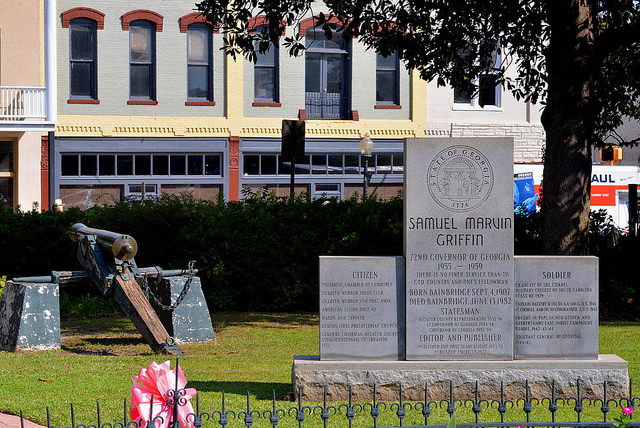
Segregated seating on Atlanta buses was held unconstitutional by a federal court on January 9, 1959.
Hamilton Holmes and Charlayne Hunter arrived in Athens to register at the University of Georgia on January 9, 1961.
After Julian Bond’s election to the Georgia House of Representatives in 1965, the chamber voted against seating him ostensibly because he had publicly state his opposition to the war in Vietnam. On January 10, 1967, after the United States Supreme Court held the legislature had denied Bond his right to free speech, he was seated as a member of the State House.`
On January 8, 2007, R.E.M. was announced as an inductee into the Rock and Roll Hall of Fame.
Here’s REM at their induction into the Rock Hall.
Steve Jobs, Apple CEO, debuted the iPhone on January 9, 2007.
On January 10, 2014, the Atlanta Journal-Constitution released a poll of the Georgia Governor’s race that showed Nathan Deal with 47 percent to 38 percent for Jason Carter. The nine-point Deal advantage was as close as the AJC polling firm would come all year to correctly predicting the point spread in the General Election.
Governor Nathan Deal was sworn-in as the 82d Governor of Georgia on January 10, 2011 while snow shut down the planned public Inaugural.
Georgia Politics, Campaigns, and Elections
Governor Brian Kemp issued Executive Order #01.08.26.01, appointing a Review Commission to review the indictment of former State Rep. Sharon Henderson, (D-Covington) District 113 Representative in the Georgia House of Representatives.
From Georgia Recorder, dated December 8, 2025:
A Georgia state representative is accused of fraudulently collecting $17,811 in unemployment benefits after allegedly applying for a federal program meant to support people who had lost their jobs due to the pandemic, the U.S. Department of Justice announced Monday.
Rep. Sharon Henderson, a Covington Democrat whose district spans a western portion of Newton County, was charged with two counts of theft of government funds and 10 counts of making false statements.
Henderson was scheduled to appear before U.S. Magistrate Judge Justin Anand on Monday afternoon. She did not respond to multiple requests for comment.
The program, which was established by Congress in 2020, provided cash assistance to those experiencing unemployment as a result of the COVID-19 pandemic. Applicants were required to submit weekly certifications providing the reason they were unemployed and stating that they were actively looking for work.
Prosecutors say Henderson applied for the program during June 2020, when she was a candidate for the Georgia House of Representatives, falsely claiming that she had been an employee of the Henry County School District in 2019 and 2020, and was laid off due to the pandemic.
In reality, authorities say Henderson had only spent five days working for Henry County Schools as a substitute teacher in 2018, and had not worked there since. Additionally, the substitute teaching contract she signed included an acknowledgement that she was not eligible for unemployment benefits.
Henderson allegedly submitted eight certifications in June 2021, after she was sworn in as an elected official.
Henderson was first elected to represent House District 113 in 2020, defeating incumbent Democrat Pam Dickerson during the primary. She was reelected in 2022 and 2024 without Republican opposition and is currently in the middle of her third term.
Guyton City Council member Theodore Hamby resigned his seat, according to the Savannah Morning News.
“It has been one of the great honors of my life to serve beside you in these chambers-to wrestle with the hard questions, to stand up for our neighbors, and to work, day by day, for a city that is more just, more compassionate and more hopeful,” Hamby wrote in his resignation letter which was shared with the Savannah Morning News by the city of Guyton Wednesday, Jan. 7. “Public service is a privilege, but it is also a solemn duty—a duty that asks for our full attention, our courage, and the quiet strength of our conscience. I step aside not in sorrow, but in faith. Faith in the resilience of our people.”
Hamby was arrested March 14, 2025 by the Georgia Bureau of Investigation and was charged with theft by taking and financial transaction card fraud.
The investigation began Feb. 21, 2025, when the Guyton Police Department requested assistance from the GBI for a theft investigation involving Hamby’s misuse of a city credit card.
In August 2025, Hamby [w]as removed from his duties as a councilman. An executive order issued by Gov. Brian Kemp’s office Aug. 20 reads, “The indictment of Mr. Hamby does relate to and adversely affect the administration of the Guyton City Council such that the rights and interests of the people are adversely affected thereby and recommended that Mister [Hamby] be suspended from office.”
The order did not remove him from his post but simply prohibited him from voting on city matters.
According to Guyton Mayor Andy Harville, City Manager Bill Lindsey will contact the elections office to check for future dates regarding electing a new councilmember.
“City Council will address the resulting vacancy at this Tuesday’s regular meeting. Under the City Charter, when a vacancy occurs with 14 months or more remaining in the unexpired term, the position must be filled by a special election pursuant to Section 5.14,” Harville said in an email. “We wish him the best in his future endeavors.”
President Donald Trump’s lawyers are asking for $6.2 million dollars in reimbursement for legal fees from Fulton County, according to the Savannah Morning News.
The motion alleges the Fulton County District Attorney’s Office, and Fani Willis, launched a “politically motivated” investigation into claims that the president tried to overturn the results of the 2020 election by asking the Georgia Secretary of State to “find” votes.
The motion comes after a bill was passed in Georgia in May 2025 to allow defendants in felony cases to file a motion for “reasonable attorney’s fees” in circumstances where cases are dropped.
Trump’s attorneys, led by Steven Sadow, outline the ultimate disqualification of District Attorney Willis from the interference case, starting when Willis was “openly promoting and headlining a fundraiser for (Trump’s) political opponent.”
The case was dismissed against Trump on Nov. 26, 2025, which æpaves the way for the award of reasonable attorney fees and litigation expenses” under the new Georgia law.
“Each of the necessary elements have been met: DA Willis was disqualified based upon improper conduct, the criminal case was dismissed, and the criminal case was pending when the statute went into effect,” Trump’s attorneys write.
The motion requests $6,261,613.08 for the “costs for the defense of President Trump.”
The Georgia Department of Audit and Accounts found “potential waste and abuse of public funds” in their audit of the beleagured Dublin City Schools, according to 13WMAZ.
Dublin City Schools is facing serious questions about how it has spent taxpayer money after a state audit revealed “potential waste and abuse of public funds” and major weaknesses in financial oversight.
The Georgia Department of Audit and Accounts released a special examination Tuesday that found the district used temporary COVID-19 relief funds to cover ongoing expenses like salaries and operations, masking budget problems that have now resurfaced.
The investigation, requested by House Appropriations Committee Chair Matt Hatchett, who represents Dublin, found the district lacked adequate spending controls. Purchases weren’t properly approved, budget warnings were ignored and credit card use wasn’t closely monitored, according to the report.
“I hate to say it but it was, it’s been a perfect storm, and there are, there’s fault at many levels, across state, local, different departments and it can’t happen again,” Hatchett said.
The audit also found major problems with how district leaders developed budgets. Budget projections weren’t based on solid evidence and weren’t properly checked, meaning the school board made decisions based on inaccurate financial information.
The findings come as Dublin City Schools faces a projected $13.4 million budget deficit for fiscal year 2026. The district has already made significant cuts, including eliminating 46 positions and reducing the school calendar by 10 days.
Interim Superintendent Marcee Pool said in a Facebook statement that the district is “working diligently” with state officials to address every item in the report.
“Diligent doesn’t begin to describe how we are working alongside our financial advisors, the Georgia Department of Education, the DOAA, and state officials to address every item outlined in this report and to implement best practices at every level to protect the district’s financial stability and ensure its integrity moving forward,” Pool wrote.
The state is recommending Dublin City Schools overhaul its entire budget process, including better tracking of salaries and benefits, multi-year financial planning and training for school board members on budget oversight.
At least two top district leaders have stepped down since the financial problems came to light last summer. Finance Director Chad McDaniel resigned in August, followed by former Superintendent Fred Williams in September. Williams was named Georgia’s Superintendent of the Year before resigning.
The Georgia Department of Audits and Accounts and the state superintendent did not immediately respond to requests for comment.
“Affordability” will now be on the 2026 Session Bingo Card. From the Capitol Beat News Service via the Savannah Morning News:
When lawmakers return to the Georgia Capitol next week, they will focus on affordability.
While President Donald Trump tries to address complaints about the cost of living, Georgia Republicans see the risk of a voter backlash.
They worry that the landslide defeat in November of two Republican incumbents on the state Public Service Commission could be a harbinger for the November general elections.
So, members of the state Senate and House say they will be pushing pocketbook proposals this year.
“We’re laser focused on pursuing an agenda — when we start back next Monday — that makes life affordable,” said House Speaker Jon Burns, a Republican from Newington.
In a briefing Wednesday, he said he and his chamber would focus on local property taxes, which he blamed for undermining the American dream of homeownership.
“For many of the families in our state, because of those property taxes, that dream appears to be unattainable,” he said. “We need to do something about it. And we’re going to do something about it.”
Senate Republicans are concerned about taxes, too. But they are targeting the state income tax.
On Wednesday, a Senate study committee recommended eliminating it on the first $50,000 earned by individuals and $100,000 for couples.
The committee, led by Sen. Blake Tillery, R-Vidalia, also recommended abolishing the $16 billion tax entirely by 2032.
But first, he said, lawmakers must help those struggling most with rising costs by exempting them from the 5.19% income tax.
“Georgia families are feeling the burden of affordability,” said Tillery, who, as chairman of the Senate Appropriations Committee, will have significant say over the state budget. “They’re talking about how high their power bill is. They’re talking about how much child care costs, how much their grocery bill is.”
Last spring and summer, legislators held hearings to study rising medical costs, a topic that could lead to legislation, as well. The House heard about a resulting lack of access to cancer care and about the impact of federal funding policy on the state public health system.
The end of COVID-19 era subsidies for people who buy health insurance through the Affordable Care Act is expected to make coverage unaffordable for hundreds of thousands in Georgia. The Congressional fighting over the issue could spill into state politics.
U.S. Sen. Jon Ossoff, a Democrat, taunted Georgia’s Republican delegation to the U.S. House over the issue, targeting those who want to unseat him in November.
“They support throwing half a million Georgians off their health insurance. They support more than a million Georgians seeing their health insurance premiums double,” he said Thursday. Republicans should break with Trump and extend the tax credits, he said. It is a line he will surely repeat during this election season.
Health care was the second issue Burns said the state House would tackle this year. His concern centered on recruiting and retaining doctors. His plan is to establish more opportunities for future doctors to complete their residency in Georgia, since they tend to settle where they do that training.
The third top issue Burns mentioned was education. He said the state must do more to improve literacy rates, so he wants to put a literacy coach in every elementary school. It has been a major concern of his wife, Dayle, a retired educator who has been helping with a state literacy campaign.
Speaker Burns also touched on another education topic that lawmakers in both the House and Senate have been discussing since the last legislative session: banning cellphones in high schools.
Gov. Brian Kemp signed legislation into law in May that will ban personal devices in elementary and middle school starting next fall. Last month, a Senate committee co-led by Sen. Sally Harrell, D-Atlanta and Sen. Shawn Still, R-Johns Creek, the chamber’s majority caucus chair, recommended extending that ban to high schools.
Burns was on board with the idea, observing the popularity in schools that have banned phones on their own.
“You’ll see us move this session, I do believe, to ban cell phones in high schools because so many jurisdictions around the state have already done that,” he said. It is a hot topic, with school shootings leading to parent concerns about being able to contact their children.
Burns noted that authorities see phones as a distraction from safety protocols during emergencies, but he said he respects parents’ feelings on the issue: “that will be something we will certainly have a lively discussion about.”
State Rep. Jaclyn Ford (R-Tifton) discussed her priorities for the legislative session, according to the Tifton Gazette.
The District 170 representative, covering Berrien County and parts of Tift and Irwin counties, has been hard at work preparing for the start of the upcoming session, building a foundation for the policies she hopes to pursue and identifying which key pieces of reform will likely be up for discussion.
The state representative expects taxation reform to be among the most discussed topics, namely the lowering of property tax, as well as policies to provide incentives to first-time homebuyers and support to seniors, and the reduction of or even elimination of income tax.
“Lowering taxes is a big issue right now,” Ford said. “Last year we lowered the state income tax 20 basis points to 5.19, so there’s continual talk.”
While she doubts that the state’s income tax could be truly eliminated, she is confident that discussions of lowering the rate will be among the items addressed in the upcoming session.
Ford is also prepared to deliberate on policies in support of the forestry industry, which has sustained notable damage in recent years, and a handful of bills related to insurance — something she is more than equipped to discuss.
In terms of what policies she aims to push for, Ford has reported she hopes to bring a few pieces of local legislation to the table, but will be keeping her focus on the state with the lowering of taxes, support of education, and an increase to general affordability.
“I certainly want to do what we can to make sure that our taxes are lowered,” she said. “Lowering our taxes but also protecting our education, making sure that we’ve got the money we need to make sure our kids are educated properly.”
State legislators may consider legislation on cannabis, according to WRDW via WALB.
Several cannabis bills first introduced last year are expected to be reintroduced as Georgia’s legislative session begins next week.
One Senate bill would increase THC potency in medical cannabis. A House bill would limit searches and arrests based on the scent of marijuana.
Georgia is currently a “medical cannabis” state, meaning only eligible patients can buy and have 20 ounces of low THC oil and products. Advocates argue the state’s ban on marijuana plant material is limiting.
“I think what’s going on right now with our medical program in the state of Georgia is it’s listed as low dose THC oil medical program, right? And so if we’re ever going to get inhalables right, whether that’s smoking or vapes, right, we have to overcome that name first. This is a small win that we hope we can get this session,” said Omari Anderson, cannabis advocate.
Expanding anti-gang operations may be considered by the General Assembly, according to WJBF.
Georgia leaders are ramping up efforts to crack down on gang activity across the state, calling it a top public safety priority this legislative session as investigators warn gangs are expanding their reach and recruiting children.
A new report from the Georgia Gang Investigators Association estimates there are nearly 130,000 gang members and about 2,000 violent gangs currently operating in Georgia, an 80 percent increase since 2018.
Attorney General Chris Carr says those numbers highlight the urgent need to expand Georgia’s Anti-Gang Unit and strengthen partnerships between law enforcement agencies.
“We need to continue to expand because this is about keeping people safe,” Carr said. “That is what government is supposed to do, keep people safe all over the state of Georgia.”
State investigators say gangs are now linked to roughly 65 percent of all crime statewide, including drug trafficking, fraud, cybercrime and carjackings.
To address the growing threat, Georgia launched a statewide gang task force in 2022, bringing together federal, state and local law enforcement, prosecutors, nonprofits and community groups. Carr says the coordinated approach has improved intelligence sharing and helped target gang recruitment before it starts.
“In 2017, we created the Georgia Anti-Gang Unit to improve communication, intelligence sharing and prosecution, but also to identify anti-recruitment programs so kids would never join gangs to begin with,” Carr said.
Investigators say gangs are increasingly using social media to recruit young people, often promising a sense of belonging. In response, state leaders are pushing for tougher penalties for gang-related crimes alongside expanded prevention and youth intervention programs.
Carr also emphasized the importance of multi-jurisdictional cooperation, noting that gang operations routinely cross city and county lines.
“Gangs don’t care about jurisdictional boundaries,” he said. “If the goal is to keep people safe, law enforcement has to work together and share intelligence.”
Authorities are also tracking new smuggling tactics, including gangs concealing illegal goods inside produce shipments such as celery, jalapeños and blackberries, according to investigators.
Law enforcement officials say gang activity has been reported in nearly every Georgia county, with rural communities, particularly in South Georgia, seeing a troubling rise in juvenile involvement.
Newly-elected legislators will join the legislative session next week, according to Georgia Recorder.
There will be some fresh faces under the Gold Dome when lawmakers reconvene next week for the 2026 legislative session.
That’s thanks to a series of off-year special elections held to replace state lawmakers who have died, resigned or been appointed to other political offices. At least three representatives will make their House debut, and another three legislators will join the Senate to finish out the remainder of their predecessor’s two-year legislative term.
There are also more special elections to come in the new year, after two lawmakers recently announced they were leaving the state Legislature. Former Rep. Karen Bennett, a Stone Mountain Democrat, resigned her seat days before she was charged with fraudulently receiving nearly $14,000 in unemployment benefits. Former Rep. Lynn Heffner, an Augusta Democrat, also resigned Monday citing damage to her home from Hurricane Helene and the state law requiring representatives to live in the districts they represent. Details about the elections to replace the two representatives have not yet been announced.
Here’s a look at the newcomers.
House District 23
The newest lawmaker in a Cherokee County-based district will be Republican Bill Fincher, who defeated Democrat Scott Sanders during a runoff election Tuesday, maintaining the GOP’s hold over the district.
Fincher, a former district attorney who now owns an RV park, received over 70% of the vote according to unofficial results from the secretary of state’s office. He will replace Republican state Rep. Mandi Ballinger of Canton, who died in October after a long battle with cancer.
In an interview, Fincher told the Georgia Recorder that he was “absolutely humbled” by the support of the voters in his district. His top priorities will be capping property taxes, reducing traffic around metro Atlanta and lowering the cost of insurance premiums.
The district, which includes Canton, part of northern Holly Springs and the surrounding unincorporated areas, heavily favors a Republican.
House District 106
Democrat Muhammad Akbar Ali, a graphic designer and former first vice chair of the Gwinnett County Democratic Party, is headed to the Gold Dome after defeating fellow Democrat Marqus Cole during a runoff election for a southwest Gwinnett County state House seat.
Ali focused his campaign on issues like lowering the cost of living, supporting public schools and protecting the rights of immigrants and LGBTQ Georgians. He received a slew of endorsements from key figures in Georgia’s Democratic establishment, including House Minority Caucus Whip Sam Park, a Lawrenceville Democrat, and former Georgia Governor Roy Barnes.
The district’s previous representative, Snellville Democrat Shelly Hutchinson, stepped down from the state Legislature earlier to care for a family member. She later endorsed Ali.
At 21, Ali is set to become the youngest state legislator currently serving in Georgia, stealing the title of youngest lawmaker from Democratic Rep. Bryce Berry of Atlanta.
House District 121
In a stunning upset, Democrats flipped a northeast Georgia House seat, gaining control of an Athens-area district for the first time since 2019.
Eric Gisler, a tech executive and small business owner, will replace former state Rep. Marcus Wiedower, a Watkinsville Republican who abruptly resigned from his seat to focus on his work as vice president of external affairs at the real estate firm Hillpointe.
The district, which covers parts of Clarke and Oconee counties, has historically leaned conservative. Wiedower won his last election with 61% of the vote.
In an interview, Gisler credited his campaign’s success to a strong ground game, as well as his focus on issues like health care access and the rising cost of living, which he said likely appealed to some Republican voters.
Senate District 18
Voters have yet to select a replacement for state Sen. John F. Kennedy, a Macon Republican who resigned in December to focus on his campaign for lieutenant governor.
The district encompasses Crawford, Monroe, Peach and Upson counties, as well as part of Bibb and Houston counties. Six candidates — five Republicans and one Democrat — have qualified for the seat. They include former state Rep. Lauren Daniel, former Forsyth Mayor Eric Wilson and former Fort Valley Mayor Pro Tem LeMario Brown.
The election will be held on Jan. 20, roughly a week after the start of the 2026 legislative session, and early voting for the race will begin on Dec. 29. If no candidate receives more than 50% of the vote, a runoff election will be held on Feb. 17.
Senate District 21
Republican state Sen. Jason Dickerson, the president of a private investment firm, will replace former Alpharetta Republican state Sen. Brandon Beach after securing a victory in what was perhaps the most contentious legislative special election of 2025.
Beach, who had represented the district since 2013, resigned from the Senate after President Donald Trump appointed him to serve as the 46th U.S. Treasurer. The district, which includes parts of Fulton and Cherokee counties, is predominantly Republican, with Beach receiving upwards of 70% of the vote against a Democratic challenger in 2024.
But Democrats rejoiced after Debra Shigley, an Alpharetta mom, attorney and small business owner, racked up nearly 40% of the vote in a seven-way special election. Her campaign also received door-knocking help from high-profile Democrats like Democratic National Committee Chairman Ken Martin and U.S. Sen. Jon Ossoff.
The district’s Republican base quickly coalesced around Dickerson in the runoff, and he ultimately won the seat with over 60% of the vote, though Democrats cheered the gains made in the conservative district.
Senate District 35
Democrat Jaha Howard, a dentist and former Cobb County School Board member, is headed to the state Capitol, representing a metro Atlanta district that includes portions of Cobb and Fulton counties.
Howard narrowly defeated former Democratic state Rep. Roger Bruce, who retired from the state Legislature in 2024, during a special election runoff on Dec. 16. He will replace former state Sen. Jason Esteves, an Atlanta Democrat who resigned from the state Senate in September to focus on his campaign for governor.
According to his campaign website, Howard plans to prioritize supporting small businesses, reducing barriers to health care access and increasing literacy rates.
This is not Howard’s first foray into politics; he has also been a candidate for state school superintendent and ran for a seat on the Cobb County commission last year. During a previous bid for state Senate in 2017, however, he came under fire for sexist and homophobic comments he posted on social media between 2011 and 2014. Last year, he told the Georgia Recorder he has worked to gain voters’ trust in his commitment to LGBTQ and women’s rights.
He also received an endorsement from state Sen. RaShaun Kemp, one of the two openly gay lawmakers in the chamber.
Democrats running for Governor met in a public forum, according to the Capitol Beat News Service.
Most of the Democrats who say they are running for governor appeared in a forum televised from a Savannah church Thursday night, where they worked to differentiate themselves before a primary election just four months away.
All seven of them passed two key litmus tests for the Democratic base, including Geoff Duncan, a former Republican state leader.
They all said they would expand Medicaid if they reached the governor’s office, and they all would fight back against President Donald Trump.
Duncan, as lieutenant governor, famously rebuked Trump’s assertions that the 2020 election was stolen, and he defied Trump’s efforts to overturn the results. Former Atlanta Mayor Keisha Lance Bottoms also could point to experience pushing back against the president during his first term.
The other five candidates said they would use the courts or other means to foil Trump when they disagreed with him. As Olujimi Wesley Brown, a reverend and architect put it, he “will build a firewall that protects us from Donald Trump, his antics and his chaos.”
Despite some nuance on other issues, such as affordable housing and the economy, they revealed similar beliefs and approaches to policy.
Most, for instance, focused on requiring more from corporations in exchange for the billions in tax breaks that they enjoy.
Former DeKalb County CEO and state labor commissioner, Michael Thurmond, said he would require recipients to hire local labor rather than foreigners, an apparent jab at the subsidies handed to South Korean company Hyundai under the watch of Republican Gov. Brian Kemp.
Federal agents raided the company’s electric vehicle battery plant west of Savannah in September, detaining 475 workers, most of them Korean nationals. The Trump administration said the action followed a monthslong investigation into the company’s employment practices.
State Rep. Ruwa Romman, D-Duluth, said Georgia should invest the money in people instead. If she were governor, she said, she would subsidize access to health care to make Georgia’s relatively young workforce even more attractive to employers.
She and Jason Esteves, a former state senator and Atlanta school board chairman, sounded a defiant tone about corporations, both blaming them for the rising cost of housing and both offering a similar solution.
“I’m going to stop private equity funds from buying up all of our single-family homes,” Esteves said, eliciting applause from the audience at Jonesville Baptist Church in Savannah.
State Rep. Derrick Lamarr Jackson, D-Tyrone, like Romman, said low wages were a core issue. Both would work to raise pay.
Bottoms, Esteves and Thurmond would offer free adult education to address a mismatch between job skills and employer needs. Brown would insert more technical education into high school classrooms while Duncan would help cover the cost of child care, freeing up more parents to work.
Thurmond, the oldest candidate at 73, touted his experience in government leadership, saying Georgia needs a governor who will not require training wheels.
Duncan had the most unique selling point: he said he could draw independents and disaffected Republicans to land a Democrat in the governor’s mansion for the first time in nearly three decades.
But he will have to convince Democrats that he has truly abandoned GOP orthodoxy after supporting policies that are anathema to many liberals, such as gun ownership and banning abortion.
Duncan said he is relieved that he no longer must “make excuses” for Trump. “I don’t have to watch that school shooting on TV and be expected to make an excuse,” he said. “This is a heartfelt move.”
The event was televised by WJCL 22, an ABC affiliate that said a similar forum for Republican gubernatorial candidates would occur in the spring, ahead of the May 19 primary election.
Democrat Stacey Abrams said she will not run for Governor, according to the AJC.
The two-time Democratic nominee for governor definitively ruled out another run for Georgia’s top job this year, saying Thursday she’ll instead continue her work fighting what she sees as the nation’s lurch toward authoritarianism under President Donald Trump.
“Americans are in pain but they are ready to act, and now is the moment to reconnect to what is at stake and what is possible,” she said in a statement to The Atlanta Journal-Constitution.
“It’s clear to me that the most effective way I can serve right now is by continuing to do this important work. For that reason, I will not seek elected office in 2026.”
Vernon Jones (D R – DeKalb) campaigned in Coastal Georgia for the Republican nomination for Secretary of State, according to The Brunswick News.
Vernon Jones does not want to relive or relitigate the 2020 election and the alleged voting issues that some people say plagued it in Georgia. He wants to identify the issues and address them.
That will be one of his goals if he is elected as Georgia’s next Secretary of State, Jones told The News during a visit to the Golden Isles on Thursday.
Fulton County Commissioner Dana Barrett announced she will run for the Democratic nomination for Secretary of State, according to the Associated Press via WJBF.
Fulton County Commissioner Dana Barrett planned to hold a news conference Thursday morning to launch her campaign for secretary of state. She joins a Democratic primary field that already includes former Fulton County State Court Judge Penny Brown Reynolds, who had a brief reality TV career, as well as Adrian Consonery Jr. and Cam T. Ashling.
Barrett, who was elected to the Fulton Board of Commissioners in 2022, was a vocal part of a Democratic majority that last year refused to vote to approve two Republican nominees to the county election board, saying their past actions made them unsuitable. A judge ultimately found the Board of Commissioners in civil contempt and imposed a fine of $10,000 a day until the nominees are appointed, though the ruling is currently on hold pending appeal.
Speaking during a Board of Commissioners meeting in August, Barrett asserted that “elections are under attack in this country.”
“I ran for this seat, in a large part, because I wanted to be in a spot to defend the integrity of our elections, and I stand by that commitment today,” she said at the time, arguing that a judge could not order her and her colleagues to vote in a particular way.
Current Secretary of State Brad Raffensperger, a Republican, is running for governor this year. Republican Gabriel Sterling, who served as one of Raffensperger’s top deputies, is running to replace him. Both Raffensperger and Sterling gained national prominence — and the ire of Trump and his supporters — when they defended Georgia’s presidential election results in 2020 after Trump called Raffensperger and urged him to help “find” the votes needed to overturn Democratic President Joe Biden’s narrow win in the state.
Rounding out the Republican primary are state Rep. Tim Fleming, Vernon Jones and Kelvin King and Vernon Jones. Fleming helms a legislative study committee that has been looking into how the state conducts its elections. Jones is a former Democratic state representative who switched parties and has championed Trump and his claims of a stolen election. King is married to Janelle King, a member of the Trump-endorsed majority on the State Elections Board.
Tybee Alliance sought an injunction prohibiting enforcement of the city’s Short Term Vacation Rental ordinance, according to the Savannah Morning News.
Four years after lawsuits were first filed by Tybee Alliance, residents, property owners and city leadership gathered in Courtroom 4B of the Eugene H. Gadsden Courthouse to hear verbal arguments on the constitutionality of Tybee Island’s short-term vacation rental ordinance.
Tybee Alliance, a group of property management companies and STVR owners, filed a motion for summary judgment in August 2025, seeking a decision on the claim that Tybee’s STVR ordinance is unenforceable because it violates state codes limiting municipal powers on the regulation of residential rental properties.
The motion also asked for a permanent injunction barring the enforcement of the ordinance, preventing any further enforcement of STVRs in their entirety. The City of Tybee Island also filed a motion for summary judgment in November 2025, stating that the defendants are asking for the court to curtail access to information the city is entitled to.
Tybee Alliance argues the city is violating two Georgia codes, O.C.G.A. § 36-74-30(b) and O.C.G.A. § 44-7-19, One code prohibits local governments from requiring registration or conducting inspections of residential rental property unless there is probable cause to believe there has been violations of applicable codes. The other code prohibits local governments from regulating rent amounts for privately owned residential properties.
Both sides also spent time contending with Dillon’s Rule, which is a legal principle that asserts local governments in the U.S. can only exercise powers explicitly granted to them by the government. Representatives for Tybee Alliance suggested that because there is no specific rule granting the registration of short-term rental properties, that it was not something that they could do.
“Plaintiffs are correct when they say that this is a case about power,” said Phillip Thompson, who represented the City of Tybee Island. “Tybee’s power to pass these ordinances comes directly from the zoning provision of the [Georgia] Constitution.”
The Mayor and City Council of Nicholls, Georgia disagree about changing their municipal charter, according to WALB.
A newly proposed charter would remove archaic language– limiting council members to only white men…
And take some controls from the mayor and re-allocate them to the council. It would also create a new city manager position.
The Georgia Municipal Association called on the city of Nicholls to update its charter in Dec. 2024. But still, in Jan. 2026, the mayor and council don’t seem to agree on what the city’s future structure should look like… or if it should change at all.
Glynn Tanner, Nicholls City Councilman said, “It was just an old charter that was out of date. Of course, it had things in it like no women could be on the council, we have had women on here for the last 20 years. And it had to all be white men on the thing.”
Those are only two of the modern issues presented in the city of Nicholls’ 120-year-old charter. The proposed charter also changes the city’s power structure from a strong mayor-council structure to a council-manager structure.
• Current charter the Mayor acts as chief executive, presiding over the Council, supervising officers, and executing broad day‑to‑day authority. The mayor also has voting power, including vetoing power, on local ordinances.
• Proposed charter would establish a Council–Manager structure, where the City Council (5 at‑large members) acts as the legislative body with the mayor presiding during meetings; a and a City Manager is appointed by the Council to be the chief executive/administrator of the city.
The mayor would also act as the official spokesperson of the council and would vote only to break ties within the council.
Tanner said, “When Nicholls started back and got the charter, they let the mayor be a strong mayor. Because the local merchants usually served as the councilmen, Older men, they said you just run it and we will help you with everything. That was in 1903.”
Proposed charter, the City Manager could be appointed and removed by the Council. City department directors would be appointed based on qualifications and employees would be at‑will. The City Attorney would be treated as an independent contractor.
Nicholls Mayor Tamon Frost told WALB in a statement:
“The New Charter has never been discussed nor we as a Mayor and Council ever scheduled a meeting to have a First or second reading. Some of the changes made in this New Charter are taking the Mayor out of control of running this City. A Mayor which is voted in by the Citizens to serve. The Council wants full control of hiring and firing of all City Employees, as well as hiring a City Manager which would add an additional salary giving that City Manager control of running the City in all aspects, financial etc. The City of Nicholls does not have a City Manager in place, in the history of our City we have never had a City Manager. We live in a small town population of approximately 850 where everyone is considered family. The council is not over any districts or wards.”
However, city councilmen Tanner and Phillip Grady believe that under the current charter operation – city funds have not gone to address citizens’ concerns, like water and sewer issues, sidewalk additions, and community parks and recreations.
Grady said, “I think we need a forensic audit and to know where the city is at because we had a quite of bit of money and now we don’t have that money…”
“I think the biggest thing is electing a council… which we’ve done. And everybody get together and decide on what we’re going and if you get voted down then you get voted down. If you get voted up then you go ahead with that project. But everybody work together would be right to get everything straight,” Tanner said.
In response as to whether the addition of a city manager would be a positive or negative thing for Nicholls, Frost says, “Realistically this City is too small of a city to have a City Manager Position. It would be costing the City a salary that is not needed. It is hard to justify a position of such high standards without ever been spoken to and met with regarding this matter.”
According to the councilmen, the proposed charter presented in the October 2025 council meeting will be approved by the Georgia General Assembly this month.
Columbus City Council member Byron Hickey (District 1) dropped out of the race for Mayor, according to WTVM.
Six candidates remain in the race for Columbus mayor after District 1 City Councilman Byron Hickey dropped out of the contest.
Three of the remaining candidates outlined their priorities and qualifications for the position during recent interviews. The remaining three candidates will be profiled in a follow-up report.
The mayoral election is scheduled for May 19.
Zack Thompson was sworn in as the new Mayor of Gainesville, according to AccessWDUN.
Zack Thompson ran unopposed for the mayoral seat in November, replacing previous Mayor Sam Couvillon, who left the post to run for 9th District U.S. Congress. Thompson previously served as the Ward 2 councilman for the city.







Comments ( 0 )