
On April 22, 1891, Asa Candler bought the recipe for Coca-Cola for $2300 and eventually turned its marketing from a “brain tonic” into a plain old tasty beverage.
Adolf Hitler admitted defeat in World War II on April 22, 1945.
The Atlanta Braves won their first home game in Atlanta Stadium on April 22, 1966. The Braves beat the New York Mets 8-4. It’s interesting to look back at how the Braves landed in Atlanta.
During his 1961 campaign for mayor of Atlanta, Ivan Allen, Jr. promised to build a sports facility to attract a Major League Baseball team. After winning office, Allen chose a 47-acre plot in the Washington–Rawson neighborhood for the building site, citing its proximity to the Georgia State Capitol, downtown businesses and major highways. Allen, along with Atlanta Journal sports editor Furman Bisher, attempted to persuade Charlie Finley, owner of the Kansas City Athletics, to move his team to Atlanta. Finley was receptive and began discussing stadium design plans with Allen. The deal, however, ended in July 1963 when the American League did not approve the move.
In 1964, Mayor Allen announced that an unidentified team had given him a verbal commitment to move to Atlanta, provided a stadium was in place by 1966. Soon afterward, the prospective team was revealed to be the Milwaukee Braves, who announced in October that they intended to move to Atlanta for the 1965 season. However, court battles kept the Braves in Milwaukee for one last season.
A verbal commitment by an unnamed team brought the Braves here.
The Blues Brothers made their worldwide debut on Saturday Night Live on April 22, 1978. Two prominent Georgia musicians, Ray Charles (born Albany) and James Brown (died Atlanta) would co-star in The Blues Brothers movie.
Former President Richard Nixon died on April 22, 1994.
Passover begins at sunset today. Chag Sameach!
Georgia Politics, Campaigns, and Elections
Yesterday, I attended part of the Republican National Committee Spring Meeting in Hollywood, Florida.
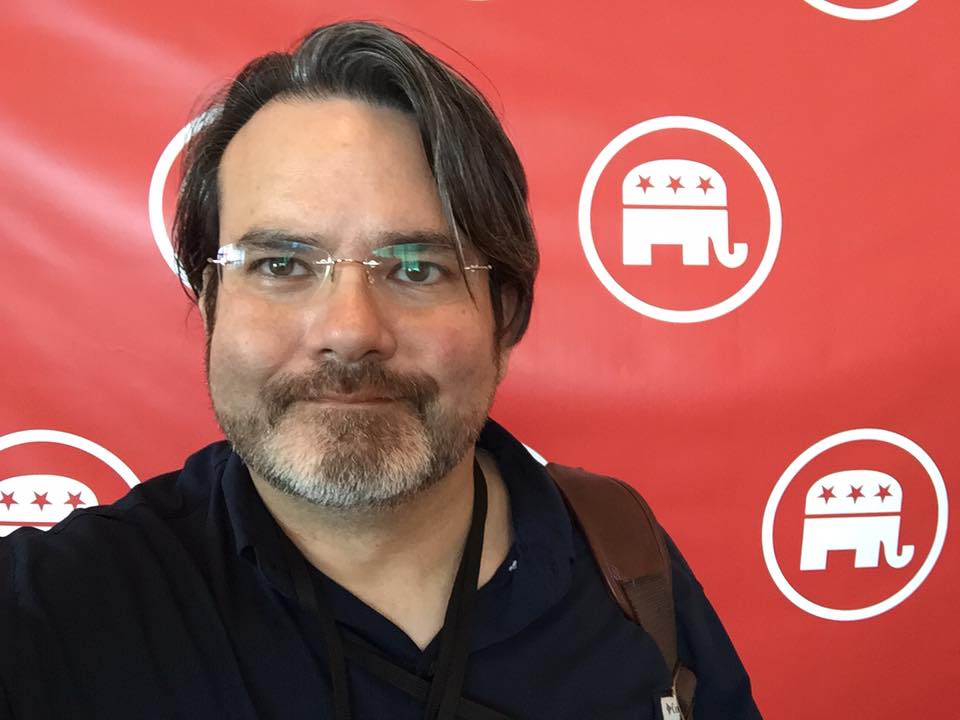
The national media descended like a plague of locusts, expecting juicy news from the Rules Committee, but they got none.
For members of a Republican Party establishment that finds itself under attack from Donald Trump for running a “rigged” nominating system, the unsaid theme of their Florida confab this week is the old truism: No news is good news.
That was the result of Thursday’s RNC rules committee meeting, an arcane affair that usually attracts scant public attention. In this fraught primary campaign, though, the meeting took on outsized significance as a test of whether the party could serve as an impartial referee in the nomination battle.
The 56-member committee rebuffed all the proposed rule changes before it, including one dealing with the parliamentary guidelines governing the convention. Many members said they were afraid that taking any action at all would hurt their credibility.
“We’re basically in the seventh inning of the ballgame and I don’t think it’s right to change the rules in the middle of the game,” said Randy Evans, an RNC committee member from Georgia.
Evans cautioned that, in light of the charged political environment, “any change that we make will be viewed with a large degree of cynicism.”
Both Ted Cruz and John Kasich made appearances, and both predicted a contested convention in Cleveland. From the Cleveland Plain-Dealer.
Texas Sen. Ted Cruz, who was mathematically eliminated on Tuesday from clinching the nomination during the GOP primary season after Donald Trump won his home state of New York, now says there’s only one possible outcome for the Republican National Convention.
“What is clear today is we are headed to a contested convention — nobody is able to reach 1,237,” Cruz said Wednesday, referring to the number of delegates needed to win the nomination.
Both Cruz and Kasich traveled to South Florida to appeal directly to the 168 members of the RNC, all of whom are voting delegates in the convention, scheduled for July 18-21. And both argued that they alone — and certainly not Trump — could beat Hillary Clinton, the Democratic frontrunner, in a general election.
Kasich said RNC members were receptive to his candidacy, and none have encouraged him to drop out of the race. Cruz has tried to argue that by staying in the race, Kasich is serving as a spoiler who makes a Trump nomination inevitable.
“My message to the delegates is that I can win. It’s reflected in every poll, and an uplifting message is one that provides energy to the party,” Kasich said. “And it becomes very attractive to people by addressing how we can fix these problems.”
But Cruz had his own assessment: “John Kasich has no path whatsoever…. His plan apparently rests on losing 49 states, going to the convention and having the delegates say, the guy who lost every state in the union besides his home state, that guy should be our nominee.”
Yesterday, I spoke to Ken Cuccinelli, a top Cruz advisor, surrogate speaker, and delegate wrangler, who previously served as Attorney General for the Commonwealth of Virginia.
Florida Governor Rick Scott spoke to the RNC at lunch.
Florida Gov. Rick Scott passed up a chance to urge Republican National Committee members to support his preferred presidential candidate, Donald Trump.
But he warned them: no “monkey-business.”
“We’ve got to be transparent,” Scott told a packed room of RNC officials Thursday at their spring meeting in Hollywood, Fla., implicitly telling them not to cut back-room deals that would undercut the frontrunner or, in Trump’s terms, “rig” the process.
“We can’t take a chance that we’re accused of any monkey-business. Tricks. Stunts. Anything,” Scott said in his brief remarks during which he received polite applause.
Though he’s the highest-profile endorser of Trump in the nation’s biggest swing state, Scott pointedly avoided using the platform at the RNC speech to make the case for Trump. Scott said he wanted to plug Florida and the need to talk about the economy.
At 5 PM in a medium-sized reception room in the hotel, the Trump campaign hosted a presentation with top Trump aides Paul Manafort, Rick Wiley, and Dr. Ben Carson. It was a private event, closed-door with security outside admitting only RNC Members and those with Guest badges while the media cooled their heels outside. Of course a recording came out of the meeting.
“When he’s sitting in a room, he’s talking business, he’s talking politics in a private room, it’s a different persona,” top Trump aide Paul Manafort said during the meeting, a recording of which was obtained by NBC News. “When he’s out on the stage, when he’s talking about the kinds of things he’s talking about on the stump, he’s projecting an image that’s for that purpose.”
In the meeting, Manafort cast Trump as playing a part aimed at winning over his core supporters.
“He [Trump] gets it,” Manafort said, and “the part that he’s been playing is evolving into the part that now you’ve been expecting, but he wasn’t ready for because he had to first feed the first phase.”
Manafort insisted that Trump’s deep unpopularity nationwide, fueled by months of unapologetic bluster on the campaign trail, would be easily remedied when the candidate shifts gears. In contrast, Hillary Clinton’s negatives are character driven and baked-in, Manafort argued.
He also reassured RNC members that Trump will raise money for the party — something he’s so far avoided doing, Manafort said, because it would violate a campaign promise not to take donations.
“He’s actually living his word, and that’s what the base that we are attracting to the Trump campaign is looking for. They’re looking for honesty, and they’re looking for consistency, and they’re looking for someone who does exactly what they say,” Manafort said.
Manafort did assure the RNC that Trump has told him and another top aide, Rick Wiley, that the billionaire will spend what it takes to lock up the nomination before Cleveland.
“He’s told Rick and I that he’s willing to spend what’s necessary to finish this out. That’s a big statement from him,” Manafort said. “It allows us to put a plan together so that we can make sure that we finish this thing early enough so that you can feel comfortable that he’s going to be the nominee.”
The most interesting part of it to me was the appearance by his national political director Rick Wiley, who managed Scott Walker’s presidential campaign and previously served as Political Director for the RNC.
In 2014, when Republicans took control of the Senate, Wiley was a consultant for the National Republican Senatorial Committee. He worked with Joni Ernst’s Iowa campaign in Iowa, among others, on strategy and get-out-the-vote operations.
That year Wiley also advised the Republican Governors Association — which was then chaired by New Jersey Gov. Chris Christie, now a Trump surrogate and adviser — and oversaw the committee’s spending in states including Wisconsin, where Walker won a tough reelection fight.
Walker was not Wiley’s first presidential campaign. He served as deputy national political director for Rudy Giuliani’s 2008 presidential bid; he former New York mayor is now backing Trump. Wiley also ran the RNC’s operations in the swing state of Wisconsin for then-President George W. Bush’s 2004 reelection.
Wiley took the stage as someone who was comfortable with the RNC, and knows many of the members and guests. He was able to speak about his days there with Chairman Reince Priebus and namecheck a number of folks in the room, something that Trump himself wouldn’t be able to do.
Wiley gave a presentation about the election, starting with the 2012 Presidential election and going into individual states that he says Trump can put back on the map for Republicans.
PBS Newshour writes that both Wiley and Manafort said Trump will win on the first ballot.
From the New York Times,
Mr. Wiley walked them through a slide show that predicted victory for Mr. Trump not just in swing states with large Hispanic populations like Nevada, Colorado and Florida, but in states that Republicans have not captured since the 1980s: Pennsylvania, Michigan, Minnesota, Wisconsin and Connecticut.
And in other solidly Democratic states, like Illinois and New Jersey, he said Mr. Trump could force Mrs. Clinton to spend money defending herself. “Can we win Illinois?” Mr. Manafort asked. “I don’t know. But what we can do is make Hillary Clinton go to Illinois, make her spend money there, make her spend money in the Northeast.”
The most remarkable thing to me was that Wiley spoke with the confidence of someone who is on the campaign of the presumptive nominee, laying out the general election strategy and how the RNC’s ground game, developed and sharpened in 2016 will compliment Trump. If the Trump campaign had been dealing with Republican leaders in states and at the RNC with this level of professionalism over the last year, I think it would have made a major difference in the campaign, and he’d be on his way to nomination at the Convention in Cleveland.
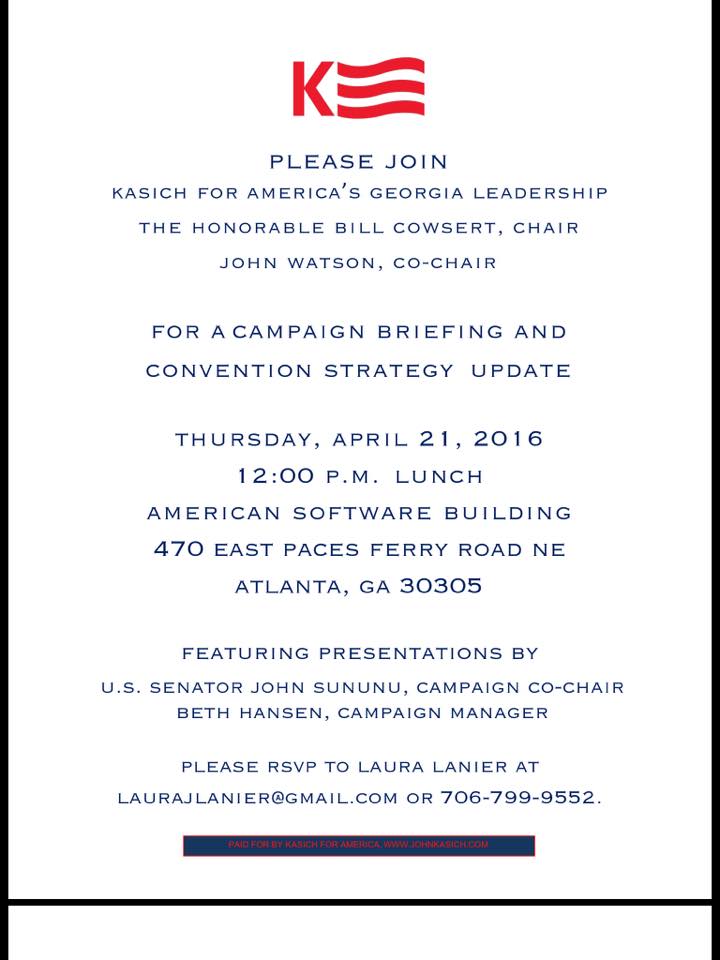
In addition to his appearance at the RNC on Wednesday, John Kasich’s campaign held a strategy session in Atlanta yesterday for Georgia supporters of the Ohio Governor.





Comments ( 0 )