
James Oglethorpe was named Commissioner of Indian Affairs and Charles Wesley was named Secretary of Indian Affairs by the Georgia Trustees in London on September 24, 1735.

John Paul Jones, at the helm of US ship Bonhomme Richard, won a naval battle off the coast of England on September 23, 1779.
After inflicting considerable damage to the Bonhomme Richard, Richard Pearson, the captain of the Serapis, asked Jones if he had struck his colors, the naval sign indicating surrender. From his disabled ship, Jones replied, “I have not yet begun to fight,” and after three more hours of furious fighting the Serapis and Countess of Scarborough surrendered to him.
The Judiciary Act of 1789, which established the first federal judicial system, was adopted on September 24, 1789 with the signature of President Georgia Washington. Under the Act, the original size of the Supreme Court was five Associate Justices and a Chief Justice. Washington nominated John Jay as Chief Justice, and John Rutledge, William Cushing, John Blair, Robert Harrison, and James Wilson as Associates.
Also established on September 24, 1789 were the office of Attorney General of the United States and the United States Post Office Department.
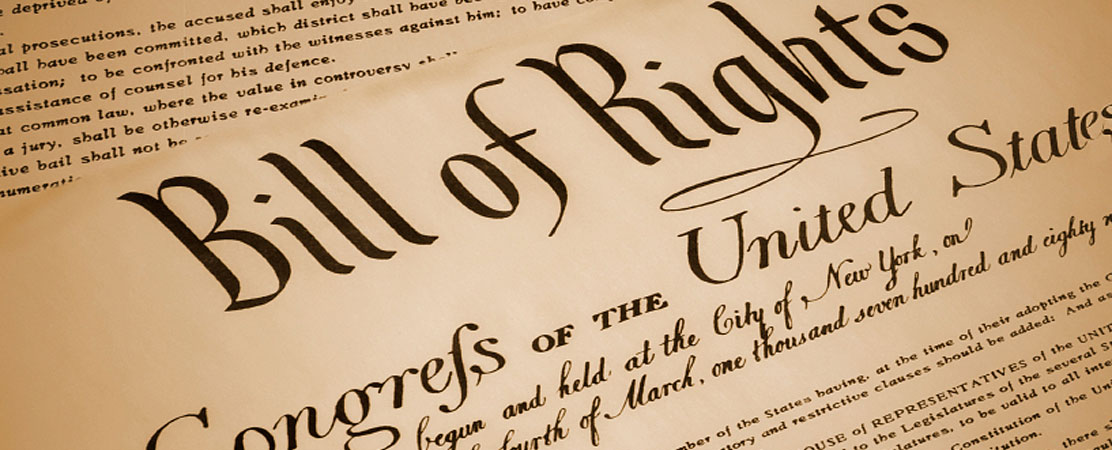
On September 25, 1789, Congress adopted the first twelve amendments, called the Bill of Rights, to the United States Constitution. A little more than two years later, in 1791, enough states had ratified ten of the Amendments, with two not receiving sufficient support.
Meriwether Lewis and William Clark returned to St. Louis Missouri from their exploratory trip to the Pacific coast on September 23, 1806.

On September 22, 1862, Republican President Abraham Lincoln issued a preliminary Emancipation Proclamation, which stated,
“. . . on the first day of January [1863] . . . all persons held as slaves within any State, or designated part of a State, the people whereof shall then be in rebellion against the United States shall be then, thenceforward, and forever free.”
On September 24, 1862, the Confederate Congress adopted the Seal of the Confederate States of America.
On September 21, 1863, the federal Army of the Cumberland retreated to Chattanooga after its defeat at Chickamauga.
President Rutherford B. Hayes visited Atlanta on September 22, 1877. Click here to read the text of his speech in Atlanta.
The Decatur Female Seminary opened with 60 students on September 24, 1889 and would later be chartered as Agnes Scott College.
White vigilantes seeking to assault African-Americans after reports of four white women being assaulted led to the Atlanta Race Riots on September 22-24, 1906, which would claim the lives of at least 25 African-Americans and one white person.
On September 22, 1918, the City of Atlanta gasoline administator prohibited non-emergency Sunday driving to conserve fuel for the war effort.
On September 23, 1944, President Franklin Delano Roosevelt was speaking at a dinner with the Teamsters union and addressed attacks that had been made by Republicans, including the allegation that after leaving his dog, Fala, behind in the Aleutian Islands, he sent a Navy destroyer to fetch the dog. This would become known as the “Fala speech.”
These Republican leaders have not been content with attacks on me, or my wife, or on my sons. No, not content with that, they now include my little dog, Fala. Well, of course, I don’t resent attacks, and my family don’t resent attacks, but Fala does resent them. You know, Fala is Scotch, and being a Scottie, as soon as he learned that the Republican fiction writers in Congress and out had concocted a story that I’d left him behind on an Aleutian island and had sent a destroyer back to find him—at a cost to the taxpayers of two or three, or eight or twenty million dollars—his Scotch soul was furious. He has not been the same dog since. I am accustomed to hearing malicious falsehoods about myself … But I think I have a right to resent, to object, to libelous statements about my dog.
The idea for the joke was given to FDR by Orson Welles. The political lesson here is that any time you get an audience laughing at your opponent, you are winning.
A statue of former Georgia Governor Eugene Talmadge on the grounds of the Georgia State Capitol was unveiled on September 23, 1949, the 65th anniversary of Talmadge’s birth near Forsyth, Georgia in 1884.
On September 23, 1952, Senator Richard M. Nixon was under fire for allegedly accepting $18,000 and using it for personal expenses. To salvage his place as the Vice Presidential candidate on Eisenhower’s Republican ticket, Nixon took to the airwaves in the first nationally-televised address and delivered what came to be known as the “Checkers Speech. From The Atlantic:”
[A] 1999 poll of leading communication scholars ranked the address as the sixth most important American speech of the 20th century — close behind the soaring addresses of Martin Luther King, Jr., John F. Kennedy and Franklin Delano Roosevelt.
The “Checkers” speech wins this high rank for one stand-out reason: It marked the beginning of the television age in American politics. It also salvaged Nixon’s career, plucking a last-second success from the jaws of abject humiliation, and profoundly shaped Nixon’s personal and professional outlook, convincing him that television was a way to do an end-run around the press and the political “establishment.”
Click here for the full text of the “Checkers Speech.”
On September 24, 1960, USS Enterprise CVN-65, was launched from Newport News Shipbuilding in Norfolk, Virginia, the first nuclear-powered aircraft carrier. Enterprise was inactivated on December 1, 2012.
The Warren Commission report on the assassination of President John F. Kennedy was delivered to President Lyndon B. Johnson on September 24, 1964.
On September 23, 1976, President Gerald Ford and former Georgia Governor Jimmy Carter met in their first televised debate. On September 24, 1976, former Georgia Governor Jimmy Carter resumed campaigning after the first debate.
On September 24, 1976, former Georgia Governor Jimmy Carter resumed campaigning after the first debate against President Gerald Ford.
Bert Lance resigned as Director of the Office of Management and Budget under President Jimmy Carter on September 21, 1977. After a jury acquitted him on ten federal charges in 1980, Lance served as Chair of the Democratic Party of Georgia from 1982 to 1985.
On September 24, 1979, CompuServe offered the first dial-up computer information service to consumers.
Launched as MicroNET in 1979 and sold through Radio Shack stores, the service turned out to be surprisingly popular, thanks perhaps to Radio Shack’s Tandy Model 100 computers, which were portable, rugged writing machines that dovetailed very nicely with the fledgling, 300-baud information service.
MicroNET was renamed the CompuServe Information Service in 1980. Around the same time, CompuServe began working with newspapers to offer online versions of their news stories, starting with the Columbus (Ohio) Dispatch in 1980. At least 10 major newspapers were offering online editions through CompuServe by 1982, including The Washington Post, the Los Angeles Times, and the San Francisco Examiner.
General Colin Powell was confirmed by the Senate Armed Services Committee as Chairman of the Joint Chiefs of Staff on September 21. 1989. Powell served as National Security Advisor to President Ronald Reagan before being appointed Chairman of the Joint Chiefs of Staff by President George H.W. Bush; in 2000, Powell was nominated by President George W. Bush as Secretary of State, the first African-American to hold that post.
Friends debuted on NBC on September 22, 1994.
The last game played in Atlanta-Fulton County Stadium took place on September 23, 1996.
On September 24, 2009, it was announced that the College Football Hall of Fame would move to Atlanta, where it opened on August 23, 2014.
On September 21, 2011, R.E.M. announced on their website that they were quitting as a band.
Georgia Politics, Campaigns, and Elections
Georgia State House Speaker David Ralston suggested naming the new judicial complex near the Capitol in honor of Governor Nathan Deal, according to Fox5Atlanta.
House Speaker David Ralston said Thursday he plans to introduce a resolution next year asking lawmakers to name the $110 million Atlanta complex in honor of Deal, who is finishing his second term and will leave office in January.
Ralston of Blue Ridge made the announcement as he introduced the governor at a Savannah event. He called Deal “one of our greatest governors” as well as a personal friend.
The new judicial complex will house the Georgia Supreme Court and the state Court of Appeals. Construction began last year.
Ray Ingle and Conrad Puryear applied for appointment to Murray County Board of Education District 5 seat, according to the Dalton Daily News.
The Macon-Bibb County Board of Elections approved Sunday early voting for the November elections, according to the Macon Telegraph.
The Macon-Bibb County Board of Elections decision to approve Sunday voting came during a contentious meeting in which a county commissioner called for a board member to resign. Whether polls will be open from 9 a.m.-4 p.m. on Sunday, Oct. 28, is still dependent on an estimated $3,000-$5,000 in funding from the county.
During Thursday’s meeting, County Commissioner Elaine Lucas called for elections board member Rinda Wilson to resign. Wilson said she felt “railroaded” by Sunday voting being added to the agenda after the meeting started — and just weeks before early voting starts.
Wilson, a Republican, was the lone vote against the Sunday measure. Board members Cassandra Powell and Henry Ficklin, both Democrats, voted for it. Republican representative Herbert Spangler was not present at the meeting.
Board member Mike Kaplan, an at-large member, said he supported Sunday voting for the Nov. 6 election because the county no longer has a second early voting location.
“I really don’t like the way this was done,” he said about the last-minute agenda addition. “We have a job do to and that’s the job to make sure everyone gets to vote.”
Georgia Ports Authority Executive Director Griff Lynch says the Talmadge Bridge may need replacement to allow port access for larger ships, according to the Savannah Morning News.
A portion of GPA’s plans include a goal of doubling the container capacity of the Garden City Terminal and the possible replacement of the Talmadge Memorial Bridge that spans the Savannah River.
Lynch pointed to the ongoing record-breaking growth with 4.2 million TEUs handled this year, an increase of 8.4 percent. That growth, along with a 16 percent increase in intermodal rail lifts, has contributed to Savannah’s cargo growth outpacing the nation. A TEU is a 20-foot container equivalent unit.
“What I’m here to tell you is that Georgia Ports Authority will be ready,” Lynch said. “We are committed to developing our terminals to continue to have a congestion-free environment. Whether it’s investing in a new bridge with the state, or new gates that will allow us to handle that capacity we will do it.”
The Savannah Harbor Expansion, SHEP, is now halfway finished and is expected to be completed by late 2021. The deepening will allow ships of 14,000 TEUs, called neo-panamax ships, to come to Savannah at capacity. Currently a number of those large ships call on our ports, but are not able to be loaded to capacity due to the river’s depth.
Ships are now getting even bigger, with 19,000 TEU – and even 22,000 TEU vessels – making calls at some ports.
The Talmadge Bridge, with a vertical clearance of 185 feet at high tide, is not tall enough for the 19,000 TEU vessels that are highly stacked with containers. Talks about a new bridge are in the planning stages and no details on size needed or cost were available.
Dr. Stephen Goggans told a public meeting that Augusta has a real problem with opioids, according to the Augusta Chronicle.
Goggans, district health director for the East Central Health District, said one of the trends seen from Georgia Department of Public Heath data is the rising number of opioid overdose deaths.
“The deaths of opioid overdose continue to rise. At the same time, the prescription use of opioids is dropping and has been for a few years,” said Goggans, adding that the focus for those healthcare professionals combating the epidemic should not only be on overdose and overdose deaths, but on treating people who are or might become addicted to opioids. “However, we had a long number of years with opioid prescribing going up and a lot of people being exposed, a lot of people becoming addicted or misusing. Now, we are seeing the consequences of that in the overdoses.”
According to the agency’s data and Goggans, there were about 60 deaths linked to opioids in Augusta in 2017. Goggans said the opioid problem in Augusta is big, but, luckily, not as intense as other areas around the country.
A rare Kemp’s Ridley sea turtle was caught by a fisherman on a Savannah pier, according to the Savannah Morning News.
John Amann landed the turtle quickly in what James Fleullan called a “once in a lifetime rare encounter.” Fleullan, an amateur naturalist who has trained raptors at Oatland Island Wildlife Center, was at the pier sampling fish. He’s a manager at Bass Pro Shops. With help from Rip Tide Bait and Tackle on the pier Fleullan placed the 26-inch-long turtle back in the drop net to release it. They watched it swim away.
Listed as endangered, Kemp’s Ridleys are the smallest sea turtle species. While these more tropical turtles don’t nest on Georgia’s beaches, juveniles are known to forage in the state’s coastal waters.
Columbus Mayor Teresa Tomlinson said City Council will soon be presented with options for dealing with the Government Center, according to the Ledger-Enquirer.
Nearly 100 residents and city officials filled the Community Room of the City Services Center Thursday as Tomlinson completes the last three months in the office she has held almost eight years. The Government Center has been at the center of issues for the 47-year old building plagued by three floods since June 18 and the closure of the 10th and 11th floors.
After a meeting Thursday with the judges, Tomlinson said they are working on a couple of proposals, possibly with a suggested alternative during the Oct. 9 meeting of the 10-member Columbus Council.
“We are going to have options for council , very specified options with proposed costs , time lines, pros and cons,” she said.
A referendum may be one of the options but the mayor said that would add two years to any solution. “If we do a referendum, we’ve got to go to the Georgia Legislature, wait for the next ballot then wait for the other penny sales tax to roll off,” she said. “Then you can’t start building , you can’t start sending out bonds for two more years. It’s all got pros and cons.”
Officials need a quicker solution for the $6 million in repairs just to get the two floors repaired. “ I think we’ve got some creative options the citizens will find very palatable to make this a good investment,” she said.






Comments ( 0 )