
John Hancock was elected President of the Second Continental Congress on May 24, 1775.
The Constitutional Convention of 1787 convened at Independence Hall in Philadelphia on May 25, 1787.
With George Washington presiding, the Constitutional Convention formally convenes on this day in 1787. The convention faced a daunting task: the peaceful overthrow of the new American government as it had been defined by the Article of Confederation.
The process began with the proposal of James Madison’s Virginia Plan. Madison had dedicated the winter of 1787 to the study of confederacies throughout history and arrived in Philadelphia with a wealth of knowledge and an idea for a new American government. It featured a bicameral legislature, with representation in both houses apportioned to states based upon population; this was seen immediately as giving more power to large states, like Virginia. The two houses would in turn elect the executive and the judiciary and would possess veto power over the state legislatures.
William Patterson soon countered with a plan more attractive to the new nation’s smaller states. It too bore the imprint of America’s British experience. Under the New Jersey Plan, as it became known, each state would have a single vote in Congress as it had been under the Articles of Confederation, to even out power between large and small states.
Alexander Hamilton then put forward to the delegates a third plan, a perfect copy of the British Constitution including an upper house and legislature that would serve on good behavior.
Confronted by three counter-revolutionary options, the representatives of Connecticut finally came up with a workable compromise: a government with an upper house made up of equal numbers of delegates from each state and a lower house with proportional representation based upon population. This idea formed the basis of the new U.S. Constitution, which became the law of the land in 1789.
Georgia Militia under General John Floyd began rounding up Cherokee Indians on May 26, 1838.
General Robert E. Lee wrote a letter dated May 26, 1861 to Georgia Governor Joseph E. Brown asking the state to send any weapons available for Georgia volunteers who arrived in Virginia unarmed.
The Battle of New Hope Church was fought near Dallas, Georgia May 25-26, 1864 between Confederates under General Joseph E. Johnston and Federal troops under General William T. Sherman.
The Brooklyn Bridge opened May 24, 1883.
On May 25, 1907, an equine statue of John B. Gordon was unveiled on the grounds of the Georgia State Capitol.
President Calvin Coolidge signed the “Comprehensive Immigration Act” on May 26, 1924.
Many Americans saw the enormous influx of largely unskilled, uneducated immigrants during the early 1900s as causing unfair competition for jobs and land. Under the new law, immigration remained open to those with a college education and/or special skills, but entry was denied to Mexicans, and disproportionately to Eastern and Southern Europeans and Japanese. At the same time, the legislation allowed for more immigration from Northern European nations such as Britain, Ireland and Scandinavian countries. A quota was set that limited immigration to two percent of any given nation’s residents already in the U.S. as of 1890, a provision designed to maintain America’s largely Northern European racial composition. In 1927, the “two percent rule” was eliminated and a cap of 150,000 total immigrants annually was established.
The law particularly angered Japan, which in 1907 had forged with U.S. President Theodore Roosevelt a “Gentlemen’s Agreement,” which included more liberal immigration quotas for Japan. By 1924, strong U.S. agricultural and labor interests–particularly from California, which had already passed its own exclusionary laws against Japanese immigrants–favored the more restrictive legislation signed by Coolidge. The Japanese government viewed the American law as an insult, and protested by declaring May 26 a national day of humiliation in Japan.
Serial bank robbers Bonnie Parker and Clyde Barrow were shot to death near Sailes, Louisiana by a group of LA and Texas state police on May 23, 1934.
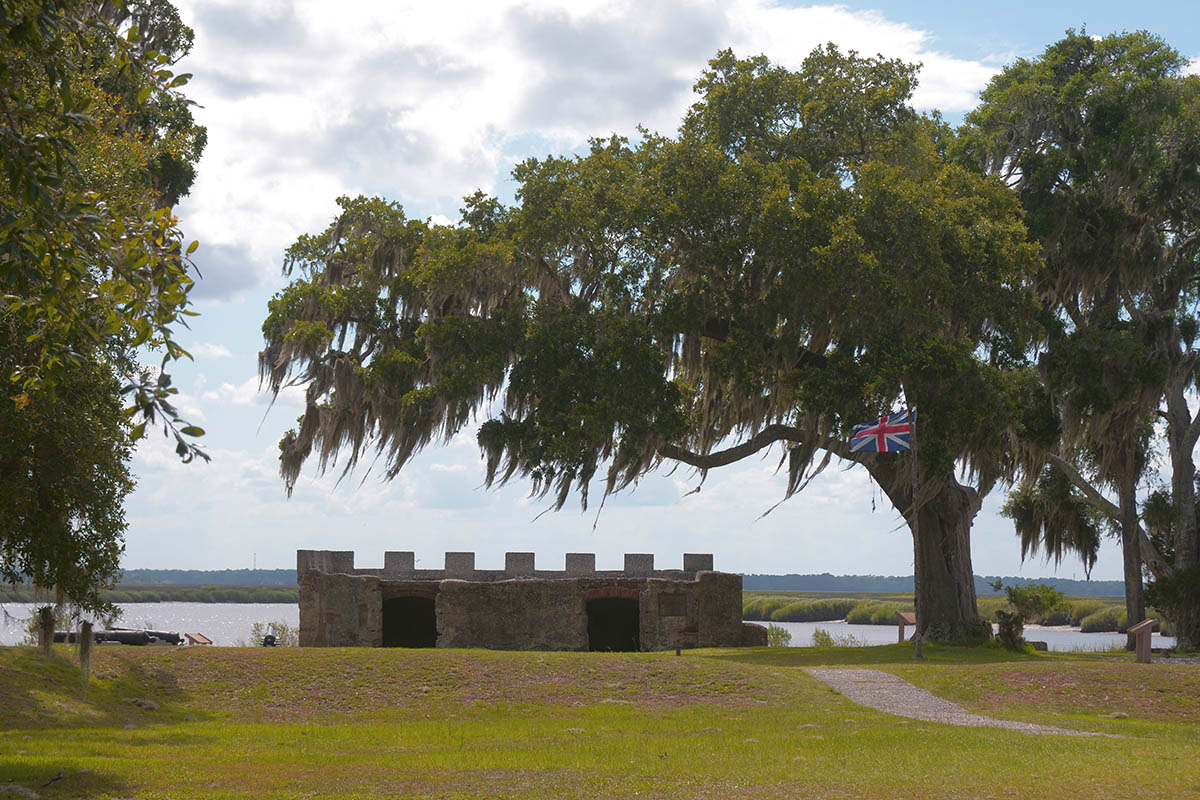
Fort Frederica National Monument was established on St Simons Island, Georgia on May 26, 1936.
May 26, 1949 was named Clay Day in Marietta, Georgia in honor of General Lucius Clay, who spoke at the courthouse square.
On May 23, 1954, the NAACP petitioned the Fulton County Board of Education to desegregate after the U.S. Supreme Court decision in Brown v. Board of Education.
Then-Lt. Governor Marvin Griffin announced his candidacy for Governor on May 24, 1954.
The United States District Court for the Northern District of Georgia held on May 25, 1962 that the Georgia General Assembly was malapportioned and ordered the reapportionment of the State House and Senate.
Former Georgia Governor Jimmy Carter won the Virginia Caucus on May 23, 1976, gaining 24 delegates. On May 25, 1976, Carter won the Arkansas, Tennessee, and Kentucky Primary Elections for President.
Star Wars opened on May 25, 1977.
On May 23, 1990, the NFL announced that Atlanta would host the 1994 Super Bowl.
John Smoltz tied the record for most strikeouts by a Braves pitcher, throwing 15 Ks against Montreal Expos on May 24, 1992.
On this day in 1992, The Southern Harmony and Musical Companion by Georgia-based The Black Crowes reached number one on the Billboard US Album chart.
Happy Birthday to Bob Dylan, who was born on May 24, 1941.
Georgia Politics, Campaigns, and Elections
Governor Brian Kemp issued Executive Order # 05.22.25.02, a Writ of Election calling a Special Election for State Senate District 21, held on Tuesday, August 26, 2025.
Governor Kemp’s Office announced Mercedes-Benz will move up to 500 jobs to Atlanta, according to a Press Release.
Governor Brian P. Kemp today announced that Mercedes-Benz will establish Atlanta as Mercedes-Benz’s headquarters in North America by centralizing and uniting key corporate functions. The company will move up to 500 jobs to the existing Mercedes-Benz facility, known as “1MB,” in Fulton County, and make a multi-million dollar investment in a future state-of-the-art Research & Development (R&D) facility to also be located nearby.
“Georgia continues to lead the way in the future of mobility and technical innovation, attracting world-class companies like Mercedes-Benz that are driving the automotive industry forward,” said Governor Brian Kemp. “We’re excited that a job creator that already has close ties to Georgia is doubling down on that choice and growing their presence here in the best state for business and opportunity.”
Mercedes-Benz opened its “1MB” facility in 2018 in Sandy Springs, which currently supports approximately 800 jobs in Georgia.
“We thank the State of Georgia for its support in deepening Mercedes-Benz’s roots in the Atlanta area as we bring even more talented team members to this world-class city,” said Jason Hoff, CEO of Mercedes-Benz North America. “This strengthens our position for continued growth and reinforces our established commitment to the U.S. market. Bringing our teams closer together will enable us to be more agile, increase speed to market, and ensure the best customer experience.”
The “1MB” facility located in Sandy Springs will house the existing sales teams as well as financial services teams and corporate functions. The new state-of-the-art Research & Development hub will be located near Sandy Springs. The company anticipates that the move to metro Atlanta will be completed by August 2026. To learn more about Mercedes-Benz, visit www.mbusa.com/en/careers or group.mercedes-benz.com/careers.
“We’re excited to see Mercedes-Benz expanding in Sandy Springs,” said Mayor Rusty Paul, City of Sandy Springs. “Since establishing their headquarters here in 2018, they have been outstanding corporate partners. Their decision to grow in Sandy Springs highlights the success of the city’s recent infrastructure and capital investments which are now clearly paying dividends. This expansion represents a wonderful opportunity and a significant milestone for our continued development.”
“Having a globally recognized brand like Mercedes-Benz reaffirm its commitment by investing and growing here in Fulton County is a testament to the strength and vitality of our community,” said Chairman Robb Pitts, Fulton County Board of Commissioners. “It proves Fulton County continues to be a destination for corporate solutions, providing major companies an accessible, vibrant, and growing community for their business to thrive in.”
“This expansion is a testament to both Mercedes-Benz’s commitment to excellence and metro Atlanta’s strength as a hub for innovation and talent. When the 1MB facility opened in 2018, it quickly became an integral part of our business landscape, driving economic growth and elevating the region’s global presence,” said Katie Kirkpatrick, President & CEO of the Metro Atlanta Chamber. “We are proud to see this partnership deepen as Mercedes-Benz continues to invest in our future shared success.”
Assistant Director of Statewide Projects Elizabeth McLean represented the Georgia Department of Economic Development’s (GDEcD) Global Commerce team on this competitive project in partnership with the City of Sandy Springs, Select Fulton, Metro Atlanta Chamber, and Georgia Power.
“Since the strategic decision to relocate Mercedes-Benz USA to Sandy Springs in 2018, we have watched Mercedes-Benz become an integral part of our business community. Their continued growth and community involvement are a prime example of why we recruit industry leaders such as Mercedes-Benz to Georgia,” said GDEcD Commissioner Pat Wilson. “This expansion and commitment to R&D in the metro Atlanta area will further strengthen the company’s long-term success, and highlights the talent and collaborative partnerships fostered by the University System of Georgia.”
Related Posts
 Former rep uses loan, rollover funds to build cash advantage over Dugan – Douglas County Sentinel: Local News
 Georgia’s port push starts in Panama | www.myajc.com
 Edge in Democrat-leaning Americans not enough to make up for GOP turnout: poll – Washington Times
 Adoptable Georgia Dogs for October 9, 2014
 Georgia Politics, Campaigns, and Elections for December 11, 2018


Comments ( 0 )