
On January 11, 1765, Francis Salvador of South Carolina became the first Jewish elected official in America when he took a seat in the South Carolina Provincial Congress. Salvador’s grandfather was one of 42 Jews who emigrated to Georgia in 1733. Salvador later became the first Jewish soldier to die in the American Revolution.
On January 11, 1908, President Theodore Roosevelt declared the Grand Canyon a national monument.
“Let this great wonder of nature remain as it now is,” he declared. “You cannot improve on it. But what you can do is keep it for your children, your children’s children, and all who come after you, as the one great sight which every American should see.”
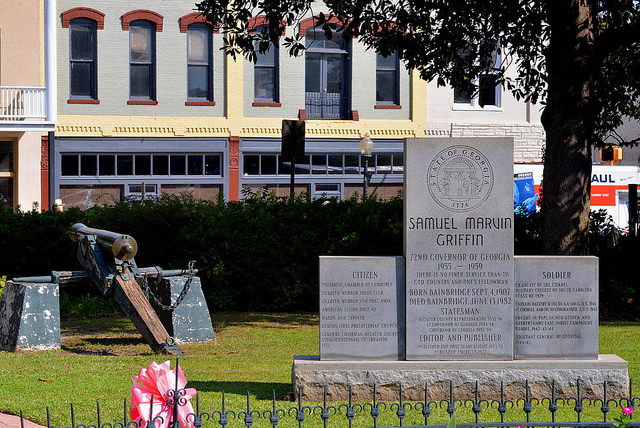
Marvin Griffin of Bainbridge was inaugurated as Governor of Georgia on January 11, 1955.
Georgia Politics, Campaigns, and Elections
Governor Brian Kemp discussed his legislative priorities at the Georgia Chamber’s Eggs and Issues breakfast, according to a Press Release.
Today, at the Georgia Chamber of Commerce’s annual Eggs and Issues legislative preview event, Governor Brian P. Kemp delivered an address celebrating years of record-breaking economic development and laying out priorities for the 2024 legislative session to continue that success.
The Governor announced his administration’s priorities to continue addressing workforce development challenges, including in the area of healthcare; reinforce Georgia’s status as a right-to-work state; address the need for more information regarding civil litigation; invest in infrastructure across the state, including workforce housing; and establish new higher education assets.
Below are the Governor’s prepared remarks:
Good morning, thank you for that introduction. I’m proud to be here today with the nation’s best First Lady – Marty Kemp! And we’re glad to be here with Speaker Burns, Lt. Governor Jones, other members of the General Assembly, Mayor Dickens, and some of the great local partners who have helped us keep Georgia the best state for opportunity. I also want to thank Chris Clark and the Georgia Chamber team for making this yearly event possible.
It’s thanks to all of these partners, and many others throughout Georgia, that we remain the No. 1 state for business. We’ve seen over 171,000 new jobs come to our communities. We’ve brought in roughly 74.5 billion dollars in investment to the state, with the majority going to rural parts of Georgia. We have more people working than ever before in our state. And we have jobs open for anyone looking for work or a new career.
That’s a track record everyone in this room should be proud of.
But that’s where we are today. What everyone in this room should consider is where we need to be in five years, in ten years, in generations to come and how do we get there.
My vision for that future Georgia is one where all people have opportunity and can succeed, where job creators and innovators choose us over and over again because we’re the best place to build the businesses of tomorrow, and where every community in our state benefits from those opportunities.
If we want to maintain the incredible position we’re in today for another generation, we need to make smart moves right now to secure that future.
For too long, business owners and individuals alike have struggled under the weight of sky-high insurance costs.
The cost to do business in our state should not be so high it stalls job creation and impedes growth because of frivolous lawsuits that drive up insurance premiums.
In Georgia, we have some of the highest premiums in the country. We can and should do something about that.
I look forward to working with the leadership and members of both chambers of the General Assembly on meaningful reforms that will stabilize costs for everyday Georgians, incentivize job creators to bring more opportunity to all parts of our state, and ensure Georgia is the best place to start, grow, and operate a business.
That’s why over the past several months, we’ve brought together representatives from a full range of industries to learn more about those challenges.
Following those extensive conversations, my team and I have determined this issue deserves consideration beyond one session. We will begin by taking the first step this year.
Like in every major undertaking our state has tackled in the past, we will work on a Georgia-specific solution; one designed to make meaningful reforms in this area over the next several years.
I look forward to introducing legislation this year that will reflect my priorities to stabilize the market for insurers, stabilize premiums for Georgia’s families, and level the playing field in our courtrooms so we can continue to create even more quality, good-paying jobs.
We’re also working hard to ensure the war on opportunity declared by the Biden administration in Washington does not come to Georgia. Last year we saw just how damaging anti-business actions are for workers and the economy.
The largest strikes of 2023 that lasted just six weeks cost the American economy over 9 billion dollars and more than 75,000 jobs.
The people orchestrating these actions are partisan activists who want nothing more than to see the free market brought to a screeching halt, businesses both small and large go under, and economic growth and opportunity to be dictated by the heavy hand of government – not job creators.
This anti-job playbook has been blessed by the Biden administration, and empowered by a federal government that views businesses as an enemy – not a vital partner in reigniting the American Dream.
I want to be clear: in Georgia, we’re proud to be a right-to-work state – and we’re going to continue to stand for free enterprise, job creation, economic growth, and pro-business policies as long as I’m governor.
Because what this administration fails to recognize is that the American Dream will always provide our people greater prosperity than government ever could.
My commitment to you is that we will never cower to activists who seek to attack job creators and undermine the countless opportunities they create in communities across Georgia – big and small.
We will remain a right to work state, and this legislative session, we will take further steps to protect workers and require transparency from unions.
My administration will be introducing legislation requiring businesses that utilize state incentives to respect their employees’ right and access to a secret ballot, if some seek to unionize.
Georgians have a right to opportunity, and we will defend that right against the overreaches of big government and big labor.
With these new measures added to all those we’ve already achieved, I have no doubt that Georgia will continue to be the epicenter for historic growth and projects that will impact our state for generations to come.
With the help of many in this room, we’re making strategic investments in our communities and workers to keep it that way.
That includes making sure community-level infrastructure is able to meet the increased demand that comes with unprecedented economic development.
That is why in the budget proposals my office will unveil tomorrow, we will invest 250 million dollars of new state funds into the Georgia Environmental Finance Authority for local water and sewer projects across the state.
These new investments will raise the fund’s capacity for new projects to 325 million dollars, and the overall portfolio to nearly 750 million dollars.
It will also give Georgia a competitive edge in attracting even more job creation to our state, especially in our rural communities.
As many of you know, when it comes to attracting new companies to our state… or incentivizing existing businesses to expand, the more the state can do from a water and sewer perspective, the more likely we are to land that project.
That means more jobs, more growth, and more opportunity in zip codes that need it the most.
If you’ve been around metro Atlanta, or down I-16 toward Savannah, or up I-85 to Commerce, or braved GA-400 northbound in rush hour, you know that Georgia is attracting more people, more businesses, and more investment.
While the incredible win streak we’ve been on benefits Georgians from all walks of life, in nearly every region of this state, it’s also true that there are costs to that success when it comes to the movement of people and goods across our state.
To continue being the best state to live, work, and raise a family, our transportation infrastructure must not only keep up with demand, it must look five, ten, twenty years ahead – both for hardworking Georgia families, and businesses here in the Peach state and around the world that rely on us to get their products to market.
That’s why my budget recommendations will also include an additional 1.5 billion dollars in state funds we will allocate to the Georgia Department of Transportation for projects that directly help move commuters and freight.
With the funds provided in our amended 2024 budget, these projects will accelerate GDOT’s existing project pipeline, enabling the agency to work further down its list of priority projects that includes those related to Georgia’s two largest economic development projects in state history.
This funding will also enable us to establish a new program focused on Freight Infrastructure projects that improve efficiency, safety, and reliability for the transportation of goods.
Lastly, 200 million dollars from this pot of money will go to the Local Maintenance and Improvement Grant, essentially doubling the amount available to local governments for Fiscal Year 2024 to 418 million dollars. This money will be well spent on local road engineering, construction, paving, and maintenance.
And just as Georgia’s workers deserve to drive on safe and reliable roads, they also deserve to be able to live in the same community where they work.
That’s why we created the Workforce Housing Fund last year with an initial investment of 35.7 million dollars.
That money has already been put to good use, allowing local development and housing authorities across our state to prepare land for housing projects in areas with upcoming economic development projects.
To date, over 17 million dollars of this has been awarded to 9 projects. The approved projects so far have been grants for water, sewer, and road construction around single and multi-family housing developments.
This year, I’m proposing an additional 50 million dollars in the Amended 2024 budget and 6 million dollars in base funding for the Fiscal Year 2025 budget that will go to this Fund, ensuring these types of strategic investments continue.
I’m confident that by working together with the members of the General Assembly, we can continue to build on the incredible success we’ve had bringing jobs, growth, and opportunity to all parts of our state.
Just as we need to invest in the physical infrastructure of our state to keep up with growth, we also need to invest in the human capital to meet the demands of a growing population.
No sector of our economy needs qualified workers more than healthcare. Since 2019, we’ve invested in more residency slots, incentivized healthcare professionals to stay in Georgia and provide quality care, ensured new mothers in our state are covered, and taken innovative steps to expand access to care, stabilize costs, and increase the number of insurers statewide.
With that in mind, my budget proposal includes 178 million dollars for the design and construction for a dental school at Georgia Southern University – the first school of its kind in our state since the moon landing in 1969!
I am also proposing 50 million dollars for a medical school at our flagship institution – the University of Georgia. This will go a long way to helping us address the medical workforce gap Georgia has struggled with for years.
With these new assets on the way, we will further address the growing need for healthcare professionals in our state, and ensure that we are doing everything we can to address challenges across the healthcare spectrum – from workforce, to cost, to access, to quality.
All of these investments and measures I’ve shared with you today are strategic and designed to keep Georgia what we have made it over these past five years, together – the best state to live, work, and raise a family.
Tomorrow, I will share even more announcements on how we will build on these successes.
Thank you for your partnership, God bless, and may God continue to bless the great State of Georgia!
One of Gov. Brian Kemp’s top priorities is a bill targeting labor unions by preventing businesses that seek state incentives from allowing unions to form without a formal, anonymous election.
“My commitment to you is that we will never cower to activists who seek to attack job creators and undermine the countless opportunities they create in communities across Georgia, big and small,” Kemp said. “We will remain a right to work state, and this legislative session, we will take further steps to protect workers and require transparency from unions.”
Kemp said stopping “frivolous” lawsuits from driving up business owners insurance premiums is a priority that will take longer than this year’s session to resolve.
“Like in every major undertaking our state has tackled in the past, we will work on a Georgia-specific solution; one designed to make meaningful reforms in this area over the next several years,” adding that his office will introduce the first legislation of a coming tort reform suite this year.
House Speaker Jon Burns raised eyebrows with a suggestion that Georgia is considering expanding Medicaid.
“When it comes to health care, there has certainly been a lot of discussion of late about Medicaid expansion. Expanding access to care for lower income working families through a private option in a fiscally responsible way that lowers premiums is something we will continue to gather facts on in the House.”
Georgia is one of 10states that have not adopted full Medicaid expansion, which extends coverage to adults who make less than 138% of the federal poverty level. Expansion could provide access to health care for hundreds of thousands of low-income Georgia adults. The opposition has been largely ideological, with GOP state lawmakers erecting roadblocks to expansion under the Affordable Care Act.
Speaking to reporters after the event, Georgia Chamber President and CEO Chris Clark said the General Assembly will consider models approved in other states, including Arkansas. Arkansas’ Medicaid expansion was unusual in that instead of enrolling the expansion population into existing Medicaid programs, Arkansas used the money to buy private insurance for most of its qualifying residents.
This morning at the Georgia Chamber of Commerce Eggs and Issues breakfast, Gov. Brian Kemp unveiled his $2 billion spending bill.
There were several categories included in the funding measure like transportation, infrastructure and health funding for medical facilities at the University of Georgia and Georgia Southern University.
UGA already has a medical school in partnership with the Medical College of Georgia at Augusta University. This would be a separate medical school in Athens.
Georgia Southern would receive $178 million in funding to create a new dental school in Statesboro.
According to the Georgia Chamber of Commerce, Georgia has over 40,000 job openings in the healthcare industry. They predict job openings will grow to 60,000 in the next two years.
So far, the chamber has already provided funding to schools to expand their resources to get more students into the medical field. One of the schools that received funding was Mercer School of Medicine.
Jean Sumner, dean at the Mercer School of Medicine, says Mercer is working to address the shortage.
πYou have to care about people, you have to be able to communicate and of course have to be smart but that said it’s more than just being smart. There are a lot of other factors. We try to select the right people and also. We try to select people that care about what we’re doing and that care about rural Georgia and that respect the people in rural Georgia,” Sumner said.
The state chamber reports by 2030, the Peach State will need over 100,000 healthcare workers.
Stephanie Roseboro is a nurse manager at Piedmont Macon. She says adding another medical school will help more students see what the day-to-day is like for someone in the medical field.
“Having more people coming through here doing their rotations and clinicals is going to give them a better idea of what a great community this is and also what the need is,” Roseboro said.
Sumner says doctors are needed in rural Georgia too because they face a health desert too.
“There are counties in Georgia that have no doctors and one of the counties we put a clinic in had no doctor to 36,000 people,” Sumner said.
From the Associated Press via AccessWDUN:
Republican House Speaker Jon Burns of Newington, also speaking Wednesday, again voiced openness to expanding health care coverage to low-income adults through Georgia’s Medicaid program.
“Expanding access to care for lower income working families through a private option in a fiscally responsible way that lowers premiums is something we will continue to gather facts on in the House,” Burns said.
Kemp says he wants to allot $1.5 billion to the Georgia Department of Transportation before June 30 to speed planned roadwork and establish a freight infrastructure program. Of that money, $200 million would go to cities and counties, increasing what the state sends local governments to maintain their own roads and bridges.
Kemp said he also wants to invest another $250 million in the Georgia Environmental Finance Authority, which loans money to local governments for water and sewer projects. Kemp earlier gave out $442 million in water and sewer grants using federal COVID-19 aid.
The governor wants to allot another $50 million to a fund to develop land for housing, and then spend at least $6 million a year on such grants going forward. Lawmakers earlier allotted $35.7 million for Kemp’s “rural workforce housing” plan, and $17 million has been spent so far.
Kemp proposed spending $178 million to create a new public dental school at Georgia Southern University in Statesboro, in addition to the current Dental College of Georgia at Augusta University. Kemp also proposed $50 million to create a separate medical school at the University of Georgia in Athens. Now, a four-year medical program operates there in partnership with the Medical College of Georgia at Augusta University.
“With these new assets on the way, we will further address the growing need for health care professionals in our state,” Kemp said.
From the Athens Banner Herald:
Rep. Houston Gaines posted on X in response to the UGA medical school proposal, saying: “The funding process will begin in this year’s state budget—I look forward to supporting this historic initiative.”
Governor Kemp will deliver the “State of the State” address today, according to WTOC.
The address will happen at the Georgia State Capitol in the House of Representatives chamber at 11 a.m. Thursday morning.
WTOC talked to Dr. Kimberly Martin at Georgia Southern University about what we could expect Thursday.
She says this is Governor Kemp’s second term, so he is not necessarily campaigning right now but for other state leaders – it could be a different story.
“It is an election year for other candidates so really the focus will be on state legislators and how this is going to impact this agenda that the governor puts forth is going to impact them when it comes November for their reelection campaigns. What they are going to want to do is pass bills and pass a lot of bills that are useful for their district so they can go back and say, ‘hey this is what I did when I was in Atlanta for you,’” said Dr. Martin.
Savannah area legislators discussed their priorities, according to the Savannah Morning News.
As a practicing physician and the chairman of the Health and Human Services Committee, health reform is one of the key issues for the Republican senator. Current Certificate of Need laws require new healthcare facilities to prove a need for new facilities to the Department of Community Health, making it harder to establish new healthcare centers.
“I think that everybody is on the page that that needs to be either done away with or at least modified significantly, because it is monopolistic and anti-competitive,” Watson said. “These nonprofit hospitals that do not pay any property tax are stifling growth in the health industry.”
Senate District 2: Derek Mallow
First elected to the Georgia House in 2020 and the state Senate in 2022, Mallow is a relative newcomer to the Chatham delegation. During his first term as a senator, he championed issues like expanding access to affordable housing and public transit. This legislative session, he is hoping to focus on Medicaid expansion, the 911 and EMS system, and funding the Childcare and Parent Services (CAPS) program. The senator, who serves as the executive director and CEO of East Savannah United, is also hoping to introduce legislation to mandate that businesses accept cash payments from customers.
Senate District 4: Billy Hickman
Raising Georgia’s literacy rates continues to be an issue of great importance to Hickman, who serves as the Higher Education Committee chairman and is married to an educator. In 2024, Hickman has a slate of education-themed reforms on his priority list, saying he hopes to expand lottery-funded Pre-K programs, provide more funding for schools working to implement the Georgia Early Literacy Act, and pass legislation to make it easier for retired teachers to reenter the field, particularly in rural areas.
It’s a comprehensive article speaking with a number of legislators, and is worth reading in its entirety.
Five candidates qualified in each of the two Special Elections for Georgia General Assembly on February 13, 2024, according to the Associated Press via WSAV.
Qualifying closed Wednesday for the Feb. 13 votes to replace Republican Mike Dugan in Senate District 30 and Rep. Barry Fleming in House District 125. Dugan resigned to run for Congress, while Kemp swore Fleming in as a superior court judge on Wednesday.
Members of all parties will run together in the special elections with no primaries to select nominees. If no one wins a majority on Feb. 13, the top two candidates would advance to a runoff on March 12, the same day as Georgia’s presidential primary.
Running in the Senate race as Republicans are former state Rep. Tim Bearden of Carrollton, real estate agent Renae Bell of Tallapoosa, contract administrator Amber Nixon of Carrollton and consultant Robert “Bob” Smith. Ashley Kecskes Godwin of Carrollton is running as a Democrat. The district covers all of Haralson County and parts of Carroll, Douglas and Paulding counties.
Bearden was elected to the state House four times before Gov. Nathan Deal appointed him as director of the Georgia Public Safety Training Center. Bearden is now the government affairs manager for a billboard company. He’s a former police officer who pushed for expansions of gun rights while in the House.
“My goal is to make sure that this district is set up for a prosperous future,” Bearden told Carrollton radio station WLBB-AM on Tuesday. He said he would seek tougher criminal penalties for trafficking fentanyl and those who injure police officers and firefighters.
Republicans running in the House race include conservative commentator C.J. Pearson of Grovetown, Columbia County Commissioner and car wash owner Gary Richardson of Evans, farmer James Steed of Grovetown and software developer John Turpish of Grovetown. The lone Democrat running is cosmetologist Kay Turner of Grovetown. The district covers parts of Columbia and McDuffie counties.
The Eleventh Circuit United States Court of Appeals rejected an appeal by Chatham County District Attorney Shalena Cook Jones in an employment discrimination case, according to the Savannah Morning News.
The Eleventh Circuit Court of Appeals ruled that it lacked jurisdiction to review a district judge’s sanction order against Jones because “it did not determine the amount of costs, attorney’s fees, and expenses for which Jones is responsible, and is therefore not final and appealable.”
“No petition for rehearing may be filed unless it complies with the timing and other requirements of 11th Cir. R. 40-3 and all other applicable rules,” the Circuit Court stated.
In November 2023, Jones requested that the federal judge “set aside” past orders that denied her emergency motions to reschedule her deposition because of her obligations as lead counsel in a rape trial. U.S. District Judge R. Stan Baker of the Southern District of Georgia ruled Jones in default in the case and sanctioned her.
“Mrs. Shalena Cook Jones did absolutely nothing individually to anyone in this case, and anything that she did do or could alleged to have been done would be the scope and course of her employment as the elected District Attorney,” said attorney Mark Tate, who is representing Jones, after the appeal was denied. “We’re going to proceed with that basis and then try the case if we have to, and if we don’t prevail, and it’s something not to our liking, then we’ll appeal.”
Gwinnett County Commissioners are expected to move forward toward a vote to put a referendum on ballots, according to the Gwinnett Daily Post.
But even though a transit referendum has been expected since the county’s Transit Development Plan was approved last year, such a vote is not officially set to take place — yet.
That is starting to change, however, because the county commissioners are taking their first steps to putting a referendum on the November ballot. They held a required meeting with city leaders this past Tuesday, and now they will hold a key vote on this upcoming Tuesday that will begin the formal process of calling for a referendum.
The vote on this upcoming Tuesday will be on whether they to intend to hold another vote in the spring to actually call for the referendum.
Basically, Tuesday’s decision would be about putting voters and election officials on notice that the commissioners will vote in a few months on whether to put referendum on the general election ballot this fall.
“At our Board of Commissioners meeting, it’s expected that we’ll do an ‘Intent To Call A Referendum,’” County Commission Chairwoman Nicole Love Hendrickson said. “And, whatever the commission decides — if it’s in the affirmative, then we’ll start working on those next steps that are part of a legislative process to officially call a referendum for the November ballot.”
The idea that Tuesday’s vote is just a prelude to an another vote on calling for a referendum may sound convoluted but that is a process that state law requires the county to follow before they can actually put the referendum on the November ballot.
Gwinnett County Transportation Director Lewis Cooksey said the earliest that the commissioners could hold an actual vote to call for a referendum would be May because of the requirements under state law.
That means county leaders would have to wait until after the May 21 general primary election.
“The way the law is written, you can’t call it until after all the other elections are held because, once you do call it, it must be up for a vote in the next election,” Cooksey said.
Effingham County public schools opened a daycare center for employees’ children, according to the Statesboro Herald.
Hoping to attract and retain more employees — especially employees with infants and small children in need of childcare — the Effingham County School District opened two daycare centers at opposite ends of the county Jan. 3.
The new daycare centers — STARS (Supports Teachers and Rising Students) early learning centers — are located at Rincon and Guyton elementary schools. The centers are open from 6:30 a.m.–5 p.m
They are open when school is in session plus the 10 in-service days that educators must attend. The school district is using the availability of daycare as a benefit to recruit employees.
“We’ve got our annual job fair coming up in early February and we will make sure that that’s at the forefront of our recruitment process,” Dr. Ford said. “Some people have family members here that they can rely on to help with daycare, but there’s a lot (of people) that don’t have that opportunity and don’t have that luxury, and so this is something that’s pretty special to us.”
All the children — even the babies — will have a curriculum that will prepare them for success in pre-K and beyond, according to Dr. Ford.
“We have a specific curriculum that we use through Bright from the Start,” Dr. Ford explained. “Our teachers are trained. We have teacher leaders. We have site directors. Our teachers will be working very closely with the boys and girls, beginning at 6 weeks old all the way up until 4 years old, so that they can be the most prepared students once they enter pre-K.”
Literacy, even for the babies, is an important element of the program that gets children ready for school and learning.
United States Senator Jon Ossoff (D-Atlanta) will hold traveling constituent service events, according to WALB.
Sen. Ossoff announced his Office’s “Constituent Services in Your Community” events for the month of January. Sen. Ossoff’s team will be hosting events in Valdosta, Douglasville, Stockbridge, and Fort Valley.
The constituent services team works to help families cut through red tape and access the benefits they’ve earned, from resolving issues with Social Security and Medicare, to helping families obtain passports and visas, to ensuring servicemembers, veterans, and their families receive their VA and TRICARE benefits, and more.
Sen. Ossoff says, “I have a hard-working team across the state standing by to help you and your families navigate the Federal bureaucracy, which can often be confusing and difficult to access and navigate. We don’t guarantee results, but we always guarantee effort.”
Annalee Sams was sworn in as Mayor of Dalton, according to the Dalton Daily Citizen News.
Annalee Harlan Sams was sworn in as mayor of Dalton Monday night in front of a crowded audience at City Hall.
Council members Tyree Goodlett and Dennis Mock also took the oath of office following their November reelection, with Goodlett sworn in as the mayor pro tem.
Macon-Bibb County Commissioner Al Tillman announced he will leave office before the year ends, according to the Macon Telegraph.
The first Macon-Bibb County Commission meeting of the year Tuesday was also the last for Commissioner Al Tillman, who announced he will not serve out his last year in office at the end of an agenda that included more than three-quarters of a million dollars in grants to curb crime, reduce court backlogs and plant 455 trees in the urban core.
Due to term limits instituted in consolidation, Tillman and commissioners Elaine Lucas, Virgil Watkins, Jr. and Mallory Jones cannot seek re-election this year. Tillman, a former mayor pro tem, will share more about his personal decision to step down during “Al Tillman’s Chew & Chat Red Carpet Edition” at 3 p.m. Sunday at Macon Mall.
At the conclusion of the meeting, he released a statement through the county’s public affairs office that read in part: “I’m forever grateful to the citizens of District 9, for entrusting me to voice their interests by electing me to office. In District 9, together, we’ve been able to expand Log Cabin (Drive) to increase pedestrian safety; create Filmore Thomas Park, which provides a safe space for children, families and the community to gather for fun; and set the foundation for reigniting the economic flame for Eisenhower corridor by establishing the Eisenhower (Business) Improvement District.”
His resignation was effective immediately. Mayor Miller is expected to appoint someone to finish out the remainder of Tillman’s term, which concludes at the end of the year.
![Delegation Day set for [this] week – The Cherokee Ledger-News: Top Stories](https://gapundit.com/wp-content/plugins/wordpress-23-related-posts-plugin/static/thumbs/29.jpg)





Comments ( 0 )