
On November 27, 1095, Pope Urban II called for the first Crusade.
At the Council of Clermont, in France, at which several hundred clerics and noblemen gathered, Urban delivered a rousing speech summoning rich and poor alike to stop their in-fighting and embark on a righteous war to help their fellow Christians in the East and take back Jerusalem. Urban denigrated the Muslims, exaggerating stories of their anti-Christian acts, and promised absolution and remission of sins for all who died in the service of Christ.
Urban’s war cry caught fire, mobilizing clerics to drum up support throughout Europe for the crusade against the Muslims. All told, between 60,000 and 100,000 people responded to Urban’s call to march on Jerusalem. Not all who responded did so out of piety: European nobles were tempted by the prospect of increased land holdings and riches to be gained from the conquest. These nobles were responsible for the death of a great many innocents both on the way to and in the Holy Land, absorbing the riches and estates of those they conveniently deemed opponents to their cause. Adding to the death toll was the inexperience and lack of discipline of the Christian peasants against the trained, professional armies of the Muslims. As a result, the Christians were initially beaten back, and only through sheer force of numbers were they eventually able to triumph.
Urban died in 1099, two weeks after the fall of Jerusalem but before news of the Christian victory made it back to Europe. His was the first of seven major military campaigns fought over the next two centuries known as the Crusades, the bloody repercussions of which are still felt today. Urban was beatified by the Roman Catholic Church in 1881.
On November 28, 1520, Ferdinand Magellan became the first European to navigate from the Atlantic Ocean to the Pacific.
John Wesley left Savannah on December 2, 1737.
John Wesley’s strict discipline as rector of Christ Church in Savannah irritated his parishioners. More trouble followed when he fell in love with Sophia Hopkey, the niece of Georgia’s chief magistrate. When she married another man, Wesley banned her from Holy Communion, damaging her reputation in the community.
His successful romantic rival sued him; but Wesley refused to recognize the authority of the court, and the man who would eventually found a major Protestant denomination in America left Georgia in disgrace on December 2, 1737.
Touro Synagogue, the oldest existing synagogue in the United States, was dedicated on December 2, 1763 in Newport, Rhode Island.
On November 28, 1777, Congress appointed John Adams as commissioner to France, replacing Silas Deane.
General George Washington set up winter headquarters at Morristown, New Jersey on December 1, 1779.
On November 30, 1782, British and American signed a preliminary treaty in Paris to end the American Revolution, which included withdrawal of British troops and recognition of American independence.
President George Washington declared November 26, 1789 the first “public day of thanksgiving and prayer.”
By the President of the United States of America, a Proclamation.
Whereas it is the duty of all nations to acknowledge the providence of Almighty God, to obey His will, to be grateful for His benefits, and humbly to implore His protection and favor; and—Whereas both Houses of Congress have, by their joint committee, requested me “to recommend to the people of the United States a day of public thanksgiving and prayer, to be observed by acknowledging with grateful hearts the many and signal favors of Almighty God, especially by affording them an opportunity peaceably to establish a form of government for their safety and happiness:”
Now, therefore, I do recommend and assign Thursday, the 26th day of November next, to be devoted by the people of these States to the service of that great and glorious Being who is the beneficent author of all the good that was, that is, or that will be; that we may then all unite in rendering unto Him our sincere and humble thanks for His kind care and protection of the people of this country previous to their becoming a nation; for the signal and manifold mercies and the favor, able interpositions of His providence in the course and conclusion of the late war; for the great degree of tranquillity, union, and plenty which we have since enjoyed; for the peaceable and rational manner in which we have been enabled to establish constitutions of government for our safety and happiness, and particularly the national one now lately instituted; for the civil and religious liberty with which we are blessed, and the means we have of acquiring and diffusing useful knowledge; and, in general, for all the great and various favors which He has been pleased to confer upon us.
And also that we may then unite in most humbly offering our prayers and supplications to the great Lord and Ruler of Nations, and beseech Him to pardon our national and other trangressions; to enable us all, whether in public or private stations, to perform our several and relative duties properly and punctually; to render our National Government a blessing to all the people by constantly being a Government of wise, just, and constitutional laws, discreetly and faithfully executed and obeyed; to protect and guide all sovereigns and nations (especially such as have shown kindness to us), and to bless them with good governments, peace, and concord; to promote the knowledge and practice of true religion and virtue, and the increase of science among them and us; and, generally, to grant unto all mankind such a degree of temporal prosperity as He alone knows to be best.
Given under my hand at the City of New York the third day of October in the year of our Lord 1789.
Go. Washington
On November 30, 1782, British and American signed a preliminary treaty in Paris to end the American Revolution, which included withdrawal of British troops and recognition of American independence.
Georgia ratified the Eleventh Amendment to the United States Constitution on November 29, 1794, which reads,
The judicial power of the United States shall not be construed to extend to any suit in law or equity, commenced or prosecuted against one of the United States by citizens of another state, or by citizens or subjects of any foreign state.
On November 30, 1819, the SS Savannah returned to Savannah, GA from its trip as the first steamship to cross the Atlantic.
On December 1, 1824, the election for President of the United States, in which no candidate received a majority of electoral votes, went to the United States House of Representatives.
Andrew Jackson of Tennessee won 99 electoral and 153,544 popular votes; John Quincy Adams–the son of John Adams, the second president of the United States–received 84 electoral and 108,740 popular votes; Secretary of State William H. Crawford, who had suffered a stroke before the election, received 41 electoral votes; and Representative Henry Clay of Virginia won 37 electoral votes.
As dictated by the Constitution, the election was then turned over to the House of Representatives. The 12th Amendment states that if no electoral majority is won, only the three candidates who receive the most popular votes will be considered in the House. Representative Henry Clay, who was disqualified from the House vote as a fourth-place candidate, agreed to use his influence to have John Quincy Adams elected.
The only major battle on Sherman’s March to the Sea occurred at Griswoldsville on November 22, 1864; on the same day, federal troops marched into Milledgeville. On November 23, 1864, General William Tecumseh Sherman himself entered Milledgeville, where he used the Governor’s Mansion as his headquarters.
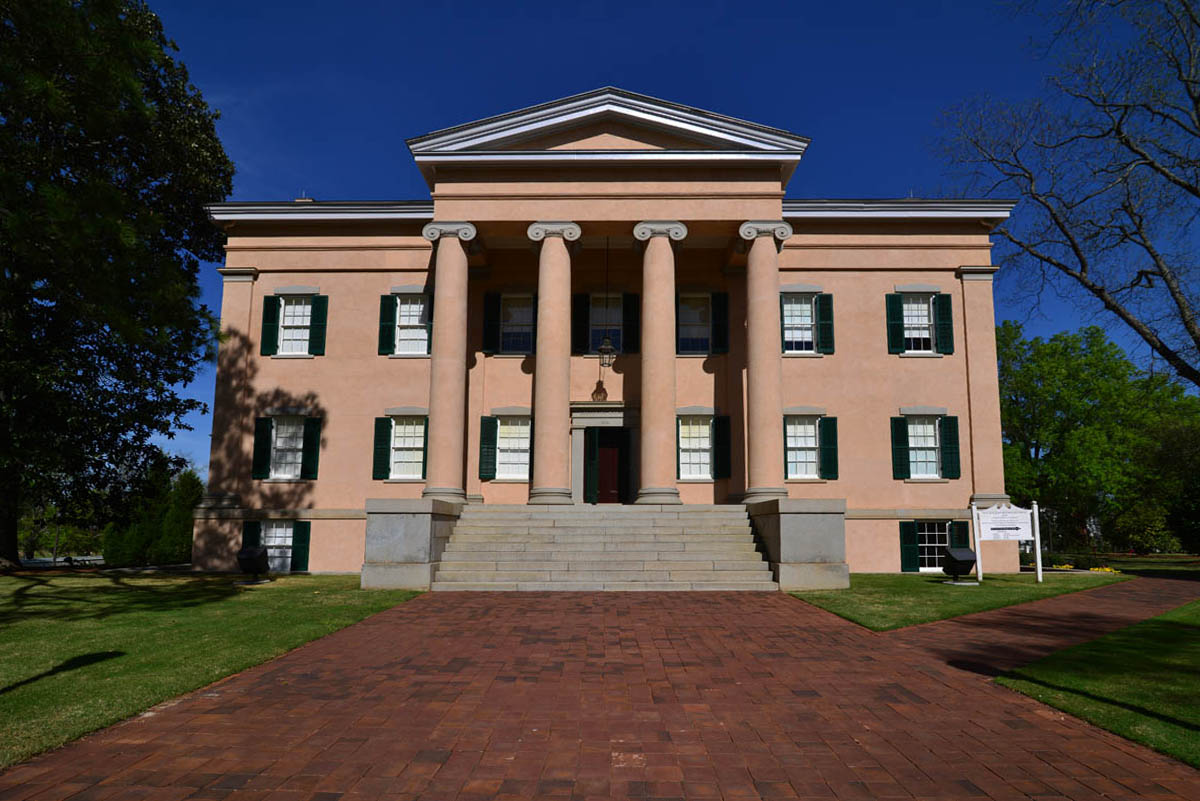
On November 25, 1864, Sherman’s 14th and 20th Corps moved toward Sandersville while the 17th Corps fought briefly against a mix of Kentucky Militia, Georgia Military Institute cadets, and Georgia convicts.
On November 27, 1864, Sherman ordered the courthouse in Sandersville, Georgia burned.
The Skirmish at Rocky Creek Church took place near Waynesboro, Georgia on December 2, 1864.
On November 25, 1867, Swedish chemist Alfred Nobel filed a patent for dynamite. On November 25, 1895, Nobel wrote his will, leaving the equivalent of roughly $186 million (2008 dollars) to endow the Nobel prizes.
The Grand Ole Opry began live radio broadcasts from Nashville, Tennessee on November 28, 1925.
On November 26, 1941, President Franklin D. Roosevelt established the Fourth Thursday in November as the modern Thanksgiving celebration.
[I]t was not until 1863, when President Abraham Lincoln declared Thanksgiving to fall on the last Thursday of November, that the modern holiday was celebrated nationally.
With a few deviations, Lincoln’s precedent was followed annually by every subsequent president–until 1939. In 1939, Franklin D. Roosevelt departed from tradition by declaring November 23, the next to last Thursday that year, as Thanksgiving Day. Considerable controversy surrounded this deviation, and some Americans refused to honor Roosevelt’s declaration. For the next two years, Roosevelt repeated the unpopular proclamation, but on November 26, 1941, he admitted his mistake and signed a bill into law officially making the fourth Thursday in November the national holiday of Thanksgiving Day.
On the same day, a Japanese navy fleet left port headed toward Pearl Harbor.
On November 29, 1942, coffee rationing began in the United States.
On November 29, 1947, the United Nations passed a resolution to partition Palestine and allow the creation of a Jewish state of Israel.
President John F. Kennedy became the fourth President of the United States to be assassinated in office on November 22, 1963. The next day, Jack Ruby shot Lee Harvey Oswald, who had been arrested for shooting Kennedy.
President John F. Kennedy was buried at Arlington National Cemetery on November 25, 1963.
On November 29, 1963, President Lyndon Johnson appointed the President’s Commission on the Assassination of President Kennedy, referred to as the Warren Commission. Senator Richard B. Russell, Jr. of Georgia was appointed to the Commission.
The Jimi Hendrix Experience played its first show at the Bag O’Nails Club in London on November 25, 1966.
On November 27, 1978, San Francisco Mayor George Moscone and Supervisor Harvey Milk were murdered at City Hall.
[Suspect Dan] White, who was caught soon after the murders, pleaded a “diminished capacity” defense, claiming that copious amounts of junk food, combined with distress over the loss of his job, caused him to suffer mental problems. The so-called “Twinkie Defense” appeared to be successful, and, in 1979, White was found guilty of voluntary manslaughter rather than murder. Public outrage was so widespread that California revoked the diminished capacity defense in subsequent cases.
In 2009, President Barack Obama posthumously awarded Milk the Presidential Medal of Freedom, and California declared his birthday, May 22, Harvey Milk Day. On the 50th anniversary of Stonewall in 2019, Milk was an inaugural inductee onto the National LGBTQ Wall of Honor.
On November 22, 1988, the B-2 Spirit stealth bomber was first unveiled publicly at Palmdale, California.
The Tawana Brawley case began on November 28, 1987; the greatest lasting impact would be the rise to celebrity of community activist the Rev. Al Sharpton.
Back to the Future II was released on November 22, 1989.
Construction on the Georgia Dome began on November 24, 1989.
On November 24, 1992, Republican Paul D. Coverdell defeated Democratic incumbent Wyche Fowler in the runoff election for United States Senate. We are thankful that Georgia has runoff elections, not something silly like drawing straws or instant runoff voting.
The City of Sandy Springs began operations at one second after midnight on December 1, 2005. Three years later, Dunwoody became a new city, on December 1, 2008.
Georgia Politics, Campaigns, and Elections
Voters go to the polls today in a Special Runoff Election for Richmond Hill City Council District 2, according to the Savannah Morning News.
Election Day for a runoff between Buck Holly and Kevin Bowes is Dec. 2 but residents are concerned about their stances regarding the proposed airport as the two have differing views on the suggested development. Residents have been vocal about their feelings regarding the airport on social media.
Gov. Brian Kemp signed The Richmond Hill-Bryan County Airport Authority Act, or House Bill 763, May 1. A fiscal review conducted by Georgia Tech shows the $274 million capital investment, the total amount of assets on the property, includes everything from aircraft to concrete for the runway.
A dozen new jobs will be created to include maintenance to clean and fuel planes among other responsibilities. A total of $35 million in property taxes would be paid over a 20-year period to the city, county and school board.
Bowes said in a phone call that he does not “support the airport.”
“I don’t believe right now that there is refutable proof that suggests it’s going to be beneficial to us,” said Bowes. “There’s so many factors with this airport and it’s in a baby stage right now. I don’t feel it’s going to be beneficial to us based on the data they provided thus far.”
His opponent, however, feels voters are now laser focused on the proposed airport and that it may be top of mind as they head to the ballot box Tuesday morning.
“There’s a low propensity turnout,” said Holly. “The only topic that is driving people to vote is the airport.”
With the project needing GDOT’s approval, among other things, Holly says he is remaining neutral on the topic.
“There’s three or four major hurdles that need to be overcome – I’m awaiting the mandatory studies that the Airport Authority has to do, because if any of those come back negative and it doesn’t happen, then my opinion still doesn’t matter,” said Holly.
It’s runoff day for voters in Georgia.
Voters in Richmond Hill are deciding a runoff election for City Council Post 2 on Tuesday.
The race is between Kevin Bowes and Buck Holly.
Polls are open from 7 a.m. to 7 p.m. in the City of Richmond Hill.
The runoffs taking place in the Coastal Empire on Tuesday are in Richmond Hill and Midway. Richmond Hill’s election has shifted into a debate over a proposed airport project. While in Midway, a razor-thin margin in November set up a rematch for the mayor’s seat.
In Richmond Hill, residents will decide between Kevin Bowes and Buck Holly for the Post 2 City Council seat. That race is getting extra attention as both candidates have addressed the proposed Richmond Hill–Bryan County airport, a major $274 million project, now under state review.
In Midway, the mayoral runoff features Malcolm Williams and Stanley Brown Sr., who finished just two votes apart during the November election – 175 to 173. If you plan to vote, the polls open this morning at 7 a.m. and close tonight at 7 p.m.
The following are South Georgia races that will be in the runoff:
Americus Mayor
Barry Blount
Travis RushAmericus Council District 5
Katie Minich
Kelvin Pless (Incumbent)Cordele City Commissioner At-Large
Joe Joe Wright
Joshua Deriso (Incumbent)Cordele City Commissioner Ward 2
Royce Reeves, Sr. (Incumbent)
Bernard FennCordele City Commissioner Ward 3
Isaac Owens (Incumbent)
George SingletaryClinch County Probate/Magistrate Judge
Tony Spradley
Elexis WilliamsDawson Mayor
Robert Aaron (Incumbent)
Johnny JessieFitzgerald City Council At-Large
Angela-Anderson Johnson
Albert Webb (Incumbent)Nashville City Council Post 5
Dustin Rathel
Shane Willis (Incumbent)Quitman City Council District 2 Post 3
Donald Morgan (Incumbent)
Robby Christian, Sr.Nicholls Mayor
Tamon Frost (Incumbent)
Ronnie BurchVienna City Council
Walter Brown (Incumbent)
Babette LewisPlains City Council Post 6
Randall Dillard
Andrea Dannette Oates (Incumbent)
Georgia Democrats insist that last month’s ouster of two Republicans on the Public Service Commission is a preview of the midterms. Today, they’ll get another chance to prove the flips were no fluke.
A bevy of local runoff races will be decided today across metro Atlanta, headlined by two Republican-backed mayors seeking to fend off challenges from Democratic-aligned candidates.
The tightest race could be in Roswell, where former Democratic state Rep. Mary Robichaux finished a close second to incumbent Mayor Kurt Wilson on Nov. 4. The race is nonpartisan, but Gov. Brian Kemp and U.S. Rep. Rich McCormick — both Republicans — are backing Wilson while Robichaux has the support of the Democratic Party.
The runoff in Sandy Springs could be more indicative of voter sentiment.
Incumbent Rusty Paul faces Dontaye Carter in a rematch of 2021. Paul easily prevailed four years ago. But Carter appears much stronger this year, finishing ahead of two sitting City Council members in last month’s election to make it to the runoff. He’s got support from Stacey Abrams and the state Democratic Party, while Kemp and other senior Republicans are boosting Paul.
Other runoff races to watch:
Atlanta City Council District 7: Thad Flowers faces Thomas Worthy. Flowers is a former City Council chief of staff. Worthy is the chief public policy officer at Piedmont Healthcare and a former MARTA board member.
Atlanta City Council District 11: Nate Jester faces Wayne Martin. Jester is a military veteran and Harvard law graduate. Martin has worked for the Atlanta Housing Authority and Atlanta Public Schools.
South Fulton Mayor: A pair of City Council members, Mark Baker and Carmalitha L. Gumbs, are vying to succeed mayor khalid “Kobi” kamau, who lost last month’s election after facing criticism for his public spending.
House District 106: Democrats Akbar Ali and Marqus Cole are vying to succeed former state Rep. Shelly Hutchinson, who resigned this summer to care for a family member.
One week from today, voters in State House District 23 will go to the polls in a Special Election, according to the AJC.
Five Republicans and one Democrat are running for the seat, which represents Canton and unincorporated parts of Cherokee County. The vacancy was created after Republican state Rep. Mandi Ballinger, who represented the area, died in October after a long battle with cancer.
The candidates are Republicans Bill Fincher, Brice Futch, Ann Gazell, Rajpal Sagoo and William Ware, as well as Democrat Scott Sanders. With several candidates in the race, it’s unlikely one person will receive a majority needed to win outright, making a runoff a likely outcome.
Early voting began Nov. 17 and continues through Friday at 7 p.m. Election Day is Tuesday, Dec. 9. Polls are open 7 a.m. to 7 p.m., and absentee ballots must be received by 7 p.m. on Election Day.
Governor Brian P. Kemp and First Lady Marty Kemp will lead an economic development trip to Panama, according to a Press Release.
Governor Brian P. Kemp and First Lady Marty Kemp are leading an economic development mission to Panama this week, focusing on logistics infrastructure and supply chain operations at the Panama Canal. They are accompanied by representatives from the Georgia Ports Authority and Georgia Department of Economic Development.
“Georgia’s ports directly and indirectly support over 650,000 jobs across the state and are some of the fastest growing in the United States,” said Governor Brian Kemp. “The Panama Canal connects shipping routes with some of Georgia’s top business partners to Savannah and Brunswick, and we look forward to learning more about their operations as we continue to innovate and invest in our infrastructure at home.”
“We are one of the top trading partners with the Panama Canal, and we look to build on this with our trip to Panama,” said Griff Lynch, President and CEO of Georgia Ports Authority.
Georgia ranks sixth in the United States for dollar value of trade, facilitating more than $198.7 billion in trade to 222 unique countries and territories in 2024, alone. The ports of Savannah and Brunswick are key facilitators of that trade. The Port of Savannah is one of the best-connected U.S. ports to world markets with 35 ship calls a week, 42 doublestack trains per week, and 14,000 truck gate moves daily. The Port of Brunswick is the top U.S. roll-on/roll-off port for automotive and machinery logistics, with over $262 million in recent upgrades and a new $100 million fourth berth under construction.
“Connectivity drives business, and the Panama Canal is a vital link in Georgia’s global network,” said Georgia Department of Economic Development Commissioner Pat Wilson. “The strong flow of goods between Panama and our ports fuels investment, supports jobs, and keeps Georgia competitive. When companies combine that connectivity with our skilled workforce and pro-business environment, it’s clear why so many choose to invest and grow in Georgia.”
Prosecuting Attorneys’ Council of Georgia Executive Director Pete Skandalakis dismissed charges against the alleged Trump conspirators, according to the Capitol Beat News Service via the Valdosta Daily Times.
Nearly half a decade after it started, the election fraud case against Donald Trump and his fellow indicted allies has ended, with a Fulton County judge on Wednesday granting a special prosecutor’s request for dismissal of the conspiracy case against the president and his 14 remaining co-defendants.
Peter Skandalakis, executive director of the Prosecuting Attorneys’ Council of Georgia, wound up in charge of the case after the Georgia courts removed Fulton County District Attorney Fani Willis over ethical concerns.
Skandalakis, who formally took over as the prosecutor less than two weeks ago, concluded that many of the charges would not stand up under free speech grounds. But he also offered pragmatic reasons, such as the fact that Trump would not be exposed to criminal prosecution again until after leaving office in 2029.
Realistically speaking, a trial could not begin for a decade until after the 2021 events that led to the indictments against Trump and 18 alleged co-conspirators, and it would likely take many years to conduct, Skandalakis observed.
“Continuing this litigation under these circumstances would neither serve the citizens of Georgia nor fulfill our statutory obligations,” Skandalakis wrote in his motion to dismiss the case Wednesday morning. “Our agency is simply not equipped to carry out this case while meeting the essential duties required under the current budget—or under any realistically conceivable budget the State could provide.”
He added that he did not think Georgia citizens would be served by pursuing the prosecution for another five to 10 years.
Fulton County superior Court Judge Scott McAfee immediately issued an order granting the motion to dismiss, ending a case that started in February 2021 when Willis announced her investigation.
Her case was grounded in two main events: Trump’s phone call to Secretary of State Brad Raffensperger asking him to find enough votes so he could be declared the winner in Georgia, and the convening of Trump allies who positioned themselves as alternative electors to those who cast their votes for Joe Biden.
Skandalakis detailed his reasoning in each of the charges. In some cases, free speech was a core issue. For instance, he wrote that Rudy Giuliani had told lawmakers “wrong and baseless” things about the election during unsworn testimony, but he did not think the cirumstances merited prosecution.
“Criminalizing such unsworn testimony would have a chilling effect on witnesses appearing before the Legislature on important issues,” Skandalakis reasoned.
In the case of David Shafer, accused of false statements to a prosecutor working for Willis, Skandalakis determined that Shafer had not said anything false or misleading.
In the events surrounding the breach of election equipment in Coffee County, Skandalakis noted that two participants had already pleaded guilty to misdemeanor counts. One of them, Sidney Powell, an attorney, had advised others under indictment that it was legal to access the election machines to gather evidence for a lawsuit. Another who pleaded guilty, Scott Hall, had arrived by chartered plan[e] to supervise the work, conveying “the appearance of acting under the color of law,” Skandalakis wrote.
He decided it would be an “inefficient” use of state resources to prosecute the others after those two had already resolved their cases “favorably” through negotiations with Willis.
Then, there was incident at the center of everything that unfolded in Georgia: Trump’s call to Raffensperger.
Mark Meadows, Trump’s chief of staff at the end of his first term, was also among those charged due to his involvement in arranging that call and in observing election verification processes.
“The White House Chief of Staff’s job duties are varied and fluid. We could have a debate if arranging phone calls, observing the signature-verification audit, or messaging an investigator to expedite the vote audit process falls within Mark Meadows’s duties,” Skandalakis wrote.
“While the call is concerning, reasonable minds could differ as to how to interpret the call,” he concluded. Trump could have been trying to get Raffensperger to commit fraud or he could have believed he was a victim and was just asking Raffensperger to investigate.
“When multiple interpretations are equally plausible, the accused is entitled to the benefit of the doubt and should not be presumed to have acted criminally,” Skandalakis wrote.
He wrote that he was persuaded by events outside Georgia, writing that the alleged criminal conduct in Georgia “was conceived in Washington, D.C.” and that Special Counsel Jack Smith had been in the best position to prosecute Trump.
Smith, a federal prosecutor, had pursued criminal charges against Trump related to his efforts to overturn the 2020 election. The U.S. Supreme Court’s ruling on presidential immunity led Smith to move for dismissal.
If Smith, with all the resources of the federal government behind him, “concluded that prosecution would be fruitless, then I too find that, despite the available evidence, pursuing the prosecution of all those involved in State of Georgia v. Donald Trump, et al. on essentially federal grounds would be equally unproductive,” Skandalakis concluded.
State Senator Shawn Still (R-Johns Creek) shared some thoughts, according to the Capitol Beat News Service.
The only lawmaker among the group of co-indictees with President Donald Trump who were dismissed from the election fraud prosecution this week lashed out at the Fulton County district attorney who brought the charges more than two years ago.
“I genuinely believe that Fani Willis knew from the beginning that there was no evidence of any criminal intent on my part,” Sen. Shawn Still, R-Johns Creek, said in a statement after a judge in Fulton County dismissed all defendants Wednesday at the request of a special prosecutor.
Still was among three of 16 Republican electors whom Willis indicted in her election conspiracy case. Still said he got nothing out of joining with them and voting for Trump and never thought he was doing anything wrong.
He also said he never got an explanation for why 13 of the other electors were not indicted along with him and two others — former Republican state Sen. David Shafer and GOP activist Cathy Latham.
They had met at the state Capitol a month after the 2020 election and had cast electoral votes for Trump in an election that was decided for Joe Biden.
“I relied on the legal advice of a qualified elections attorney in the meeting, and did what he advised me and the other electors to do,” Still said. “I thought I was fulfilling my duties as an elector.”
Peter Skandalakis, who took over the prosecution this month after Georgia courts sidelined Willis on ethical grounds, used the same logic for recommending dismissal in the portion of the conspiracy case involving Still and the other two electors.
Skandalakis, who is the executive director of the Prosecuting Attorneys’ Council of Georgia, wrote in his motion Wednesday that the trio voted on the advice of an attorney to “preserve” electoral votes for Trump, without intent to overturn the election.
He pointed to what he identified as a similar situation observed by U.S. Special Counsel Jack Smith who had brought a different election-related case against Trump.
Skandalakis quoted Smith who wrote that co-conspirators deceived Trump’s elector nominees, deliberately withholding information about how their votes would be used. This “deception was crucial” to engaging the participants as “fraudulent electors,” Smith wrote.
Skandalakis wrote that it is not illegal to challenge election results and that he was “loath to use
the criminal justice system to pursue law-abiding citizens who, in good conscience and upon the advice of counsel, were asked to perform certain tasks in connection with the litigation of an election challenge.”
He wrote that Still, Shafer and Latham acted on the advice of an attorney they thought to be an expert in election law, adding that “they genuinely and sincerely believed that their actions were a lawful component of the election contest process.”
The decision to dismiss the charges left one Still colleague “deeply disappointed” though.
Sen. Harold Jones, II, of Augusta, the ranking Senate Democrat as the chamber’s minority leader, said in a statement that the dismissal let Trump “evade accountability for his clear violations of Georgia law,” enabling him “and his co-conspirators to avoid responsibility for their coordinated effort to overturn Georgia’s election results and steal the 2020 election.”
Jones called it a “setback for justice.”
Still said he was relieved that the case was no longer hanging over his head and said Willis had charged an innocent man.
U.S. Representative Austin Scott (R-Tifton) wants to continue investigating the Epstein allegations, according to the Capitol Beat News Service via the Valdosta Daily Times.
A Georgia Congressman who voted for legislation last week mandating the release of documents connected with child trafficker Jeffrey Epstein said on Monday that it does not go far enough and that he wants further investigation.
The Epstein Files Transparency Act passed the U.S. House of Representatives last week with votes in favor by all 14 members of Georgia’s Congressional delegation, including Rep. Austin Scott, a Republican from Tifton.
House Resolution 4405 became law the next day after the Senate passed it and President Donald Trump signed it, and on Monday Scott issued a statement saying the language did not achieve everything he felt was needed.
“I maintain concerns that the Epstein language, as drafted, did not provide enough protections for victims and witnesses,” Scott said. He said he wants the House Committee on Oversight and Government Reform to continue investigating to uncover “the extent of these crimes and who was involved.”
The law gave the U.S. Department of Justice 30 days to release its records, documents, communications and investigative materials concerning the deceased sex offender Epstein and his associate Ghislaine Maxwell, in prison for conspiring with him to sexually abuse minors.
The law says the agency cannot withhold information just because it is politically sensitive or causes embarrassment or reputational harm to a government official, public figure or foreign dignitary. But it allows Attorney General Pam Bondi to withhold information for a variety of other reasons.
She can deny the release of records that she thinks would jeopardize an active federal investigation or prosecution. She can keep records that are declared a national defense or foreign policy secret by executive order. And she can hold back records that she deems to be a “clearly unwarranted” invasion of privacy when they contain “personally identifiable information of victims or victims’ personal and medical files and similar files.”
The American Conservative published a piece last week that suggested Bondi could misuse her discretion with the privacy provision.
“It is not difficult to imagine such unilateral power being abused to protect administration officials from scrutiny,” the story said.
The legislation apparently widened a rift between Trump and Rep. Marjorie Taylor Greene, the Rome Republican who was once among his biggest supporters.
She announced Friday that she would resign effective Jan. 5, blaming Trump for turning against her, in part, due to her pressure to release the Epstein files.
“Standing up for American women who were raped at 14 years old, trafficked and used by rich, powerful men should not result in me being called a traitor and threatened by the president of the United States whom I fought for,” Greene said in a video she posted online.
Greene serves on the committee that Scott wants to continue investigating the Epstein case.
Scott did not offer specifics about his concerns with the Act beyond what he said about the protections for victims and witnesses, but his statement suggested that the controversy over the Epstein files is not over.
U.S. Rep. Marjorie Taylor Greene’s (R-Extreme NW GA) resignation becomes effective in January and the vacancy will be filled by a Special Election, according to the Dalton Daily Citizen.
Marjorie Taylor Greene, who has represented Whitfield County and the rest of Georgia’s 14th Congressional District since 2021, announced Friday night that she will resign from Congress effective Jan. 5, 2026.
Greene’s resignation will officially create a vacancy in Georgia’s 14th District on Jan. 5 — one day before the second session of the 119th Congress convenes. Under federal constitutional requirements, vacancies in the U.S. House can only be filled through a special election. Once the resignation becomes effective, the responsibility to call that election falls to Georgia Gov. Brian Kemp.
Under Georgia law (O.C.G.A. § 21-2-540), the governor must issue a writ calling a special election for a U.S. House vacancy within 10 days after the vacancy occurs. Because the vacancy will not legally exist until Jan. 5, the 10-day clock does not begin until that date.
Georgia law also requires that a special election be held no sooner than 30 days after the writ is issued. Given that timeline — and allowing for ballot preparation, absentee and UOCAVA ballot requirements, and county-level administrative procedures — the earliest realistic election date falls in late February.
If no candidate receives more than 50 percent of the vote, Georgia law requires a runoff four weeks after the special election.
The winner of the special election will immediately assume the seat and serve the remainder of Greene’s current term.
Kemp has the option to schedule the special election on any eligible date after the minimum 30-day period, including aligning it with the regularly scheduled May 19, 2026 primaries, although no indication has been given that such a decision is under consideration.
County election superintendents and the Georgia Secretary of State’s office will oversee candidate qualifying, ballot preparation and election administration once the writ is issued.
Some state legislators are questioning investments in prison safety, according to Atlanta News First via WTVM.
Georgia lawmakers are pressing for answers after approving a $600 million investment aimed at stabilizing the state’s troubled prison system.
During a House Budget Committee meeting on Monday, members asked whether the money has led to any meaningful improvements as violence, staffing shortages and basic security failures continue.
Committee Chairman Billy Hitchens said one of his top concerns remains broken cell-door locks — a longstanding issue that has allowed inmates to roam freely and fueled gang activity within several facilities.
Corrections Commissioner Tyrone Oliver told lawmakers that fully replacing the locks could take years, though the department is working with vendors on a long-term solution.
Oliver also said staffing trends are improving, noting that Georgia now employs more than 3,000 correctional officers and has seen 20 consecutive months of net hiring gains. The system, however, still needs more than 1,000 officers to meet recommended staffing levels.
For advocates like Wendy Hunnicutt, who became involved in prison reform through a ministry program that supports inmates, the lack of visible change raises serious concerns.
“I haven’t seen any locks being changed. There are no improvements,” Hunnicutt said.
Hunnicutt pointed to ongoing reports of violence and unsanitary conditions she’s heard and seen about in videos circulating online.
The U.S. Department of Justice investigated more than a dozen Georgia prisons last year and found that conditions violated inmates’ constitutional rights.
“We’ve seen prisoners assaulted, carried out on stretchers with blood everywhere,” she said. “There are rats, bugs, filthy showers — everything about the living conditions is horrible.”
Oliver reported to lawmakers that roughly 50,000 people are currently incarcerated in Georgia, the fourth-highest rate in the country. Lawmakers warn that without significant improvements, the system may be unable to keep pace as the prison population is expected to grow to 55,000 by 2030.
Drones are part of the problem with prison safety, according to the Capitol Beat News Service via the Athens Banner Herald.
Drones powerful enough to lift a human have become a routine tool for delivering contraband in Georgia prisons.
At a hearing Monday about the budget for prisons, Tyrone Oliver, the commissioner for the state Department of Corrections, said drones have been used to drop drugs laced with fentanyl and other goods, including power saws made by the company Dremel.
“We’ve confiscated drones that are large enough to lift 225 pounds,” he said. “We had one earlier today that can lift about 80 pounds or 90 pounds.”
He said the pilots pay people who live near prisons thousands of dollars to borrow their driveways to stage the flights.
Other methods for delivering contraband were more time-honored, such as moving it with the help of prison staff or through the mail, delivering it during inmate visitations or tossing product over fences and walls.
Matthew Wolfe, who leads the agency’s Office of Professional Standards, said couriers wrap tape around bundles, forming them into football-sized packages shaped for throwing.
He said enforcement against contraband had led to the arrests of 48 prison staff in fiscal year 2025, which ended in July. There were also 120 inmates charged and 362 civilians arrested, many in connection with drone flights, he said.
“Civilian involvement remains the most common threat vector, with throwovers and drone drops continuing to be the primary method used to infiltrate our institutions,” Wolfe said.
The prisons have tried defensive measures, such as retrofitting windows so that drones can no longer deliver to outstretched hands. But Oliver said that has not stopped rooftop drops from high in the sky.
The prisons have tried to track offenders, but they must capture them on the ground, in person. They cannot just shoot the drones out of the sky, or disable them in some other way, even when they fly over a prison.
That is because the aircraft are protected by federal law.
“The technology is out there. We just don’t have the authority, the legal authority, to be able to do it,” Oliver told Rep. Danny Mathis, R-Cochran, a member of the House panel.
“I hate that your hands are tied,” Mathis said. “That’s what bothers me the most. This is just insane.”
The Georgia State Senate Study Committee on Combating Chronic Absenteeism in Schools adopted recommendations for proposed legislation, according to the Macon Telegraph.
The Georgia Senate Study Committee on Combating Chronic Absenteeism in Schools unanimously adopted its final report on addressing the state’s chronic student absenteeism problem — and it may include scrutiny for student drivers and athletes.
After four months of hearing from state organizations and school leaders about the causes and effects of prolonged classroom absences, Georgia lawmakers recommended barring chronically absent students from participating in sports programs and temporarily revoking their driver’s licenses until attendance improves.
The recommendations also call for stressing attendance starting in kindergarten, creating a statewide real-time attendance dashboard and funding services linked to attendance, such as counseling, social work, reliable transportation and mentorship programs.
“Our work over the last few months has the power to transform our schools, strengthen our communities and improve outcomes for children across Georgia,” committee chairman Sen. John F. Kennedy (R–Macon) said in a statement.
Georgia’s struggle with chronic absenteeism mirrors nationwide trends, increasing from 12% of public school students before the COVID-19 pandemic to 23% in 2022, according to previous reporting by The Telegraph. The current rate has dropped to a five-year low of 19.5% but remains high, state officials said in August.
With the study report now released, lawmakers said its recommendations, shaped by policymakers and community organizers, could become legislation aimed at improving school climate and streamlining communication between faculty and families.
Georgia Deputy State Revenue Commissioner Chester Cook spoke in Augusta, according to WRDW.
Georgia lawmakers are drafting a proposal to eliminate the state income tax that they hope to present when the legislative session begins in January.
Deputy State Revenue Commissioner Chester Cook discussed the plan during a visit to Augusta today. Cook said the Department of Revenue is watching the proposal closely as January approaches.
“From a DOR perspective, we’re following closely because whatever gets passed, we will be the implementers,” Cook said.
Cook said state income tax rates are already set to drop to just below 5 percent. That change is separate from the elimination proposal and has already been approved.
If a state Senate committee recommends a bill during the 2026 legislative session, the income tax could be reduced to zero.
The state currently generates more than $20 billion from income tax, which makes up more than half of Georgia’s general fund.
A recent analysis from the Georgia Budget and Policy Institute found sales taxes would have to triple from 4% to 12% just to replace the state revenue lost from income taxes.
Local businesses have raised questions about how the change would affect their stability. Greig McCully, owner of Fireside Kitchens, said increasing the sales tax would be problematic.
“If they were to increase sales tax, I think that would be a bad decision across the board,” McCully said. “The sales tax is an immediate effect. And because Richmond has already, with SPLOST, increased its average, its number beyond the surrounding areas, I just can’t see that being a wise move.”
Georgia State House reporter Abby Kousoris said the debate has been fierce on how the state would replace the income tax revenue.
Neighboring states, Tennessee and Florida, have eliminated their income taxes. Decisions on how to finance Georgia’s potential change and where replacement money would come from remain to be made ahead of next month’s legislative session.
“We’re as interested as others as well, just tracking legislation to see what’s going to come out,” cook said. “We would likely be, whatever that looks like, the collector or not-collector of the tax revenue.”
Cook said large revenues have helped Georgia to provide taxpayer rebates and tax credits.
Motions will be heard in the lawsuit over Tybee Island’s Short Term Vacation Rental ordinance, according to the Savannah Morning News.
Tybee Alliance, a group of property management companies and STVR owners, filed a motion of summary judgement in August 2025, seeking a decision on the claim that Tybee’s STVR ordinance is unenforceable because it violates state codes limiting municipal powers on regulation of residential rental properties.
The motion also asks for a permanent injunction barring the enforcement of the ordinance, preventing any further enforcement of STVRs in their entirety. The City of Tybee Island also filed a motion for summary judgment in November, stating that the defendants are asking for the court to curtail access to information it is entitled to.
The motion hearing is scheduled for 2 p.m., Dec. 18, in Courtroom 4B of the Eugene H. Gadsden Courthouse on 400 W. Oglethorpe Ave.
Augusta Commissioners continue working on their budget and $21 million dollar deficit as the deadline nears, according to WRDW.
Augusta Commission members reconvene this morning to deal with a $21 million deficit they’ve failed to resolve as they face a deadline to approve next year’s budget.
They had intended to confront the deficit and pass a budget last week, but ultimately decided to put it off until today.
Commissioners planned to get started around 9 a.m.
Last week, they made some preliminary adjustments to deal with the shortfall, but they still need to find $19.4 million to balance the budget.
Adjustments so far include cuts to Housing and Community Development and the Richmond County Correctional Institution, approving a health insurance plan that shifts more costs to employees and repurposing the environmental services fee.
But even after all that, commissioners have only shaved off about $1.7 million.
At the heart of the problem, general fund and law enforcement fund budgets grew from $206 million last year to $221 million this year, mainly because:
• Inflation made everything more expensive.
• A 3% cost-of-living adjustment was initially included.
• Health insurance costs rose.
• The city lost federal money it used last year to plug holes.
• New court positions were added.
• Required emergency savings had to be restored.One of the options being considered last week was a proposed energy excise tax on manufacturers. It would have brought in about $2 million to help close the budget gap.
But commissioners voted overwhelmingly not to pursue that tax.
Other choices on the table:
• A tax increase.
• Job cuts.
• Reduced funding for nonprofits.
• Forgoing cost-of-living raises for staff.
• A three- to six-month hiring freeze.A couple of weeks ago, there was no support for a full 1.69-mill increase, and only limited interest in a smaller 1-mill increase tied to the Richmond County Sheriff’s Office.
And even then, most commissioners said they don’t want to raise taxes unless they also make real cuts to government spending.
Officials agreed to come back with updated numbers — including one scenario with a 1-mill tax instead of 0.85 millage increase for law enforcement — so commissioners can see what combination balances the budget.
Commissioners repeatedly said last week they don’t want layoffs and don’t want to cut core services like transit or libraries.
Transit reductions could save $593,350 if commissioners cut some bus routes and an administrative position. Another option is eliminating Saturday services, which could save $291,470 more.
They stressed again they need long-term revenue ideas, not another year of scrambling.
Commissioners have tossed around other ideas to bring in money, like raising recreation and licensing fees, selling unused city property and even outsourcing some services, but they stressed those still land on taxpayers one way or another.
In the end, the city administrator asked commissioners to give clear direction on the remaining options.
Gwinnett County Commissioners will host a meeting to discuss their proposed $2.6 billion dollar budget, according to the Gwinnett Daily Post.
The Gwinnett County Board of Commissioners will hold a public hearing on the county’s $2.6 billion 2026 budget at 6:30 p.m. on Tuesday in Conference Room A at the Gwinnett Justice and Administration Center, which is located at 75 Langley Drive in Lawrenceville.
The proposed budget is slightly smaller than the county’s 2025 budget, with a $66 million decrease in spending. The overall budget includes the county’s $2.19 billion operating budget and its $409 million capital improvements budget.
Residents who cannot attend the public hearing in person can still submit their input electronically at www.gwinnettcounty.com/splashpages/commentsonproposedbudget until Dec. 31. A copy of the budget resolution is also available for review on gwinnettcounty.com.
The Board of Commissioners will vote on adopting the budget at its Jan. 6, 2026 business meeting.
Floyd County Commissioners hosted a meeting to discuss their proposed budget, according to WRGA News.
According to Floyd County Manager Jamie McCord, work on the budget began in August. Since November, there have been three budget work sessions as well as meetings with individual commissioners.
“We have estimated revenues of $81.49 million for 2026,” he said. “That is with a proposed growth in the digest estimated at five percent, and a 2.3 percent growth in our sales tax, which are our two largest sources of revenue. I think both of those are adequate. I don’t think they are aggressive or conservative. I feel like they are in the middle.”
On the expenditure side, public safety, which represents a little over 52 percent of the county’s total expenses, is increasing by 3.4 percent. Judicial is seeing a 4.7 percent increase for 2026, and general government is increasing by 8.51 percent.
The fire fund is also at a deficit, and according to McCord, they may have to look at a potential millage rate increase for 2026. There are total revenues of $11.3 million and total expenditures of almost $11.9.
“Obviously, that math does not work on a continuing basis, but we were able to transfer a fund balance to cover that,” he added. “The City of Rome had built up a fund balance from savings on capital equipment and deferred retirements.”
County departments put in requests for 26 new positions. All were turned down except for a half position for half a year.
McCord stressed there is still work to be done on the budget. For instance, they did not get to go all the way through the capital budget. Another work session is planned for December 9, which is also when the commission is expected to adopt the budget.
The Dalton Police and Dalton Public Schools say that Kratom is not a problem, according to the Dalton Daily Citizen.
After several eighth-grade students in Walker County Schools were hospitalized near the end of October for ingesting gummies that were later confirmed to have contained kratom, local school officials and law enforcement agencies say there is no cause for concern in Dalton and Whitfield County.
“As far as the Dalton Police Department is concerned, we are not aware of any issues involving kratom or similar drugs,” said City of Dalton Communications Director Bruce Frazier. “We continually enforce the drug laws and encourage parents to be aware of what their child comes in contact with.”
Dalton Public Schools Superintendent Steven Craft said the school system is “very fortunate” the plant – as well as other situations involving drug-infused candies – has not been prevalent in the school system.
“You don’t want to ever say never because anything can always pop up, but our job as educators and administrators is to make sure that we’re educating our kids and making sure that we’re sharing with them the vital information they need,” Craft said. “We partner with our school resource officers and we partner with other organizations for drug awareness, and I think we just have to make our kids aware, because an elementary kid may think they’re just eating a gummy when it could potentially be fatal for them. They have to make sure they understand where it’s coming from.”
Mike Ewton, the superintendent for Whitfield County Schools, said he was not aware of any issues regarding kratom in county schools. “Certainly not anybody being hospitalized,” he said. “But I do know that it’s readily available. There’s a lot of other things with edibles and with vapes that we see a lot of, and they do cause concern with our kids. Some of it is THC (a compound serving as the main active ingredient in cannabis), but some of it may be kratom or things like that. And you’ll see them in stores around our area, so that’s always concerning to us.”
Related Posts
 AUDIO – Karen Handel Senate: Radio Commercial – Erick Erickson Supports Karen Handel
 Gwinnett Daily Post | Hundreds join Deal for barbecue event on Lanier
- School board candidate arrested | The Augusta Chronicle
 Adoptable (Official) Georgia Dogs for August 27, 2021
 Floyd County awaits gay marriage ruling from U.S. Supreme Court – Rome News-Tribune: Local


Comments ( 0 )