
Christopher Columbus set sail from Spain on August 3, 1492.
On August 4, 1753, George Washington became a Master Mason at the Masonic Lodge No. 4 in Fredericksburg, Virginia.
On August 5, 1774, Royal Governor James Wright issued a proclamation banning assemblies to protest British policy.
On August 6, 1787, delegates to the Constitutional Convention in Philadelphia began debating the first draft of the Constitution of the United States.
President Abraham Lincoln imposed the first federal income tax on August 5, 1861 at the rate of 3 percent on all income over $800 per year.
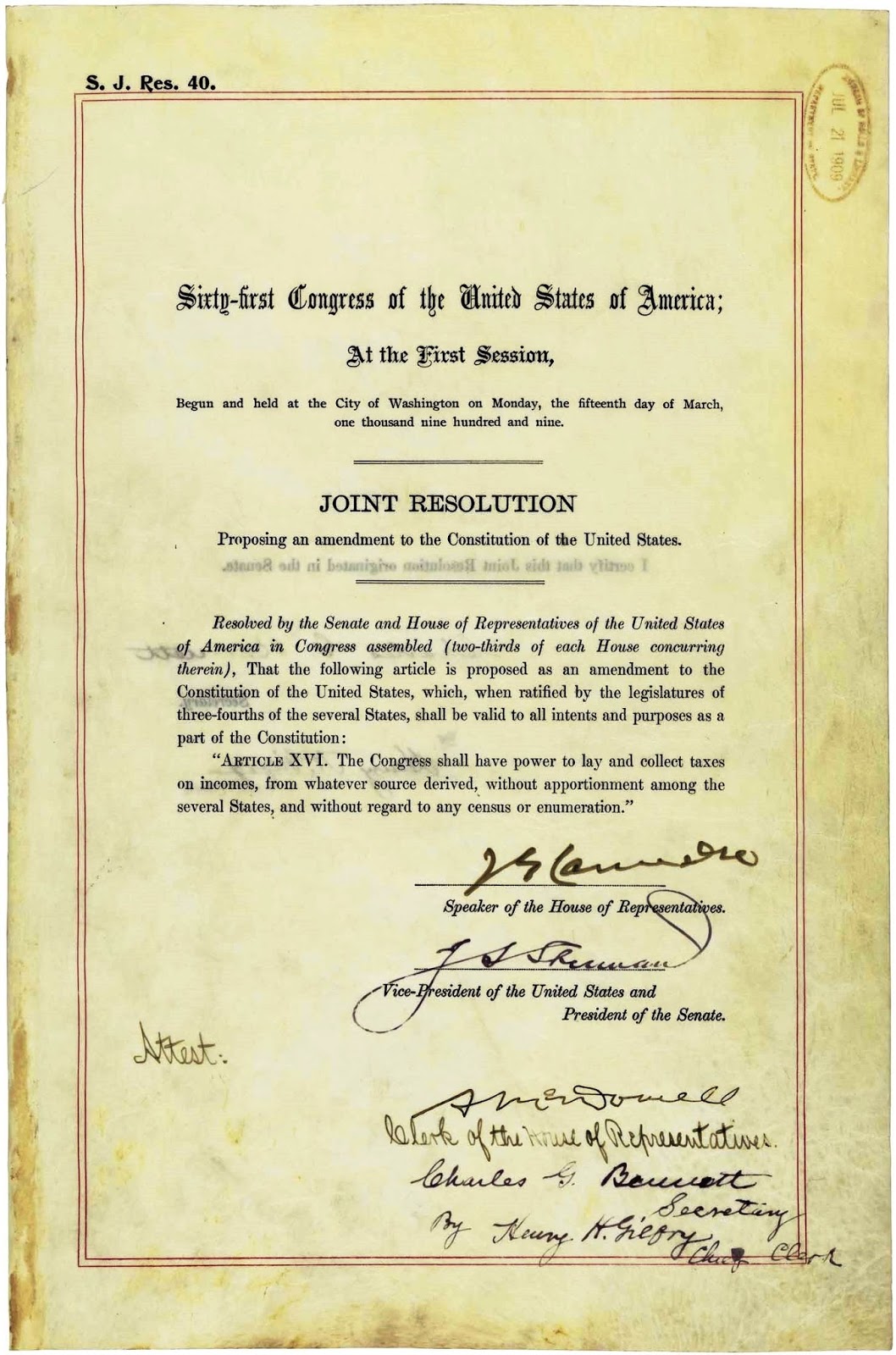
On August 3, 1910, Georgia became the ninth state to ratify the 16th Amendment to the United States Constitution, which allows Congress to levy a tax without apportioning it among the states.
On August 5, 1910, Gov. Joseph Brown signed legislation outlawing betting on election outcomes.
Calvin Coolidge was sworn in as President on August 3, 1923 after Warren Harding died in office.
On August 4, 1944, Anne Frank, her family, and two others were found by Nazis in a sealed area in an Amsterdam warehouse. They were sent first to a concentration camp in Holland, then most were sent to Auschwitz. Anne and her sister Margot died from Typhus in the Bergen-Belsen concentration camp in March of 1945.
On August 4, 1958, a wagon train left Dahlonega, headed to Atlanta to pay tribute to the mighty General Assembly deliver 43 ounces of gold to be used to coat the dome of the State Capitol.
The caravan transporting 43 ounces of gold from Dahlonega to the State Capitol to be used in gilding the dome arrived in Roswell/Sandy Springs area on August 5, 1958. At the current price of $1938.80 per ounce, that would be worth $83,368.40.
On August 6, 1958 the wagon train carrying gold from Dahlonega to gild the State Capitol dome reached Atlanta, where city officials were not prepared to receive them. The caravan bearing 43 ounces of Dahlonega gold to be used in covering the Georgia State Capitol dome reached the Capitol and delivered it to Governor Marvin Griffin on August 7, 1958.
On August 6, 1965, President Lyndon B. Johnson signed the Voting Rights Act; Rev. Martin Luther King, Jr. was in attendance and was given one of the pens Johnson used to sign the Act. Here is an auction for one of the pens used in the VRA signing. And another pen auction.
USA Today looks at the history of the Voting Rights Act and the role black women played in its passage.
“Men always got the attention, but the ones who were really organizing it and were really making it work were women,” [author Lynn] Olson said. “And that was true going back to the time of the time of abolitionists.”
When Boynton Robinson’s husband died in 1963, she used his memorial service at Tabernacle Baptist Church as the first mass meeting for voting rights in Selma.
“Mrs. Boynton [Robinson] really was the organizer of this and I think the person who actually wrote the letter that invited Dr. King and SCLC to come to Selma to help them with the voting rights movement,” Dawson said.
President Ronald Reagan began the process of firing all striking Air Traffic Controllers on August 5, 1981.
On August 3, 1982, Michael Hardwick was arrested, setting in motion the prosecution that would eventually lead to the United States Supreme Court in the case of Bowers v. Hardwick.
The World of Coca-Cola opened on August 3, 1990 between Underground Atlanta and the Georgia State Capitol.
On August 4, 1993, Nolan Ryan, the greatest middleweight fighter pitcher in major league baseball history, hit Chicago White Sox third baseman Robin Ventura, and Ventura charged the mound.
Divers raised the turret of USS Monitor near Cape Hatteras on August 5, 2002.
John Hughes, director of every meaningful teen angst movie of the 1980s (except Say Anything and Better Off Dead) died on August 6, 2009.
Molly Ringwald wrote in The New Yorker about working as a young woman with John Hughes.
Georgia Politics, Campaigns, and Elections
An attorney for the City of Rome resigned and delivered a verbal (paper) spanking. From the Rome News Tribune:
An attorney who represented the City of Rome in an ethics investigation into Rome City Commissioner Mark Cochran officially resigned this week and in a letter blasted commissioners, calling their behavior “totally unacceptable, unprofessional and without justification.”
“It is not acceptable to repeatedly scream ‘bullsh — ’ at each other or when your lawyer provides a response to a question, particularly when that answer defines their ethical responsibilities to the City of Rome — i.e., my client,” Balch wrote. “It is not appropriate to scream at each other….It is not acceptable that members of the commission insist on participating in matters in which they have even the appearance of a conflict of interest.”
“It is not acceptable to support and defend a member of the commission who has used his role to advocate for benefits for applicants or builders in the community who are either him personally or who are clients of his private business,” Balch wrote. “In other words to line his own pockets at the expense of the ordinances of the city he took an oath to defend.”
“All of you have participated in behavior that is inappropriate, unprofessional, and unworthy of your roles as leaders in the City of Rome,” Balch wrote in the June 20 letter. “This communication is not directed at any one of you or with any one group of you. It is to all of you because you have all brought shame on your city. You behaved like toddlers who do not possess self-control. Each of you has behaved as though only you know right from wrong, which is a self-delusion so far from the truth as to be yet to be discovered by the James Webb Telescope.”
Three Democratic District Attorneys and a Republican are suing the state of Georgia over a new accountability panel that resulted from legislation this year, according to the Associated Press via WSAV.
The attack on Georgia’s Prosecuting Attorneys Qualifications Commission, filed Wednesday in Fulton County Superior Court in Atlanta, comes after Republicans pushed through a law creating the panel earlier this year. Republican Gov. Brian Kemp pledged when he signed the law that it would curb “far-left prosecutors” who are “making our communities less safe.”
Sherry Boston, the district attorney in the overwhelmingly Democratic Atlanta suburb of DeKalb County and the lead plaintiff challenging the law, called the issue “bigger than Georgia.”
“We are talking about prosecutorial discretion and prosecutorial independence, both of which have been solidly under assault the last few years,” Boston told The Associated Press.
Besides Boston, district attorneys challenging Georgia’s law include Flynn Broady of suburban Cobb County, Jared Williams, whose circuit covers Augusta and neighboring Burke County, and Jonathan Adams, whose circuit covers Butts, Lamar and Monroe counties south of Atlanta. Adams is a Republican, the others are Democrats.
They say the law oversteps by requiring district attorneys to review every single case on its individual merits, and by barring district attorneys from making policies rejecting the prosecution of any whole category of crimes.
Their lawsuit contends that the duty to review every case violates the separation of powers in the Georgia Constitution, which places district attorneys in the state’s judicial branch. The lawsuit says considering every case will force prosecutors to waste time examining low-level offenses, draining limited resources from more serious prosecutions.
The suit also says the ban on establishing “stated policies” against prosecuting some cases will force district attorneys to consider prosecuting crimes such as adultery, sodomy and fornication, which most prosecutors refuse to even consider trying. It could also require prosecutors to consider prosecution for possession of small amounts of marijuana, even though the Georgia Bureau of Investigation refuses to test for amounts of marijuana less than an ounce.
They framed the urgent GOP drive for the measure as backlash against district attorneys who promised not to charge low-level drug offenders, enforce the state’s anti-abortion law or take “punitive approaches” to criminal justice.
“From the moment they started drafting this legislation it was clear to me they had crossed constitutional lines,” DeKalb County District Attorney Sherry Boston said in an interview.
“It’s of vital importance for district attorneys to have both independence and discretion,” Boston said. “This commission attacks our abilities as the ministers of justice to do that.”
“This law puts every prosecutor in every judicial circuit at risk of being removed any time someone disagrees with their decision,” Boston said, adding: “A commission like this is putting its foot on the neck of each and every one of the prosecutors.”
Under the new law, the commission will start taking complaints in October. A five-member panel will investigate the complaints and decide whether to bring formal charges, and a separate three-member panel will issue orders and opinions.
The law allows the commission to sanction or remove district attorneys for an array of causes, such as “willful misconduct” or “persistent failure” to follow the law. The complaint argues that the “vague nature” of the law leaves prosecutors uncertain how to instruct their staff to comply.
“If DA Boston or her staff were to review each individual case presented to them under SB 92′s new individual-review duty,” the lawsuit said, “they would have less staff time and other resources to devote to pressing public-safety concerns in DeKalb County, such as prosecuting serious violent felonies.”
Governor Brian Kemp announced that the Georgia Department of Natural Resources (DNR) Board voted for a new Executive Director.
Governor Brian P. Kemp today announced that the Board of Natural Resources (DNR) voted unanimously to approve Jeff Cown as Director of the Environmental Protection Division (EPD), effective August 16.
“I look forward to Jeff’s continued service to our state as EPD Director,” said Governor Brian Kemp. “With an accomplished and dedicated history in this field, he will be an asset to the Division as it continues the essential work of ensuring Georgia remains a good steward of our natural resources while balancing the needs of our citizens. I also want to thank my Executive Counsel, David Dove, for serving as Interim EPD Director.
Jeff Cown has been with the Georgia Department of Natural Resources and has served as the Director the State Parks and Historic Sites Division since September of 2018. In this role, he oversees the management of 70 properties that preserve the state’s environment and history. Prior to this role, Cown spent over 28 years with the Environmental Protection Division, serving as Chief of the Land Protection Branch. He earned a Bachelor of Science in Agricultural Engineering degree from the University of Georgia and is a graduate of the Institute of Georgia Environmental Leadership (IGEL), Georgia’s environmental leadership program.
Governor Kemp will allow agencies to seek higher budgets in the new budget cycle, according to the Associated Press via AccessWDUN.
Georgia Gov. Brian Kemp said Wednesday he’s ready to loosen the purse strings after years of huge budget surpluses, reaped partly by holding down spending despite strong state revenue.
In a yearly memo that kicks off the state budget process, Richard Dunn, director of the Office of Planning and Budget, told state agencies they can ask for 3% increases both when the current 2024 budget is amended and when lawmakers write the 2025 budget next year. He also invited agencies to propose one-time ways to spend the state’s unallocated surplus, which could top $10 billion once the books are closed on the budget year ended June 30.
All proposals “should be targeted at initiatives that can ‘move the needle’ on program outcomes, improve customer service, or provide future improvement on how we do business or deliver services as a state,” Dunn wrote.
One of the Republican Kemp’s strongest powers as governor is setting the revenue estimate, an amount that state law says legislators cannot exceed when writing the state spending plan. Critics of Kemp’s fiscal policy, including the liberal-leaning Georgia Budget & Policy Institute, say he has starved state services by setting artificially low revenue estimates.
Most Georgia agencies took a 10% cut in the 2021 budget, when government officials feared a sharp revenue drop from the COVID-19 pandemic. Instead, federal stimulus programs and inflation fueled higher income and sales tax collections. Agencies saw their budgets increase in 2022 and 2023, but mostly only to raise employee pay.
Georgia plans to spend $32.5 billion in state revenue and $55.9 billion overall in the year that began July 1. The difference between the two figures stems mostly from federal funding. State revenue is projected to be level, but overall spending is expected to fall from $61.5 billion last year.
From the Capitol Beat News Service:
Rick Dunn, director of the Governor’s Office of Planning and Budget (OPB), informed state agency heads in a memo Wednesday that they will be allowed to request spending “enhancements” of up to 3% in their fiscal 2024 mid-year and fiscal 2025 budget proposals.
Dunn, who joined the OPB this month after heading the Georgia Environmental Protection Division, cited a Georgia economy that continues to exceed expectations despite predictions by multiple economists of a recession this year.
“The underlying strength of the state economy will enable us to continue to meet projected spending obligations required to support our growing population, even with the impact of current and upcoming tax cuts … and other revenue adjustments,” Dunn wrote.
While Republican state lawmakers have praised Kemp for conservative budgeting practices during the last three years, Democrats and advocates for low-income Georgians have criticized the governor for using a growing budget surplus to push state income tax rebates and reductions in the tax rate through the GOP-controlled General Assembly.
“Many of Georgia’s systems are failing to meet citizens’ needs,” Staci Fox, president and CEO of the Atlanta-based Georgia Budget and Policy Institute, said Wednesday. “It’s not a surplus unless you’ve met your fiscal obligations.”
Agency budget submissions to the OPB are due Sept. 8. Kemp will present his spending recommendations to the General Assembly in January.
But Kemp’s new budget director, Richard Dunn, said in a note to agency leaders that “Georgia’s economy has continued to exceed expectations as businesses flock to the Peach State to take advantage of our strategic location, robust transportation infrastructure, world class workforce and business friendly environment.”
“For state government,” he wrote, “this has meant stronger than anticipated revenues, enabling the state to make strategic economic and infrastructure investments to support future growth over the last two years while still providing more than $3 billion in tax relief.”
Georgia Labor Commissioner Bruce Thompson (R-White) is working to burnish the agency’s image after the pandemic tarnished it. From the AJC:
As the economy shuttered during the COVID-19 pandemic, a wave of Georgians suddenly without work rushed to apply for unemployment benefits. In one month alone, more than 1.3 million workers applied, overwhelming a system that at the height of the Great Recession handled just over 125,000 claims in a month.
For state Rep. Bill Werkheiser, a Glennville Republican and chairman of the House Industry and Labor Committee, that meant frustrated constituents contacting him. “Every day I was giving (the state Department of Labor) a spreadsheet of names that seemed to be hung up in the system,” he said.
Three years later, Werkheiser rarely gets a call. The unemployment rate in Georgia has fallen dramatically, and the number of people applying for unemployment benefits in the state has returned to normal levels.
But while the pandemic shined a light on the urgency of supporting an agency that observers say was neglected for too long, solutions will take time to implement, leaving it uncertain how prepared Georgia will be for the next inevitable economic downturn.
Since Labor Commissioner Bruce Thompson stepped into his role in January, he has said the department has an image problem. “A lot of it culminated during the pandemic,” he said, “but it really was because of the contentiousness of the past.”
But the hardest challenge could be yet to come. The agency is looking to overhaul its software that runs the claims, tax and appeals unemployment benefits system, soliciting a request for a private contractor to help. Thompson said the department’s current software is from the 1980s, making it one of the oldest in the nation.
But the system will likely cost about $50 million, he said, meaning the department will have to work to get even more state funding. Thompson has confidence it will get it.
“Our case will be simple: This is not an investment into us, it’s an investment into the people through the process of modernizing.”
The 870-member staff Thompson has remaining in the department is smaller than before the pandemic. In 2019, the agency had 1,055 employees. But Thompson said he believes staffing cuts will stop now and he’ll be able to make a more efficient agency with the current total, rather than hiring more people.
Thompson said he is happy with the progress made so far. But while he’s confident once a system modernization occurs the department will be ready for anything, until then he’s less sure, especially if another rapidly unfolding crisis happens again.
“We are now preparing this agency to be resilient enough that we would be able to incrementally handle anything that would be thrown our way,” he said. “But we’ve got a ways to get there.”
The Macon-Bibb County Board of Elections and Registration is partnering with the local NAACP branch to promote voter education, according to 13WMAZ.
“We’re here to make sure that we get the community educated on what they need to do,” Gwenette Westbrooks, president of the Macon-Bibb NAACP branch, said. “We’re going to be identifying the people that have actually been purged and we’re going to be setting up across the community.”
“We just want people to make sure that they check their mail on a regular basis to make sure whether or not they receive the envelope about being purged,” Westbrooks said. “They need to act accordingly because they only have 30 days to react from the date that’s on that letter.”
Bibb County Board of Elections Supervisor Tom Gillon explained how they determine which voters they remove from the roll.
“Anyone who has not voted in several years, first they get moved to an inactive list and you can still vote as an inactive voter,” Gillon said. “As soon as you do vote, that’ll move you back to active status.”
“If you’re an inactive voter and you still miss 2 general elections, then that starts the process for the state to try to get in touch with you and they’ll send out mailings and so forth to find out where you are,” Gillon said. “If we get no contact back from them, then the state will remove you from the list.”
The NAACP is urging people to check the state’s list online, and they said they’ll help explain how people can challenge the removal of voters.
The Georgia Secretary of State’s Office audited Gwinnett County’s elections department, according to the Gwinnett Daily Post.
“In coordination with the Gwinnett County election office, the Secretary of State’s office recently conducted health checks of the voting system, finding that Gwinnett County’s election infrastructure remains secure, unaltered and fully functioning as Georgia heads into a major election cycle,” the Secretary of State’s office said.
“You have a great elections director, you have a great team, in Gwinnett,” [the SOS] told the business leaders. “When you have an elections director, prior to this one, who had been doing it for 20-some odd years, it’s so great to find someone who came from a large metropolitan region who has oversight over (a voting area) about 1 million people because you don’t want someone that’s run just 10,000.”
“That’s great, but you want someone with experience and this gentleman has just jumped into it and you have a great facility and great security controls.”
State officials said health checks are being conducted in elections offices for all 159 counties in the state. During the check, every candidate and ballot position on the Ballot Marking Devices is tested. Every ballot scanner is also tested to make sure they are working properly.
Meanwhile, the Secretary of State’s Office is pausing part of the voter removal process, according to the AJC.
Georgia’s “use it or lose it” voter registration cancellations have gone on hiatus.
Almost no one is losing their ability to vote this year solely because they declined to participate in Georgia elections for several years, a temporary reprieve caused by court cases and changes to state laws.
Instead, the 191,000 voter registrations scheduled for cancellation this month belong to people who very likely moved away: They either filled out a national change-of-address form, or notification letters mailed to them were undeliverable by the U.S. Postal Service, according to data published by the secretary of state’s office.
Without “use it or lose it,” infrequent voters will have two more years before their registrations are removed, creating a backlog that could lead to a surge in cancellations in 2025.
Voting rights advocates say they’re concerned about the return of “use it or lose it” cancellations when Georgia next conducts mass registration cancellations in 2025. There are currently about 390,000 inactive registered voters who haven’t had contact with election officials within the past five years, according to state registration data.
The Georgia State Elections Board dismissed a complaint about a Herschel Walker campaign promotion, according to the AJC.
Handing out $25 gift cards at events promoting Republican Herschel Walker’s run for the U.S. Senate didn’t amount to vote-buying, according to the State Election Board’s unanimous decision to dismiss a complaint.
But the board’s chairman said Tuesday that he found the campaign stunt “troubling,” and the board voted to send a letter to 34N22, the political action committee that hosted the events, with an admonishment to act appropriately.
The gift card giveaways at gas stations and grocery stores last year were legal because anyone who showed up received a card — including at least one voter who supported Walker’s opponent, Democratic U.S. Sen. Raphael Warnock. Georgia law bars payments or gifts in exchange for voting, registering to vote or voting for a specific candidate.
Bill Duffey, chairman of the State Election Board, said he was concerned that before people got the gift card at a downtown Atlanta Chevron, they were asked who they would vote for and whether they’d consider voting for Walker.
“Everybody in the state needs to know that if you want to engage in this sort of campaign conduct, you have to be really, really careful,” Duffey said. “… This is troubling to the board.”
The State Election Board has previously dismissed similar allegations, including cases involving a Bibb County councilwoman who provided food while passing out campaign literature at a retirement home, a Douglas County candidate who offered free hot dogs near a polling place and a group called When We All Vote that gave away free food at early voting locations. In each case, the gifts weren’t conditioned on voting.
Albany has $149 million dollars in reserve funding, according to the Albany Herald.
The figure provided by Albany Finance Director Derrick Brown includes every city asset, from buildings to lawn mowers to police cars. But the number in terms of available cash is a still-hefty $149 million, Brown said on Monday.
And all of that cash on hand is not unrestricted for immediate use. Of the $149 figure, $20 million is from federal American Rescue Plan Act funds related to the COVID-19 pandemic, out of which $15 million is dedicated to the city’s $135 million sewage project, for example.
“That’s not $149 million we can just do anything with,” Brown said. “A lot of it is allocated for other things.”
The $149 million includes cash reserves and short-term investments such as bonds that could be cashed out quickly if needed.The city’s policies require keeping on hand enough reserves to fund operations for three months, and the available amount would cover that. The policy is up for review next year and could be left as-is or extended to 180 days, which the current cash fund balance also would cover.
“When we put that policy in place, we couldn’t have put it at 180 days because we didn’t have enough for 180 days,” Brown said. “The policy is 90 days, but that (180 days) is our target. We try to have 180 days, or six months, of funding so if there is some catastrophe we would have that on hand.”
“One hundred forty-nine million sounds like a big amount,” Brown said. “We go through $1.2 million every two days. We have to take that into consideration.”
Brunswick City Commissioners heard public comments on homelessness, according to The Brunswick News.
City commissioners heard about a downtown business owner’s run-ins with homeless people at her restaurant and voted to consolidate the maintenance of city squares Wednesday afternoon.
Brunswick Mayor Cosby Johnson addressed her concerns, saying the city has taken action. The commission has passed multiple ordinances in an attempt to head off some of the issues she brought up, and taken legal action against some entities that enable them, he said. It’s also increased funding to the Brunswick Police Department.
“Officers have clearly been in a heightened mode of patrolling not only the downtown corridor but (elsewhere) in the city of Brunswick,” along with Glynn County police and sheriff’s deputies, Johnson said.
The wheels of government are definitely turning, he said.
Glynn County Commission Finance Committee members voted to refund some penalties and interest charged on property taxes, according to The Brunswick News.
In this instance, Glynn County Tax Commissioner Jeff Chapman said the request by Marlene E. Baker was unusual, and he would not have a problem if her request for a refund of $3,463 was approved.
Baker said she was misled in believing she paid the back taxes she’d own the home she has lived in since 2009.
The request to recommend a refund was unanimously approved.
Another request for $168 in refund penalties and interest paid on property taxes was denied by committee members. The property owner said the tax bill was sent to the wrong address, and he didn’t realize the taxes hadn’t been paid until they were overdue.
Troup County middle and high schools will now use metal detectors, according to WTVM.
Six Troup County Schools will use weapon detection systems or metal detectors at the main entrances for the 2023-2024 school year to add an extra level of safety for students and staff.
“The first purpose of why we are here is to educate students, right, and if students don’t feel safe in the school system, Then, they’re not going to learn much. They’re gonna be focused on other things,” Troup County School System Safety Coordinator, Steve Heaton, said.
The system will not detect items such as cell phone or keys, but will detect large quantities of metal… specifically firearms, knives, and other items not permitted that can be used as a weapon.
Albany Utilities will transition to an automated meter system, according to WALB.
Over the next year and a half, Albany Utilities will be phasing out human meter readers, and replacing them with computers. Customers will be able to see their water, gas and power consumption in real-time.
“The project is referred to as an AMI project,” Director of Utility Operations Jimmy Norman said. “AMI stands for Advanced Metering Infrastructure. It is a network that reads data meters and reports that information through a meter data management system into our billing system. So it’s an automated process that takes a lot of the human error out of traditional meter reading.”
“They can log into their customer portal, look at their bills, look at their usage. And it’s a real-time picture of what they’re using on a daily basis,” Norman said. “So they can tell if they’re using a lot more energy, a lot more water, a lot more gas at any particular time during the month or day.”
“Sometimes, we encounter situations where a meter reader might not be able to or service technicians might not be able to access the property,” Deputy Director of Utility Operations Kendall Hodge said. “And so that results in an estimated brief for that customer, which sometimes leads to frustration from a billing access, so it helps to minimize these types of situations.”
The new system will affect both commercial and residential. All water and power meters and some gas meters will be replaced.
Savannah City Council voted to approve use of software to monitor short-term vacation rentals in the city, according to WTOC.
During a recent council workshop, the city manager’s office said Savannah receives complaints about STVRs that are either illegal or have code violations every day. Now, they’re hoping this new software will help city departments improve the STVR program.
City council recently approving a contract of up to $290,000 for a program called Rentalscape.
The city manager says it scours the internet and helps code officers find properties that don’t comply with current rules. It’s something that the president of the Downtown Neighborhood Association, David McDonald, says residents have been pushing for.
The city manager’s office says Savannah has issued more than 1,600 STVR certificates. He says this new software will help improve code compliance, applications, licensing and hotel/motel tax collections.
“Be able to bring all that administration into a digital platform, which will be able to streamline processes and also provide a 24-hour, seven day a week hotline for residents to call if they feel like they’re experiencing an issue with a short-term vacation rental or an illegal short-term vacation rental,” Savannah City Manager Jay Melder said.
The city also has another system that allows the public to search for STVR certificates to see if a property is compliant.
Qualifying opens August 21 for Mayor of Albany, and three city commission seats, according to the Albany Herald.
Qualifying begins on Aug. 21 and ends on Aug. 25. Hours are 9 a.m.-4:30 p.m. each day during the qualifying period.
Candidates for mayor will be required to pay a $750 qualifying fee, while the qualifying fee for commission Wards I, IV and VI is $450.
Incumbents in those positions are Mayor Bo Dorough, Ward I Commissioner Jon Howard, Ward IV Commissioner Chad Warbington and Ward VI Commissioner Demetrius Young.
For the municipal elections, there will be two mandatory Saturday voting days during the two-week advance voting period, a change made by the state from previous elections, Dougherty County Elections Supervisor Ginger Nickerson said Wednesday.
To boost the number who show up at the polls, the Dougherty County Board of Registration and Elections is working on ways to increase turnout and make it more convenient for voters at the polls.
“We’re trying to work with various organizations to work on turnout, because in the past it hasn’t been good,” Nickerson said. “The board is going to request funding so the (Albany) Civic Center can be the site of early voting for this election. With the law change, voters will have two Saturdays.”
The municipal election and T-SPLOST referendum are scheduled for Nov. 7. If a runoff is necessary for one or more city races, it would be held on Dec. 5.
The T-SPLOST is a countywide 1% tax that helps fund transportation-related projects in the city of Albany and Dougherty County.
After the COVID-19 pandemic struck, some poll workers pulled out of working elections, a trend that was seen not just in Dougherty and Lee counties but across the country.
The Rome News-Tribune writes about candidates expected to run in this year’s local elections.
With six of the nine commission seats up for grabs, the Rome News-Tribune polled incumbents and potential challengers in the Ward 1 and Ward 3 races Wednesday.
The election is nonpartisan and there is no primary.
Candidates will qualify with Smith during business hours at City Hall, 601 Broad St. Qualifying starts Monday, Aug. 21, and runs through 4:30 p.m. Friday, Aug. 25.
The qualifying fee is $360, which is 3% of a commissioner’s $12,000 salary. Board members currently get $8,400 but a raise approved in 2022 takes effect in January.
Related Posts
 Pooler prepares to set millage rate and future | savannahnow.com
 Atlanta on the fence about joining county-wide sales tax… | www.myajc.com
 Georgia Senate runoff: Nasty, brutish — and long – Manu Raju – POLITICO.com
 Georgia Politics, Campaigns, and Elections for April 24, 2020
 FWIW: Emails run heavily against Cobb stadium | www.myajc.com


Comments ( 0 )