
Christopher Columbus set sail from Spain on August 3, 1492.
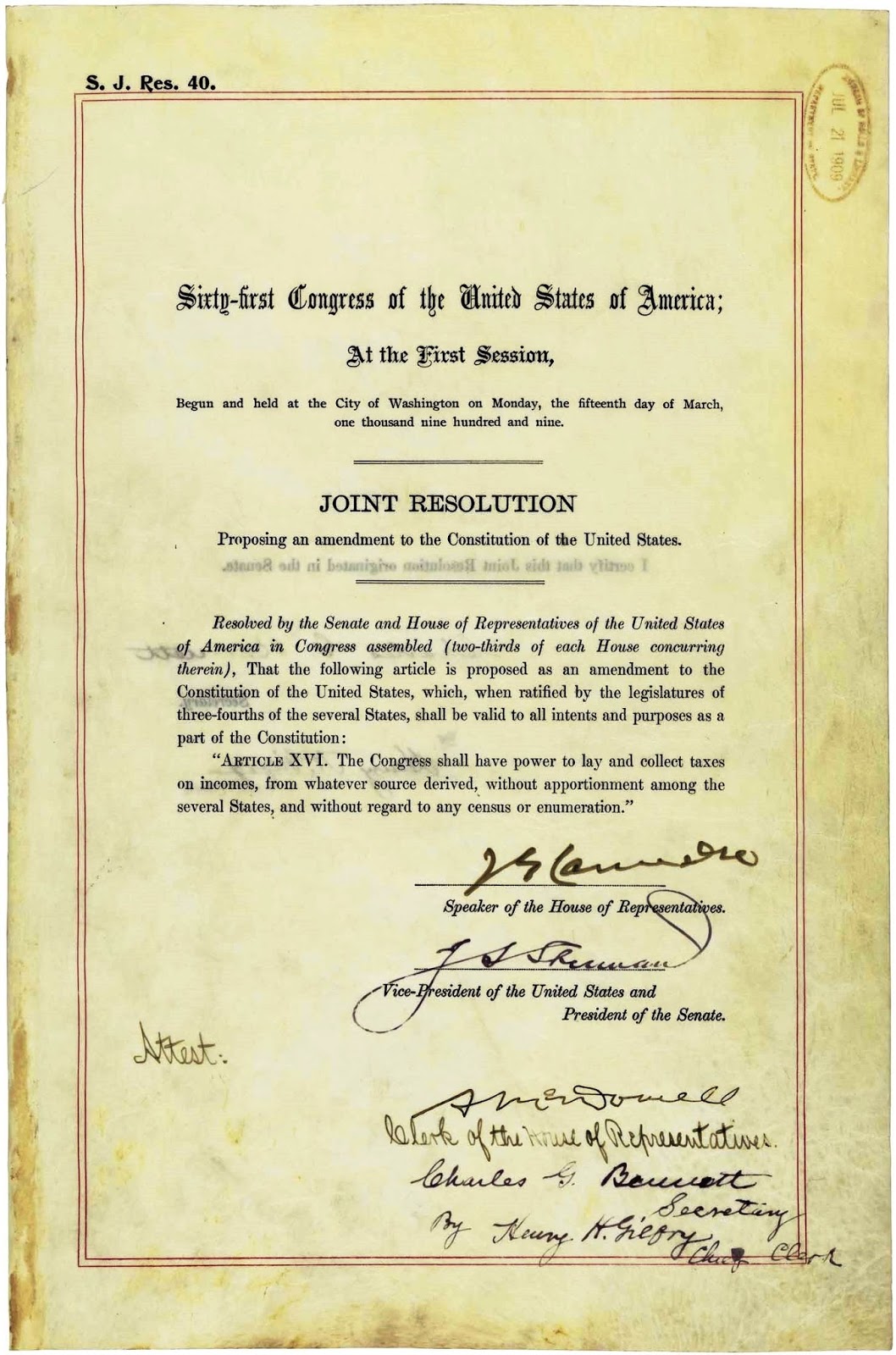
On August 3, 1910, Georgia became the ninth state to ratify the 16th Amendment to the United States Constitution, which allows Congress to levy a tax without apportioning it among the states.
Calvin Coolidge was sworn in as President on August 3, 1923 after Warren Harding died in office.
On August 3, 1982, Michael Hardwick was arrested, setting in motion the prosecution that would eventually lead to the United States Supreme Court in the case of Bowers v. Hardwick.
The World of Coca-Cola opened on August 3, 1990 between Underground Atlanta and the Georgia State Capitol.
Georgia Politics, Campaigns, and Elections
Governor Kemp and a Democratic state senator disagree on how to move Georgia’s vaccination numbers up, according to Fox5Atlanta.
“I am very heartened to see that the governor has been and continues to push vaccines as our sort of topmost priority for getting this pandemic under control. So, I do applaud him for that. However, I do think that we haven’t been doing enough to get as many Georgians vaccinated as possible,” said Sen. Dr. Michelle Au, D-Johns Creek.
“You can lead a horse to water, but you can’t make him drink,” said Gov. Kemp. “I mean, that is not the government’s role. Our role is to educate people and to tell them the truth. But when you tell them they can get vaccinated and then take their mask off and then you turn around weeks later and reverse that, who’s gonna trust anybody, any politician–Republican, Democrat or otherwise?”
Though Dr. Au said as government leaders, it is incumbent upon them to take the lead.
“I don’t think that this is the moment to throw up our hands and say, ‘Look if you haven’t gotten vaccinated yet, there’s nothing I can do about it. It’s your choice. We’re done.’ Because that’s not what government should do,” said Dr. Au.
Dr. Au said some of the Georgians who have not gotten vaccinated do not have an ideological objection to the shots, but instead face costs they have not yet figured out how to overcome, like finding transportation, taking time off for the shot, or having sick time available should they experience side effects.
“Treating the vaccine outreach sort of like how the Red Cross treats blood donation,” explained Dr. Au. “We all remember having blood drives at college. I had a blood drive at my high school. We have blood drives at work, in the lobby of the bank, you know, places people already are and really lower that barrier as much as possible to make it as easy as possible for people to do the right thing.”
U.S. Health and Human Services Secretary Xavier Becerra visited Gwinnett County, according to the Gwinnett Daily Post.
Becerra participated in a 30-minute roundtable discussion that U.S. Rep. Carolyn Bourdeaux, D-Ga., hosted at the Norcross Cultural Arts Center Monday. The meeting gave Becerra a chance to speak, in person, with local health officials and groups that have been trying to work on outreach to get people vaccinated against COVID-19.
“In so many ways, this has become the pandemic of the unvaccinated,” Becerra told the Daily Post after the roundtable. “Those who can, by chance, still get infected who have been fully vaccinated usually not only survive, not only don’t go to the hospital, but continue forward.”
Becerra’s visit to metro Atlanta to talk about COVID-19 and other issues came on the same day that one of the three health systems that serves Gwinnettians announced it has seen its highest pandemic-related hospitalizations since February.
“All of our hospitals have reported to me that they’re seeing rising hospitalizations, increased ICU bed use and also more ventilator use,” [Gwinnett, Newton and Rockdale Health District director Dr. Audrey] Arona said. “When I ask them (about hospitalization) — like for instance in Piedmont Newton (at) 100% are unvaccinated people that they’ve admitted in the past few weeks.”
“The Piedmont system in general reports 98% (unvaccinated) and we’re seeing the same thing in the Northside hospitals too: that the majority are unvaccinated.”
Health and Human Services Secretary Xavier Becerra says he hopes to soon wrap up the federal review of the governor’s health care plans even as state officials again push back the launch of Georgia’s slight expansion of Medicaid.
The Biden administration has objected to parts of Gov. Brian Kemp’s health care plans, including a proposed requirement that participants complete enough work or activity hours to keep Medicaid coverage through a strategy that would expand access to about 50,000 people.
Approved under the Trump administration, Kemp’s plan to slightly expand Medicaid has been under review since February. The Centers for Medicare and Medicaid is housed within Becerra’s agency.
“We’d like to work as quickly as possible because we know there are people in Georgia who are going without care, and we would like to make sure that we give the state as quick as a response as we can,” he told reporters Monday gathered at Southside Medical Center near downtown Atlanta.
Kemp’s Medicaid plan was originally set for implementation on July 1 but was delayed until “at least” Aug. 1. Caylee Noggle, the state’s new governor-appointed commissioner of the Department of Community Health, recently informed federal officials that the program would be pushed back further.
Becerra said his job is to ensure the federal money that would go back to the state is “well spent.”
“Are you offering more care at a better price to more people? That’s what we want to get out of any kind of waiver that we give to a state,” he said.
The Biden administration also stalled parts of a second Kemp plan that would bypass healthcare.gov and send consumers directly to insurance companies or brokers. The governor has defended the plan.
“There what we simply want to do is make sure that we offer the same standards, that there’s no race to the bottom in what providers offer to patients in Georgia. We don’t want Georgians to get a worse plan with less protections,” Becerra said. “We simply want to make sure that what people are getting is good coverage and they’re not getting some junk plan at the end of the day that doesn’t give them any real protection and service.”
Republican Agriculture Commissioner Gary Black is not waiting for Herschel Walker to decide whether to run for United States Senate, according to the Capitol Beat News Service via the Athens Banner Herald.
Black, who is already in the race, has released a TV ad contrasting his Georgia background with the fact that Walker now lives in Texas.
The ad starts with a video showing Walker in front of car with a Georgia license plate, saying he’s ready to “run with the Big Dogs.” The spot then cuts to Black standing beside and then getting into a tractor.
Black and Walker attended the University of Georgia together during Walker’s freshman season.
“If my old classmate from UGA wants to join the conversation here in Georgia, I welcome hearing his ideas,” Black said. “But it takes more than pretending to change your car tags. Move here, pay taxes here, register and vote in some elections, and learn what Georgians have on their minds.”
Georgia Attorney General Chris Carr announced that eight people were indicted on 54 charges related to gang activity by a Dougherty County Grand Jury, according to the Albany Herald.
“Gangs are behind the crime wave that is affecting Georgia communities, and members are willing to commit horrific acts to help fuel their illegal activities,” Carr said in a news release. “We will continue to vigorously prosecute gang members for their crimes, and we look forward to presenting this case – which contends there is a nexus between gangs and human trafficking – in court.”
“Conducting human trafficking and criminal street gang investigations are top priorities for the GBI,” Georgia Bureau of Investigation Director Vic Reynolds said. “We are committed to investigating crimes that affect the safety of our communities. No human should be subjected to sexual servitude or labor trafficking. We will continue to work with Attorney General Carr’s office as they prosecute these horrendous crimes.”
Georgia Lieutenant Governor Geoff Duncan spoke to the Atlanta Rotary Club about his plans after leaving office, according to the Albany Herald.
“Both sides are guilty of trying to politicize every issue,” Duncan said during a luncheon speech before the Rotary Club of Atlanta. “It’s this type of mindset that drove me in a new direction.”
Duncan announced in May he would not seek a second term as Georgia’s lieutenant governor to focus on creating a national nonprofit called “GOP 2.0” aimed at rebuilding the Republican Party in the aftermath of former President Donald Trump’s ongoing claims of widespread voter fraud following his defeat last November.
“It’s not about winning elections,” Duncan said Monday. “It’s about creating a movement that lets us focus on real problems with real solutions.”
“Crime is something that’s been politicized way too much,” Duncan said. “[But] crime affects Democrats and Republicans equally.”
Georgia State School Superintendent Richard Woods will speak to the Bulloch County Republican Party on Saturday, according to the Statesboro Herald.
The GOP Breakfast Club meets the first Saturday of each month in the conference room of the Parkwood RV Park, 12188 S. Hwy 301. Cost of the breakfast is $10. Reservations, which are required to attend, may be made by email to: bcgopbreakfastclub@gmail.com.
United States Representative Rick Allen (R-Augusta) and 50 Congressional colleagues joined an amicus brief on Georgia’s new election laws, according to the Augusta Chronicle.
The Department of Justice filed suit against the state on June 25, alleging that Georgia’s new law, SB 202, discriminates against Black voters.
Allen is one of 57 members of Congress on the amicus brief filed with United States District Court – Northern District of Georgia. He is joined by the other seven Republican members of Georgia’s congressional delegation as well as Republican House Whip Steve Scalise and Conference Chair Elise Stefanik, the No. 2 and 3 leaders in the House minority. House Minority Leader Kevin McCarthy did not join the filing.
“The Biden Administration’s lawsuit against Georgia is just the latest example of an ongoing effort to federalize elections, and is the same attempt that is being waged legislatively with Congressional Democrats’ For the People Act,” Allen was quoted as saying in a statement. “We must reject these efforts and stand with the Constitution to defend states’ authority to conduct and administer elections.”
The 22-page amicus brief filed Monday argues that the constitution gives broad authority to state legislatures to regulate elections and that any restrictions on that authority should come from Congress, not the judicial or executive branch. Given this, they argue that the state has a strong interest in measures they allege protect voters from fraud, and that inconveniences created by the law, and its strongly partisan passage, do not meet the criteria of racial discrimination under Section 2 of the Voting Rights Act.
The joint legislative redistricting committee will hold an Augusta meeting at the end of the month for citizen input, according to the Augusta Chronicle.
The hearing will be Aug. 30 at Savannah Rapids Pavilion, 3300 Evans-To-Locks Road in Martinez. The joint committee hearing was originally scheduled for July 7, but was cancelled due to the threat of Hurricane Elsa. The hearings held across the state and virtually have, so far, been held without data from the Census Bureau, which will be released on or before Aug. 16.
Although data will be available, staff for the Reapportionment committee said the state will not have had time to do anything with it, and that the data may not even be in the state system by the time the hearing occurs. Usually results from the 10-year census are released in April so that state legislatures can re-draw congressional and state legislative districts to account for demographic changes, but the data was delayed due to the pandemic.
Athens and Columbus are considering adopting so-called “non-discrimination ordinances,” according to Project Q.
Two of Georgia’s six largest cities stand poised to adopt sweeping LGBTQ-inclusive nondiscrimination ordinances, bringing protections to some 300,000 more residents.
But a similar effort in the state’s second-largest city stalled amid concerns over how to enforce the policy. Such policies are in place across Georgia in 12 municipalities, with 11 passing in the last three years.
The policies ban discrimination based on sexual orientation, gender identity, race, religion and several other factors in private employment, housing and public accommodations. The complaint process, fines and revocation of business licenses vary by ordinance. Several also call for tracking hate crimes.
The Athens-Clarke County Commission votes on its nondiscrimination ordinance during a meeting on Tuesday, according to Commissioner Mariah Parker. The city is Georgia’s sixth most populous.
Columbus City Councilmember Walker Garrett also hopes to pass a nondiscrimination ordinance in his city, the state’s third-largest, in August. But religious groups are trying to derail the effort over the measure’s inclusion of LGBTQ protections.
Columbus held a meeting to hear public input on spending federal COVID relief funds, according to WTVM.
Federal funding from the American Rescue Plan aims to provide economic relief from the pandemic’s negative economic and health impacts.
Columbus Deputy City Manager Pam Hodge says the plan allocates the Columbus Consolidated Government (CCG) a total of $78.4 million to be paid in two rounds. Hodge says they received $39 million in June and expect to receive the second half by June of next year.
Mayor Skip Henderson says the pandemic has impacted so many parts of the community over the last year and a half. “Our focus is quite simple. It’s to find the best way to heal the most people with the amount of money that we have allotted to us. And to do that, it makes no sense not to include the people in the community.”
There will be an update for the city council on this input from the public on August 10. On August 24, the council will vote on funding priorities.
Liberty County public schools are requiring masks, according to WTOC.
Last year, there were about 50-percent of students virtual and about 50-percent in-person. This year, 100-percent of students in Liberty County will be in-person learning.
Masks will be required throughout the school day for anyone in the building. They will sanitize the school and are encouraging everyone to practice the three W’s: wash your hands, wear a mask, and watch your distance.
Gainesville City schools will require employees to wear masks in open house events, according to AccessWDUN.
“We will be requiring mask for all of our employees,” said Superintendent Jeremy Williams during a Superintendent’s update. The open houses will take place over the course of three days, beginning Friday. Williams said they are monitoring the COVID-19 situation and may decide to require masks for all parties should things worsen. In the meantime, disposable masks will be on hand at every open house for students and families who may want one.
Athens-Clarke County Commissioners will consider requiring mask use again, according to the Athens Banner Herald.
A Tuesday night meeting of the Athens-Clarke County commission will include a vote on instituting a new mask mandate. The local mandate was previously tied to the local state of emergency and was removed after cases in Athens fell lower than the threshold outlined by the requirement.
With the new mandate, that threshold will resume, meaning that Athens will have a mask mandate so long as there are 100 cases (or more) per 100,000 residents, a metric used by the Centers for Disease Control and Prevention to determine “high risk.”
In Athens, as of July 30, there were 178 cases per 100,000 residents over the last two weeks, according to the Georgia Department of Public Health.
The mask mandate would only be enforced indoors and when there are over 100 cases per 100,000 residents in Athens-Clarke County over the previous seven days.
The proposed ordinance would require that people wear masks when indoors in a public place. Local businesses can opt out of the mask mandate by posting a sign in a suggested one inch Arial font that reads, “This location does not consent to enforcement of any local face covering requirement upon this property.”
A Gwinnett County parents group has filed suit over mask requirements, according to AccessWDUN.
Parent Holly Terei spoke on Fox News Channel Friday saying she chose to pull her kids out of the school system because of the mandate.
“I do not co-parent with my school board, I do not co-parent with the CDC and I certainly do not co-parent with this administration,” Terei said. “I compromised last year when they allowed our students to go back into the building as many parents did, and we put masks on our children, but no more.”
Terei said the lawsuit was filed Thursday. No details on the suit were immediately available.
Cobb County Sheriff Craig Owens said the county jail will resume COVID protocols, according to Fox5Atlanta.
A Cobb County Sheriff’s Office spokesperson said 51 people tested positive on a day of mass testing on July 28. Most are not symptomatic, officials said.
People will receive a rapid test during booking in the Adult Detention Center and will be isolated in a “pod” for 14 days. Detainees may request a COVID-19 test at any time, officials said. Officials said any detainee exhibiting symptoms will receive a test and be placed in a separate pod.
“The data is clear; the Delta variant is especially dangerous for the unvaccinated,” said Owens. “I urge our employees and all detainees to take advantage of the free, safe COVID-19 vaccine for their safety and the safety of the general public.”
The Rome and Floyd County Joint Services Committee will hear an update on project funded by the Special Purpose Local Option Sales Tax (SPLOST), according to the Rome News Tribune.
The current 1-cent special purpose, local option sales tax was approved by 60.73% of voters in 2017, including unprecedented support from the unincorporated part of the county.
SPLOST collections started on April 1, 2019 and run through March 31, 2024.
The Savannah Housing Task Force is working to address what is called a housing affordability crisis, according to the Savannah Morning News.
The task force was created by Mayor Van Johnson last summer and swiftly established a goal of forming an action plan to address Savannah’s housing affordability crisis, where housing costs have outpaced incomes by 100% since 1990.
“One of the number one contributing factors to poverty is the lack of affordable housing. And if someone is paying over 30% of their take-home income toward housing, we have a problem,” Johnson said.
“So in providing affordable housing, we’re also addressing one of the major constructs, if you will, in our issue of poverty.”
“The only way this plan will work, is it’s gonna take city government, county government, federal funds, philanthropic organization, businesses, and other organizations to chip in and help,” said Israel G. Smalls, co-chair of the Housing Savannah Task Force and former assistant city manager.
Glynn County Commissioners will discuss raising garbage fees, according to The Brunswick News.
Commissioners will be given two options to consider. One choice is to retain the current annual rate of $125, but that price would only include solid waste pickup, leaving customers the option to subscribe directly with the provider for recycling services.
The other option is continue trash and recycling pickup for $185 a year.
Related Posts
 Georgia has the fastest-growing solar industry | savannahnow.com
 Your daily jolt: Citing clash with Legislature, ratings agency downgrades Fulton bonds | Political Insider | www.ajc.com
 Gov. Deal Highlights Ethics, Juvenile Justice in Legislative Overview | WABE 90.1 FM
 Chatham Superior Court clerk prepares to sue county for pay hike | savannahnow.com
 Florida’s fundraising explosion – Anna Palmer and Marc Caputo – POLITICO


Comments ( 0 )