
Christopher Columbus set sail from Spain on August 3, 1492.
Georgia delegates Button Gwinnett, Lyman Hall, and George Walton signed the Declaration of Independence on August 2, 1776.
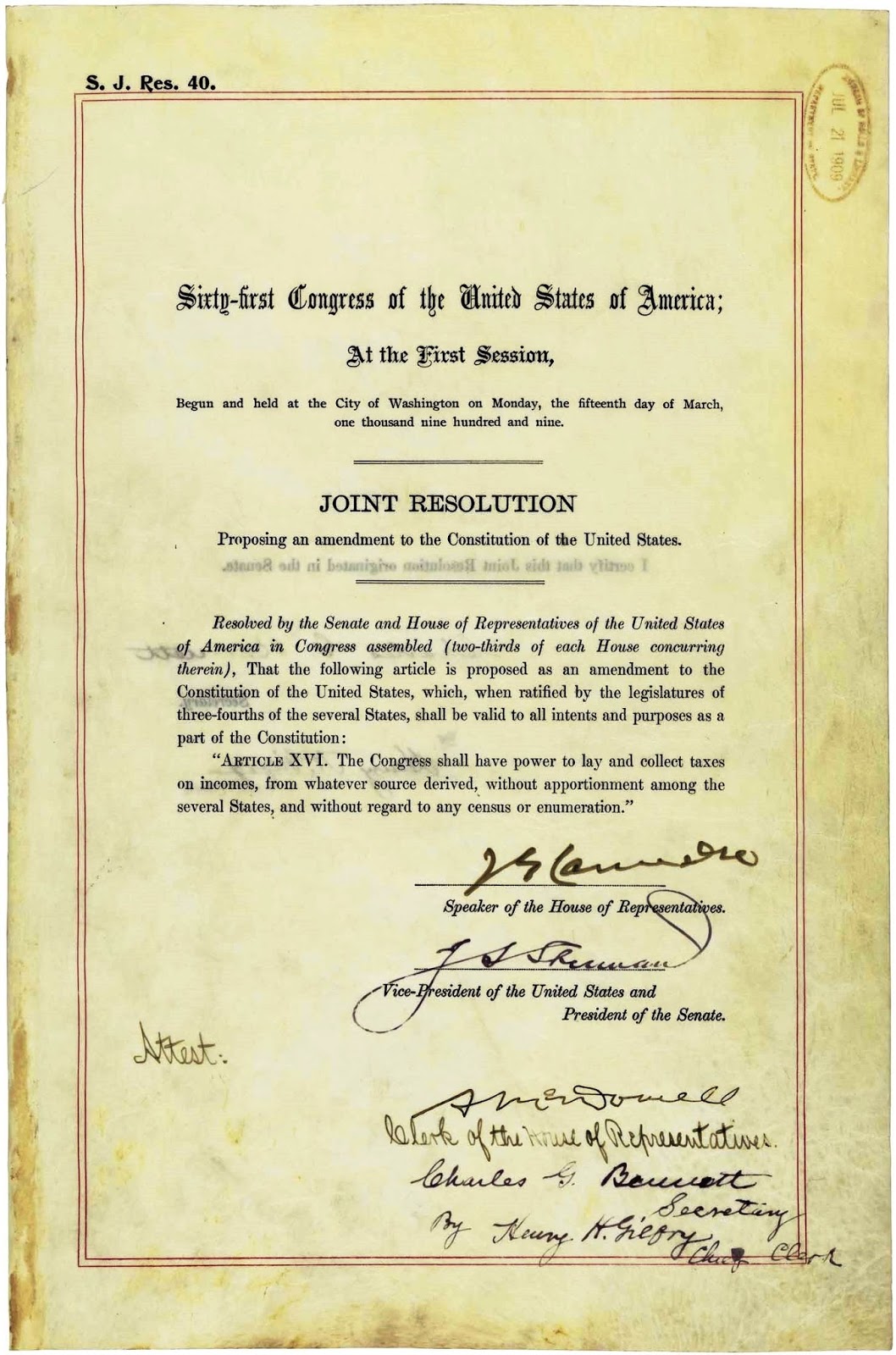
On August 3, 1910, Georgia became the ninth state to ratify the 16th Amendment to the United States Constitution, which allows Congress to levy a tax without apportioning it among the states.
Calvin Coolidge was sworn in as President on August 3, 1923 after Warren Harding died in office.
August 1 was a big day for Benjamin Mays – he was born on August 1, 1895 and became President of Morehouse College on August 1, 1936.
PT-109, commanded by LTJG John F. Kennedy was sunk on August 1, 1943.
On August 1, 1982, Hank Aaron was inducted into the Baseball Hall of Fame.
On August 3, 1982, Michael Hardwick was arrested, setting in motion the prosecution that would eventually lead to the United States Supreme Court in the case of Bowers v. Hardwick.
On August 2, 1983, the United States House of Representatives voted to observe Martin Luther King, Jr. Day as a federal holiday on the third monday in January.
On August 2, 1990, Iraq invaded Kuwait.
The World of Coca-Cola opened on August 3, 1990 between Underground Atlanta and the Georgia State Capitol.
President Barack Obama visited Georgia on August 2, 2010 – his first trip to Atlanta and second to Georgia after his election in November 2008. The occasion of his 2010 trip, like his trip to Atlanta yesterday, was to deliver a speech to the Disabled American Veterans Conference at the Hyatt Regency. From his 2010 speech:
As a candidate for President, I pledged to bring the war in Iraq to a responsible end. Shortly after taking office, I announced our new strategy for Iraq and for a transition to full Iraqi responsibility. And I made it clear that by August 31st, 2010, America’s combat mission in Iraq would end. And that is exactly what we are doing — as promised and on schedule….
As agreed to with the Iraqi government, we will maintain a transitional force until we remove all our troops from Iraq by the end of next year.
At the same time, every American who has ever worn the uniform must also know this: Your country is going to take care of you when you come home. Our nation’s commitment to our veterans, to you and your families, is a sacred trust. And to me and my administration, upholding that trust is a moral obligation. It’s not just politics.
That’s why I’ve charged Secretary Shinseki with building a 21st century VA. And that includes one of the largest percentage increases to the VA budget in the past 30 years. We are going to cut this deficit that we’ve got, and I’ve proposed a freeze on discretionary domestic spending. But what I have not frozen is the spending we need to keep our military strong, our country safe and our veterans secure. So we’re going to keep on making historic commitments to our veterans.
On Wednesday, July 31, 2024, the United States Postal Service released a new stamp honoring Hank Aaron, according to the AJC.
At an emotional First Day of Issue Dedication Ceremony at the home plate of Truist Park, home of the Atlanta Braves, the United States Postal Service honored Aaron with a commemorative Forever stamp.
Aaron’s widow, Billye Aaron, said she was “overwhelmed” by the honor.
“At this moment in time, I can only say how very, very proud I am and how very, very proud my husband would be,” Billye Aaron said, after receiving a portrait of the stamp from Thomas J. Marshall, the U.S. Postal Service’s general counsel and executive vice president.
On April 8, 1974, in Atlanta, Hank Aaron smashed his 715th home run, breaking Ruth’s 39-year-old record. Today, 48 years after he retired, Aaron is still the Major League leader in career runs batted in with a count of 2,297.
Georgia Politics, Campaigns, and Elections
Columbus, Georgia has been named the Freestyle Kayaking Capital of the United States, according to the Ledger-Enquirer.
Thanks to the thriving whitewater scene along the river, Columbus has been named Freestyle Kayaking Capital of the United States by the International Canoe Federation (ICF).
The announcement came during a July 30, 2025 press conference in Columbus on the banks of the Chattahoochee River whitewater course. Mayor Skip Henderson announced in an accompanying press release, that Columbus will also host the 2028 ICF Canoe Freestyle World Cup and the 2029 World Championship.
Since its inception in 2013, the Cutbait Rapids has become one of the largest Class V rapids on the East Coast and will now serve as a model for the ICF in developing a 10-year international kayaking competition circuit.
“Columbus continues to invest in the river and outdoor recreation because it enriches our community and supports economic growth,” Henderson said. He also promised that the Cup Championship would, “bring thousands of visitors to experience the best of Columbus.”
What does this mean for Columbus?
First, more visitors and the business they bring across hotels, restaurants and shops. According to Visit Columbus, over 50,000 people already come each year for our river sports.
Columbus is now the ICF’s very first Center of Excellence for Canoe Freestyle, which means it will become more and more attractive to tourists looking for a unique outdoor experience.
Ashley Woitena, President and CEO of Visit Columbus promises, “With our unmatched river access, supportive community, and year-round paddle sports opportunities, Columbus is the perfect home for the future of freestyle kayaking and other Canoe Freestyle events.” What can we expect?
“Columbus offers the best freestyle waves in the world — it’s no surprise the athletes chose this city to host the next World Cup and World Championship competitions,” said Dan Gilbert, owner of Columbus’s Whitewater Express. “This community has earned the freestyle world’s respect — and their excitement to return says it all.”
Police Blotter: Georgia Attorney General Chris Carr’s office announced the indictment of Cobb County Court Clerk Connie Taylor, according to the Capitol Beat News Service via the Gwinnett Daily Post.
Cobb County Court Clerk Connie Taylor was indicted Thursday in connection with alleged destruction of documents in 2022, Georgia Attorney General Chris Carr’s office said.
The indictment on two counts each of destruction of public records and violation of oath of office stems from allegations that Taylor told an employee to delete government emails and financial records in response to an open records request in October 2022, Carr’s office said.
“Georgians deserve honesty and transparency from their elected officials, and anything less undermines public trust,” Carr said. “Any attempts to conceal or destroy government records are serious allegations that cannot be ignored, and those responsible will be held accountable.”
The indictment came after the Georgia Bureau of Investigation (GBI) and the attorney general’s White Collar and Cyber Crime Unit presented evidence to a Cobb County grand jury.
“The intentional destruction of public records is a serious offense that undermines transparency and public trust,” GBI Director Chris Hosey said.
Neither agency disclosed the subject matter of the documents that allegedly were destroyed.
Carr’s office noted that indictments are merely allegations and that Taylor should be presumed innocent unless proven guilty.
Both charges are felonies, the AG’s office confirmed through a spokesperson. Deputy Attorney General John Fowler, who presented the case before the Grand Jury, declined to comment.
Now that Taylor is indicted, Gov. Brian Kemp can appoint a commission to decide if she should be suspended from her position, according to state law. The commission would determine if the indictment “relates to and adversely affects the administration of the office” and whether “the rights and interests of the public are adversely affected.”
If convicted of a felony charge, Georgia law dictates that Taylor would be removed from office.
The charges “stem from allegations that Taylor directed an employee to delete government emails and financial records in response to an open records request,” the AG’s office said in a statement.
The Atlanta Journal-Constitution reported in November 2022 about Taylor taking passport processing fees as personal income, which is legal in Georgia and resulted in more than $425,000 of additional income for the clerk in less than two years. The AJC submitted requests under the Georgia Open Records Act for emails, financial records and other documents to further that reporting.
At the time, Taylor said the passport income included nearly $84,000 in expedited passport shipping costs, which she was not permitted to keep as personal income.
Her office agreed to return the shipping fees to the county, but did not do so until years later in February 2025.
The indictment alleges Taylor directed her employee “to delete a digital folder on the employee’s work computer titled ‘Passport’ which contained accounting records” and an email with the subject line “Expedited Passport Revenue Analysis.”
The Georgia Bureau of Investigation announced it was launching a probe of Taylor’s office later in 2022. The matter was referred to the AG’s office in 2024, the AJC previously reported.
Douglas County Superior Court Judge William McClain presided over Thursday’s hearing. He said he was appointed to oversee the matter by order of the Judicial Circuits of the Seventh District after Cobb County Superior Court judges recused themselves.
The Cobb District Attorney’s Office also recused itself from the case, officials said in a news release.
Taylor faced more criticism last year, this time from multiple attorneys who practice in Cobb Superior Court and who told the AJC that her office was struggling to maintain proper record-keeping for the court — her main duty as an elected official.
The severe disruptions to court functions prompted the chief judge to take the extraordinary step of issuing an emergency judicial order, which set aside filing deadlines and eliminated penalties for missed hearings.
The Georgia State Ethics Government Transparency and Campaign Finance Commission accuses the Georgia Republican Assembly PAC of violating state law by improperly influencing state elections, according to the Associated Press via WALB.
Georgia’s Ethics Commission says a political action committee linked to what federal investigators have called a Ponzi scheme illegally sought to influence elections.
The complaint, filed Wednesday, says the spending came from the now-dissolved Georgia Republican Assembly PAC between 2021 and 2024.
The committee was headed by Edwin Brant Frost V, the son of a man named in a U.S. Securities and Exchange Commission lawsuit as heading a scheme that took at least $140 million from hundreds of investors. A company named First Liberty Building & Loan promised investors big returns from making high-interest loans to businesses with short-term cash needs, but the SEC complaint says Edwin Brant Frost IV skimmed $17 million for himself, his relatives and their affiliated companies.
More than $1 million of that went to political spending that entrenched the Frost family’s influence in Republican politics in Georgia, Alabama, Maine and other states, investigators said. But while much is disclosed in campaign contributions, Wednesday’s filing raises questions about whether the Frosts were spending on politics in undisclosed ways.
The complaint says the PAC could legally give to candidates, but it never registered as an independent committee to directly advocate for and against candidates while spending more than $220,000 to do so.
“The ethics complaint filed today represent our initial charges against the Georgia Republican Assembly-PAC,” Ethics Commission Executive Director David Emadi said in a statement. “Our investigation remains ongoing and additional charges may be coming at a future date, but we intend to aggressively pursue all violations of Georgia law committed by the GRA which illegally influenced elections in 2022 and 2024.”
State Rep. Dale Washburn said undisclosed spending is pernicious. The Macon Republican was attacked in a 2022 mailing cited in the complaint.
“The whole dark money thing, where you can attack a candidate with a name that really doesn’t represent who is behind the attack, I think that is a problem and it should be addressed,” Washburn said.
No criminal charges have been announced in the alleged financial fraud. Brant Frost V wasn’t named in the civil lawsuit filed by the SEC. However, the SEC in a subpoena filed last week sought information about activities of Brant Frost V as a First Liberty employee. The younger Frost made appearances on conservative talk shows promoting First Liberty, and some investors said they dealt with Brant Frost V when putting money into First Liberty.
The younger Frost also garnered attention when he incorporated a new lending firm — Heartland Capital LLC. Brant Frost V filed the incorporation papers on June 26, the day before First Liberty announced it had gone bust.
Brant Frost V didn’t immediately respond to an email and a text message Wednesday. A lawyer for Brant Frost IV didn’t respond to an email.
The PAC shared a name with the Georgia Republican Assembly, a group that seeks to push the Republican Party further to the right. The assembly often endorsed and the PAC often contributed to insurgent Republicans who opposed established GOP leaders. But assembly President Nathaniel Darnell said that while the GRA authorized and promoted the PAC, it was a “totally separate entity.”
“The entire time the PAC was in operation, the Frosts controlled it with zero oversight from the GRA organization,” said Darnell, who said he personally lost an unspecified amount of money invested in First Liberty.
The Frosts had a falling-out with the GRA following this year’s state Republican convention. They and other supporters of Georgia GOP Chairman Josh McKoon publicly resigned after the GRA expelled Katie Frost, the sister of Brant Frost V. Katie Frost led a nominating committee that recommended delegates vote against a number of GRA-endorsed party officer candidates.
Campaign disclosures show the Frosts and associated companies donated a majority of the PAC’s money. One focus was supporting Republican challengers who opposed late state House Speaker David Ralston, whom the GRA viewed as a corrupt moderate. But the complaint shows the PAC also didn’t disclose spending in school board races in Coweta County, where the Frosts live, and in a county commissioner race in neighboring Meriwether County.
Washburn said he believed he was targeted over his support for Ralston and for a bill that would have allowed some immigrants to pay in-state tuition at Georgia universities and colleges.
“I was kind of taken aback by those mailers when they happened and was honestly angered by them because I thought they were very deceitful and misrepresented some things,” he said.
The State Ethics Commission on Wednesday accused a conservative political action committee of 61 violations of Georgia law in a case stemming from the collapse of First Liberty Building & Loan.
The Georgia Republican Assembly PAC failed to report tens of thousands of dollars’ worth of campaign expenditures, failed to file numerous required campaign reports and failed to properly register as an independent political committee before accepting contributions, according to a complaint released Wednesday.
The alleged civil violations are the latest fallout from Newnan-based First Liberty, whose founder Brant Frost IV was accused by the Securities and Exchange Commission of diverting millions of dollars of investor money for personal use, including funneling more than $570,000 into political contributions to conservative candidates and causes.
An Atlanta Journal-Constitution investigation found the Georgia Republican Assembly PAC was the top recipient of Frost campaign contributions. The Frost-linked committee supported far-right GOP contenders who often challenged more establishment candidates. In all, Frost IV and his family donated roughly $162,000 to the PAC, according to the AJC’s tally.
Ethics Commission Executive Director David Emadi indicated in a written statement that the charges announced Wednesday may be just the beginning.
“The ethics complaint filed today represent our initial charges against the Georgia Republican Assembly PAC,” Emadi said. “Our investigation remains ongoing and additional charges may be coming at a future date, but we intend to aggressively pursue all violations of Georgia law committed by the GRA which illegally influenced elections in 2022 and 2024.”
The State Ethics Commission complaint says the Georgia Republican Assembly PAC registered as a political action committee, which can contribute money to candidates. But it never registered as an independent committee that can directly seek to influence voters under Georgia law, according to the commission’s complaint.
The complaint also says the committee failed to file 24 required campaign disclosures from October 2021 to June 2025. And it failed to properly report 36 campaign expenditures totaling more than $223,000.
If found guilty of all of the violations, the committee could face hundreds of thousands dollars of fines.
The State Ethics Commission and the SEC aren’t the only ones investigating First Liberty.
Secretary of State Brad Raffensperger’s office has also launched a probe of First Liberty and investigators recently issued subpoenas to Brant Frost V, the owner’s son, after he launched a new lending firm. Frost V has not returned repeated messages seeking comment.
The Commission also said Lyft violated state law by giving free rides to the polls, according to Georgia Recorder.
Georgia’s State Election Board has accused the rideshare company Lyft of violating Georgia’s election law by offering discounted rides to users who were heading to the polls.
At a Tuesday meeting, the board voted 3-1 to issue a letter to Lyft, alleging that the company violated a provision of Georgia’s election code that prohibits “giving or receiving, offering to give or receive, or participating in the giving or receiving of money or gifts for registering as a voter, voting, or voting for a particular candidate.”
Violating the law is a felony offense, though the board is not issuing a fine or referring the case for criminal prosecution.
The incident stems from a series of two complaints filed by a Georgia resident ahead of the 2022 general election, flagging programs dedicated to providing transportation to the polls as potential election law violations. The first complaint was aimed at Rideshare2vote, a left-learning nonprofit dedicated to increasing turnout among Democratic voters. The second complaint was lodged against Lyft, which has been involved in voter outreach efforts across the country for the past decade.
A subsequent investigation conducted by the secretary of state’s office found that although Rideshare2vote stated that its goals were to turn out more Democratic voters, the organization provided free rides and did not turn away voters of any political affiliation. Rideshare2vote also instructed its volunteers not to ask voters about their political affiliation or urge them to support any parties or candidates. The board voted to dismiss a complaint against Rideshare2vote Tuesday.
Lyft’s voter outreach program, which provided discounted — rather than free — rides to the polls for voters across the state, proved to be a trickier issue.
Janice Johnston, the board’s Republican appointee, urged the board to pursue the complaint, despite it being slated for dismissal on Tuesday’s agenda.
“They are in violation because they offered something of value to vote,” Johnston said of Lyft’s discount program. “They have violated election code in Georgia.”
Johnston also highlighted a potential lack of access to rideshare services like Lyft in rural parts of the state, and claimed that offering discount codes to voters amounted to “vote hauling,” or buying votes.
Attorney General Chris Carr’s office did not respond to a request for comment about whether Carr agrees with that interpretation of the law.
The board’s sole Democratic appointee, Sara Tindall Ghazal, pushed back on Johnston’s remarks, highlighting churches and other community groups that offer transportation to voters on election day in certain geographic areas.
“Churches, very frequently, will provide rides to their congregations to polls, and it’s absolutely untenable for them to offer [rides to] anybody across the state of Georgia,” she said.
“To suggest that the only way that is not considered a gift is if it’s offered statewide, that’s nonsensical to me.”
Secretary of state investigator Michael Brunson recommended that the complaint be dismissed, noting that similar cases have been dismissed by the board in the past. However, Johnston and another Trump-aligned member of the board, Janelle King, pushed for more action to be taken. The board will issue a letter of instruction to Lyft in the coming weeks.
Lyft did not reply to a request for comment.
The Georgia State Election Board is again looking back at the 2020 election, according to the AJC.
Three right-wing members of the State Election Board revived a fight over the 2020 presidential election Wednesday and called for President Donald Trump’s Justice Department to intervene.
The surprise move by the Republican board members — the same three praised by Trump as “pit bulls” during a campaign rally last fall — gives new life to skepticism of the president’s narrow loss in Georgia in 2020.
State Election Board Chairman John Fervier, an appointee of Gov. Brian Kemp, strongly objected to the board’s resolution, which was proposed by Janice Johnston, an appointee of the Georgia Republican Party.
The board voted 3-2 to seek documents from the 2020 election in Fulton County, including voter lists, chain-of-custody forms, ballot images, documentation of security seals and ballot scanner paperwork. Fervier and Democratic Party appointee Sarah Tindall Ghazal opposed the resolution.
Fervier said the investigation of Fulton was already completed when the board reprimanded the county in May 2024 for double-scanning more than 3,000 ballots during a recount of the 2020 election.
But Johnston said the case isn’t over and Fulton hasn’t responded to the board’s Election Day 2024 subpoena seeking the 2020 documents. A judge has scheduled a hearing in September on the county’s motion to quash the subpoena.
Uber is seeking Georgia Supreme Court review in their case against the state, according to the AJC.
The ride-hailing company has been fighting the Georgia Department of Revenue since the agency billed the business $22 million in 2018 for overdue sales tax and associated penalties.
Uber keeps losing the battle and is now asking the Georgia Supreme Court to take its case, alleging the department’s overreach could have wide-ranging ramifications if not corrected.
In May, Uber reported its year-over-year revenue grew 14% to $11.5 billion and income from operations was $1.2 billion. A representative for the company said the Georgia judges who have ruled against it relied on a faulty legal assumption.
The state has yet to respond in court to Uber’s petition for review.
Uber alleges the Georgia General Assembly has the exclusive authority to impose state taxes and that the Department of Revenue overstepped when taxing Uber as if it were a taxi or limousine company. That was in Uber’s early years of operation, before state legislators decided how ride-hailing companies should be taxed.
Uber argued its drivers were responsible for collecting and paying any sales tax required by the state back then.
In April 2024, Fulton County Superior Court Judge Charles Eaton ruled against Uber, upholding the tax tribunal’s judgment. He affirmed the Revenue Department was authorized to tax Uber in line with a regulation on cars for hire.
Eaton said getting sales tax from thousands of Uber drivers who might not maintain records and who could change week to week would be a logistical nightmare for the state. In contrast, Uber was in an ideal position to collect the tax and pay it, he said.
The Georgia Court of Appeals agreed with Eaton in May 2025, saying the Department of Revenue was within its power to tax Uber the way it did.
Since 2020, Uber and companies like it have paid a flat fee on rides for hire in Georgia, in lieu of sales tax. That arrangement, which helps fund transit projects, is not being challenged.
State Representative Houston Gaines (R-Athens) announced he is running for the Congressional seat being vacated by U.S. Rep. Mike Collins, according to the AJC.
The Athens legislator said he planned to campaign in the mold of U.S. Rep. Mike Collins, who captured the House seat in 2022 on a pro-Trump platform and then announced this week that he’s leaving it to run for U.S. Senate.
“President Trump has already delivered historic victories in his first six months,” Gaines said. “As he continues to be unfairly attacked by the left, he needs reinforcements in Washington. Just as I’ve taken on and defeated the far left time after time here in Georgia, I’m ready to do the same in D.C.”
Gaines, 30, is an early front-runner for the deeply conservative district that stretches from east Atlanta’s suburbs to the South Carolina state line. But other GOP contenders could join the fray, including former U.S. Rep. Paul Broun, who lost a comeback bid in 2022.
A prodigious fundraiser — Gaines amassed $900,000 in his legislative account — his announcement came coupled with endorsements from a trio of county sheriffs and dozens of state legislators and local officials.
A former student body president at the University of Georgia, Gaines traces his roots to the district back eight generations. His grandfather, Joseph Gaines, was a superior court judge in the area, and he is closely allied with Gov. Brian Kemp, whose Athens home is in his legislative district.
After losing a 2017 special election for the state House to Democrat Deborah Gonzalez, Gaines won a rematch the following year and has held the conservative-leaning seat ever since, capturing more than 60% of the vote in last year’s election.
Gaines, an executive at an engineering firm, quickly emerged as a power player in the Legislature, frequently clashing with Athens’ more liberal leaders.
He sponsored legislation giving the state new powers to remove district attorneys, prompted by criticism that Gonzalez mismanaged the prosecutor’s office after her election.
And he backed legislation cracking down on illegal immigration in Georgia after the murder of Laken Riley, a nursing student who was killed on UGA’s campus by a Venezuelan man who entered the U.S. illegally but was allowed to stay while pursuing his immigration case.
If Collins’ 2022 victory is any guide, the race could become an all-out GOP brawl. In that contest, Collins defeated a former Democrat endorsed by Trump in a GOP runoff before trouncing a Democrat in the general election.
This time, Democrat Lexy Doherty is waiting in the wings, hoping to make the race a referendum on Trump’s policies — no easy task in a district the former president carried comfortably. She aims to cast Gaines and other Republicans as political panderers.
From the Savannah Morning News:
“Being your state representative for the last seven years has been the honor of a lifetime,” Gaines said. “Together, we’ve accomplished so much. But it’s time to take the fight to Washington, D.C. If we’re ever going to turn this country around, we need good, common sense people to run for Congress to help President Trump continue to deliver for the American people.”
Lexy Doherty is running as a Democrat and is an educational consultant. She previously ran for this race against Collins in November. According to Ballotpedia, three areas she is particularly interested in include rural economic development and innovation, improving access to healthcare, and the John Lewis Voting Rights Act.
“Our partisan affiliations can often be a distraction,” Doherty said. “There are two parties in this country that matter. I don’t mean the Democrats and Republicans; I mean the ultra-rich and the rest of us.”
From the AJC Political Insider:
The Athens Republican raised more than $510,000 on Thursday after launching his campaign for the GOP-leaning northeast Georgia seat, his campaign said.
U.S. Rep. Mike Collins (R-Jackson) announced endorsements in his Senate campaign, according to the AJC.
Former U.S. House Speaker Newt Gingrich might be the biggest name, but Collins also notched support from GOP powerbrokers in the state Legislature like Senate Majority Leader Jason Anavitarte, House Majority Whip James Burchett, Senate Agriculture Committee Chair Russ Goodman and state Rep. Matthew Gambill — one of Kemp’s own floor leaders.
And on Thursday came another big name: Ben Tarbutton III will be Collins’ finance chairman. Tarbutton isn’t just the influential head of the Sandersville Railroad Co. He’s one of Georgia’s best-connected GOP fundraisers — and a longtime Kemp ally.
Collins’ camp hopes these endorsements contrast with U.S. Rep. Buddy Carter — a fellow Senate candidate who hasn’t drawn a similar stream of public support from GOP officials — and sends a signal to other donors that it’s safe to pull out their checkbooks.
But Kemp, who warned his top supporters to keep their “powder dry,” isn’t likely to let it slide.
We’re told his allies are reminding potential defectors that crossing the state’s most popular Republican — a governor who spent $2 million last cycle to protect the GOP majority in the state Legislature — could come at a steep political cost.
Former State Rep. and Democratic Minority Leader Bob Trammell (D-Luthersville) announced his campaign for Attorney General, according to the Capitol Beat News Service via the Savannah Morning News.
A former Democratic state representative has entered the election to succeed Republican Chris Carr as attorney general.
Former House Minority Leader Bob Trammell on Wednesday became the first Democrat to announce his candidacy to become the state’s top attorney, saying he wants to “bring about real change” during a tumultuous era.
“At a time when Georgians are feeling the pressures of an erratic economy, corporate corruption, insidious frauds and scams, and the erosion of our rights, Georgians deserve someone who will fight for them,” the Luthersville attorney said.
Carr is running for governor, and the race to succeed him is wide open.
Two Republicans are already competing for the office: state Sen. Brian Strickland, R-McDonough, a lawyer who chairs the Senate Judiciary Committee; and Sen. Bill Cowsert, R-Athens, a lawyer who chairs the Senate Regulated Industries and Utilities Committee.
Strickland filed a campaign contribution report on July 8 that showed he had raised $435,000. Cowsert filed one the same day showing he had brought in $531,000. Trammell registered his intent to raise money on July 1 but has not filed a contribution report.
Trammell grew up in Luthersville in Meriwether County and served as county attorney there. He was also the top Democrat in the state House, as minority leader from 2017-2021.
He graduated from the University of Georgia and the University of Virginia School of Law. He and his wife Jenny, a pharmacist, have three children.
Seven candidates seek election to the State Senate District 21 seat vacated by former Sen. Brandon “Money“ Beach (R-Alpharetta) in a Special Election, according to the AJC.
North Fulton and Cherokee voters will choose next month between seven candidates to replace their former state senator, who left office earlier this year to become the treasurer of the United States.
President Donald Trump appointed state Sen. Brandon Beach, an Alpharetta Republican, to become the United States treasurer, a role he assumed in May.
Six Republicans and one Democrat are running for the chance to serve the rest of Beach’s term, which goes through January of 2027.
The special election will be held Aug. 26, with a runoff, if necessary, scheduled for Sept. 23. Early voting begins Aug. 4.With seven candidates, it is almost certain the race will go to a runoff between the top two vote-getters. Georgia law requires candidates to receive more than 50% of the vote to win a race outright.
Beach, who had served in the Senate since 2013, won just over 70% of the vote against his Democratic opponents in 2024 and 2018, the only times he faced a challenge from the other party. In 2024, Beach slightly outperformed Trump in the district, earning 81,481 votes, good for just over 70%, compared with Trump’s 78,544, or about 66.5%, according to data from the Georgia Secretary of State’s office analyzed by the Georgia Recorder.
So it’s no surprise that six of the seven Senate hopefuls are running as Republicans. Five of them came to Canton Monday for a forum hosted by the conservative Americans for Prosperity and answered questions about their commitment to principles like smaller government and lower taxes.
From the Cherokee Tribune & Ledger-News:
The Republican candidates are:
Lance Calvert
Jason T. Dickerson
Stephanie Donegan
Brice Futch
Steve West
Brian WillThe Democratic candidate is: Debra Shigley
All of the candidates will appear on the same ballot.
Early voting is scheduled to start Aug. 4.
The absentee ballot application window for the August special election is June 9 through Aug. 15.
Richmond County will crack down on curfew enforcement, according to WJBF.
Richmond County Sheriff Eugene Brantley and Judge Tianna Bias of Juvenile Court are holding a press conference Friday to announce new enforcement protocols for juvenile curfew laws.
According to the Richmond County Sheriff’s Office, the “initiative is in response to growing concerns involving juvenile activity during late-night hours in downtown Augusta, local shopping centers, and residential neighborhoods—including increased incidents of loitering and vehicle break-ins.”
Key details of the new protocol are as follows:
Weekend Enforcement: Juveniles found out past curfew will be transported to a designated holding location downtown until picked up by a parent or guardian.
Weekday Enforcement: Parents will be contacted to respond directly to the scene for pickup.
The protocol aims to increase accountability, redirect negative behavior, and prevent juveniles from entering the criminal justice system unnecessarily.
“The goal of this program is to deter future criminal behavior and engage families early, before poor decisions result in long-term consequences,” the statement from the sheriff’s office reads in part.
It would have been great if they discussed the details of the curfew itseld.
The Bulloch County Board of Education passed a property tax millage rate 2.5 mills higher than the previous year, according to the Statesboro Herald.
After a public input session in which more than 20 of the 25 citizens who signed up to speak spoke in favor of a tax increase if it would avoid eliminating classroom teaching jobs and closing the Transitions Learning Center, the Bulloch County Board of Education voted 5-3 Wednesday evening to publish a tentative 2025 property tax rate of 10.4 mills. This was discussed as a “3-mill” increase.
As a roughly 2.5-mill hike above last year’s rate of 7.932 mills, it is in that sense a 31.1% increase. But under requirements of the Georgia law known as the Taxpayer’s Bill of Rights, it will be advertised as a 2.954-mill, or 39.67%, increase above the “rollback rate” of 7.446 mills that would have been necessary to counteract inflation in average property values in the year’s tax assessments. The board must now hold three public hearings on that tax increase, set for Thursday, Aug. 14, at 12 noon and then Aug. 21 at both 9 a.m. and 6 p.m., before a final vote to set the millage rate, slated for the Aug. 21 board meeting.
Even at that rate, the school system, which is projected to spend about $13.2 million of its $37 million remaining general fund balance, or informal reserve, this year, will need to make some cuts affecting some personnel next school year, Wilson said.
Bulloch County Schools is facing a $15 million dollar [deficit] in its 2026-2027 school year budget.
A deficit Bulloch County superintendent Charles Wilson credits to a multitude of things, such as inflation, loss of previous funding and the school’s history of taking the rollback rate.
“If we want to continue to do that we have run out of running room to do that, and keep the millage rate low,” said Wilson.
The Bulloch County Board of Education voted Wednesday night to adopt a tentative millage rate of 10.400 mils which equals a nearly 40% tax increase. The current rate is 7.446 mills.
This proposed tax increase for a home with a fair market value of $300,000 would be approximately $348.57, while for a non-homestead property valued at $275,000, the increase would be approximately $324.94.
The Board of Education has previously approved a budget based with a lower millage rate.
A school board member pointed out increasing the rate would feel like going back on their word.
For three hours the board and community members debated the possibilities which included finding more room to trim spending.
However, the superintendent felt the tax increase was unavoidable.
“It’s a values based commitment, and with those things come trade offs and responsibilities so here we are,” said Wilson.
Retention and operations are the superintendent’s biggest pushes for supporting the raise.
“Raising the millage rate 3 mills is a decision that honors your purpose and ours,” said one woman who was in favor of the millage increase.
The vote passed with 5-3 and board members Lanier, Mock and Nevil all voting against the increase.
This vote means the board will now have to hold hearings on the new proposed millage rate.
The Glynn County Board of Education adopted a property tax millage rate the same as the previous year, according to The Brunswick News.
“By keeping the millage rate unchanged, we would receive approximately 688,200 more dollars than initially budgeted. I did want to note that the increase reflects a growth in the tax digest, not a rate hike,” Avery Coty, executive director for finance, said at the Wednesday meeting.
The board lowered the school property tax rate for the third year in a row, reducing it from 15.4 mills to 14.9 mills, the lowest it had been in decades, Coty said.
Coty told the school board in June that she didn’t expect Title I funding to change much, but funding provided under Title II and IV could be consolidated and the federal government was talking about eliminating Title III funding entirely.
She said Wednesday that she’s “fairly certain” federal funding will come through, but board members agreed with Coty’s recommendation to keep the school district millage even with last year’s at 14.9 mills because of lingering uncertainty.
“We know for sure they’re going to release our Title IV-B funds, and we have been told they’re going to release some of our other title funds, but we just don’t have any guarantees on that yet … and we don’t know what’s it’s going to look like next year,” she said. “… It would concern me to decrease the millage rate again this year.”
The Chatham Area Transit Board of Directors adopted an FY 2026 budget lower than the previous year, according to the Savannah Morning News.
The Chatham Area Transit Board of Directors approved a revised fiscal year 2026 operating budget Tuesday afternoon, one that included roughly $2 million in cuts after the Chatham County Board of Commissioners reduced CAT’s property tax levy last week.
CAT’s initially proposed budget, which had been presented in budget workshops, was based on maintaining its fiscal year 2025 millage rate of 1.056 mills—the rate it requested the county approve. The Board of Commissioners reduced that rate to .94 at a July 24 special called meeting, resulting in $1.9 million less in revenues for CAT.
The board unanimously approved the revised budget, with cuts that included a nearly $600,000 reduction in CAT’s contingency fund and removal of an $870,000 self-insurance fund. Staff targeted reducing expenses in areas that would not impact operations, said Interim President and CEO Stephanie Cutter.
“It’s really kudos to staff for coming up with a plan,” said new board member Bert Brantley, who is president and CEO of the Savannah Area Chamber of Commerce. “It still hurts and knocks us off the plan that had been made, but it doesn’t dramatically impact the day-to-day services.”
Port Wentworth City Council passed a moratorium on rezoning properties for residential construction, according to the Savannah Morning News.
According to [City Planner Katie] Dunigan, most of the applications and interest the city receives for rezoning applications is for these higher density, multi-family projects.
“It’s about three to one applications that are for residential rezonings,” Dunigan said. “And 80% are multifamily, and while those are great projects to bring into the city for a variety of reasons, it very quickly adds up as far as its tolls on roads, utilities and water.”
Dunigan said it was time for Port Wentworth to take a moment to “take stock” of where the city is and where they want to go.
The city will stop accepting any new applications for rezonings to residential, but commercial or industrial rezoning applications will still be accepted. Last year, the city passed a similar six-month moratorium on fueling stations.
Savannah-Chatham County public schools Police Department rolled out a mobile command unit, according to the Savannah Morning News.
The mobile command unit is a standalone vehicle that is set-up to operate as a traveling office. It has network connectivity, 15 work stations, TV monitors, a printer, an outdoor awning and more.
“It’s intended and designed to be there and support us in the event we have a large emergency and we have to bring all of our local partners to support us,” said Justin Pratt, School Security Coordinator for Savannah-Chatham County Public Schools. ‘It gives us a place to coordinate a response and bring everyone together.”
The vehicle was ordered from British van manufacturer, LDV, in 2023 and custom-built — bringing the total cost to around $490,00, Pratt said.
“Because it was custom-built for us, we were able to design exactly what we needed. There’s no fluff in there. Everything that we purchased is intended to be used strategically,” Pratt said. “We didn’t want to overspend on the vehicle and put things in that we weren’t going to use.”
Lowndes County public schools have implemented further safety measures for the new school year, according to WALB.
LCS made upgrades to the Centegix alert system, added two more school resource officers, bringing the total to 19 across the campuses, and mapped campuses to help speed up emergency response.
Superintendent Sandra Wilcher said, “Last year we put a lot of revenue, resources, and time to make sure we enhanced all our safety across the district, from increasing cameras, we added more this summer. And all of last year, we identified any blind spots and made sure we added and improved the cameras we were using to give us better coverage to see things.”
Wilcher says that since she stepped into the role as superintendent, she and the school board have had one goal: to enhance school safety.
“If there is a measure that we can put in place to not only communicate but to truly make sure that our staff and students are our top priority in terms of their safety, we’re going to take those measures. We explore a variety of different ideas all the time, and if it’s something that truly enhances the safety of our students, we’re definitely going to invest our time and resources into that,” Wilcher said.
Similar to other South Georgia schools, LCS is implementing device-free polices for K-12. But with more students, the policy will eliminate distractions while still allowing communication through the online platform “Rooms.”
Related Posts
 Food stamp roll swells in Georgia | www.myajc.com
 Adoptable (Official) Georgia Dogs for April 26, 2017
 Different dates for state, federal general election runoffs | Political Insider blog
 Georgia Politics, Campaigns, and Elections for March 16, 2020
 Regulators: More delays possible for Plant Vogtle reactors | The Augusta Chronicle


Comments ( 0 )